
Best React SaaS Boilerplates (2026)
React remains the most widely adopted JavaScript library for building web applications, and many SaaS teams choose it for its massive ecosystem, flexibility, and abundance of component libraries. The React boilerplates listed here combine React with a backend (typically Node.js, Express, Firebase, or Supabase) and include pre-built auth, billing, and database integrations. Choosing a React SaaS boilerplate makes sense when you prefer a client-side-rendered architecture, need full control over your routing, or are building a complex single-page application.
 NextJS
  React
React  TypeScript
  Tailwind
  Drizzle



 Nuxt
Nuxt 

 Remix
Remix 



 Prisma


 Firebase
  Supabase
 DaisyUI
  Pocketbase




 NodeJS
  Stripe

 MongoDB


 Django
  HTMX
HTMX 

 Chakra
  Figma
Figma 



 Lemon Squeezy

 Resend
  Sendgrid
Best SaaS Boilerplates in 2026
BoilerplateHub curates 100+ vetted SaaS boilerplates so you can compare options side by side and pick the one that fits your stack. Whether you need the best Next.js SaaS boilerplate, a Laravel starter kit, a Django SaaS template, or a React Native mobile boilerplate, every listing includes verified pricing, tech stack details, and a full feature breakdown, so you know exactly what you're getting before you buy.
Most Popular SaaS Boilerplates
The most-used SaaS boilerplates are built on Next.js. Options like ShipFast, LaunchFast, and Shipped dominate because Next.js is the default choice for production React apps. For PHP teams, Laravel SaaS boilerplates like Larafast and SaaSykit offer the same batteries-included experience. Python developers lean on SaaS Pegasus, the most mature Django SaaS boilerplate available. And for mobile-first products, React Native and Expo SaaS starter kits let you share auth, billing, and API logic across iOS and Android from a single codebase.
What Separates Good SaaS Boilerplates from Great Ones
The best SaaS boilerplates go beyond wiring up auth and Stripe. Look for active maintenance: GitHub commits in the last 90 days signal a healthy project. Multi-tenancy support matters if you're building B2B. A built-in blog and landing page saves another week of work. Admin panels, dark mode, and onboarding flows ship products that feel polished from day one. Use the feature filters above to find SaaS boilerplates that match your exact checklist.
Free vs. Paid SaaS Boilerplates
Free SaaS boilerplates on GitHub are a solid starting point, but they often lack documentation, support, and regular updates as frameworks evolve. Paid SaaS boilerplates in the $49–$300 range come with setup guides, author support, and updates that track Next.js, Laravel, and other framework releases. For a production product, the license fee pays back in the first sprint. A developer's time costs far more per hour than a one-time boilerplate purchase.
React Boilerplates Compared
Every boilerplate below is listed in our catalog with verified pricing. We compare by stack fit, included integrations, and price, not by affiliate payout.
| Boilerplate | Price | Auth | Payments | Database | AI | ||
|---|---|---|---|---|---|---|---|
| supastarter | $349 - $1499 | ✓ | ✓ | ✓ | ✓ | ✓ | Review → |
| Gravity | $506 - $2995 | ✓ | ✓ | – | – | ✓ | Review → |
| FastPocket | $55 | – | ✓ | ✓ | – | – | Review → |
| Saas UI | $49 - $799 | – | – | – | – | – | Review → |
| Scale to Zero AWS | $80 - $120 | ✓ | ✓ | ✓ | ✓ | – | Review → |
| SaaS Pegasus | $249 - $999 | ✓ | ✓ | – | – | ✓ | Review → |
| SaasRock | $149 - $1999 | ✓ | ✓ | – | – | – | Review → |
| Divjoy | $199 | ✓ | ✓ | – | – | – | Review → |
| NextBase | $99 - $399 | ✓ | ✓ | – | – | – | Review → |
| Paralect Ship | Free | – | – | – | – | – | Review → |
| MakerKit | $299 - $599 | ✓ | ✓ | – | – | – | Review → |
| SlimSaaS | $169 - $199 | ✓ | ✓ | ✓ | – | – | Review → |
| Dirstarter | $159 - $199 | – | ✓ | – | – | ✓ | Review → |
| Agentic Boilerplate | $99 | ✓ | ✓ | ✓ | ✓ | ✓ | Review → |
All 14 React Boilerplates
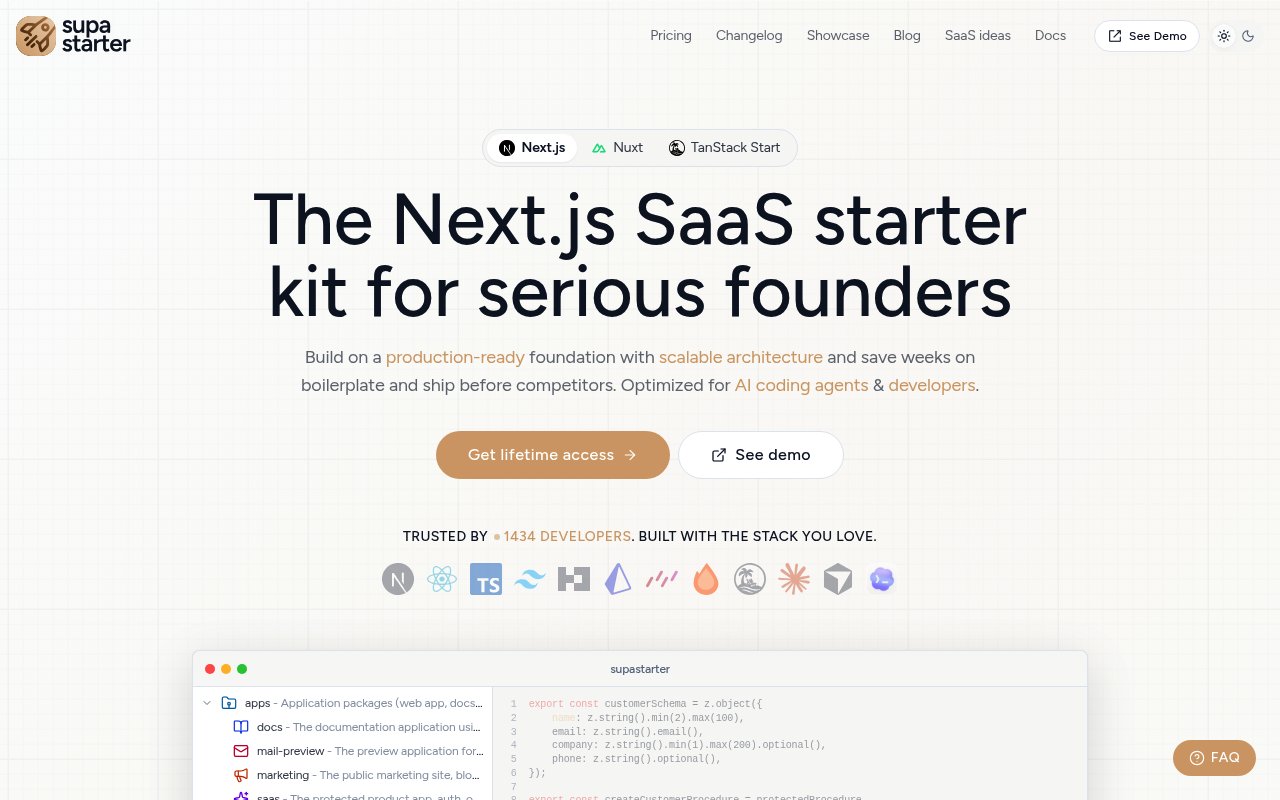
supastarter
supastarter targets teams building multi-tenant B2B SaaS on Next.js or Nuxt, and it carries the deepest feature list in this group: multi-tenancy, i18n, admin panel, dashboard, user management, blog, documentation and AI on top of the usual auth and payments. At $349 to $1,499 it is the most expensive entry here, more than double the $157 median, so it only pays off if you genuinely need organization accounts, roles and translations. For a single-tenant side project, most of that surface area is weight you will never touch.
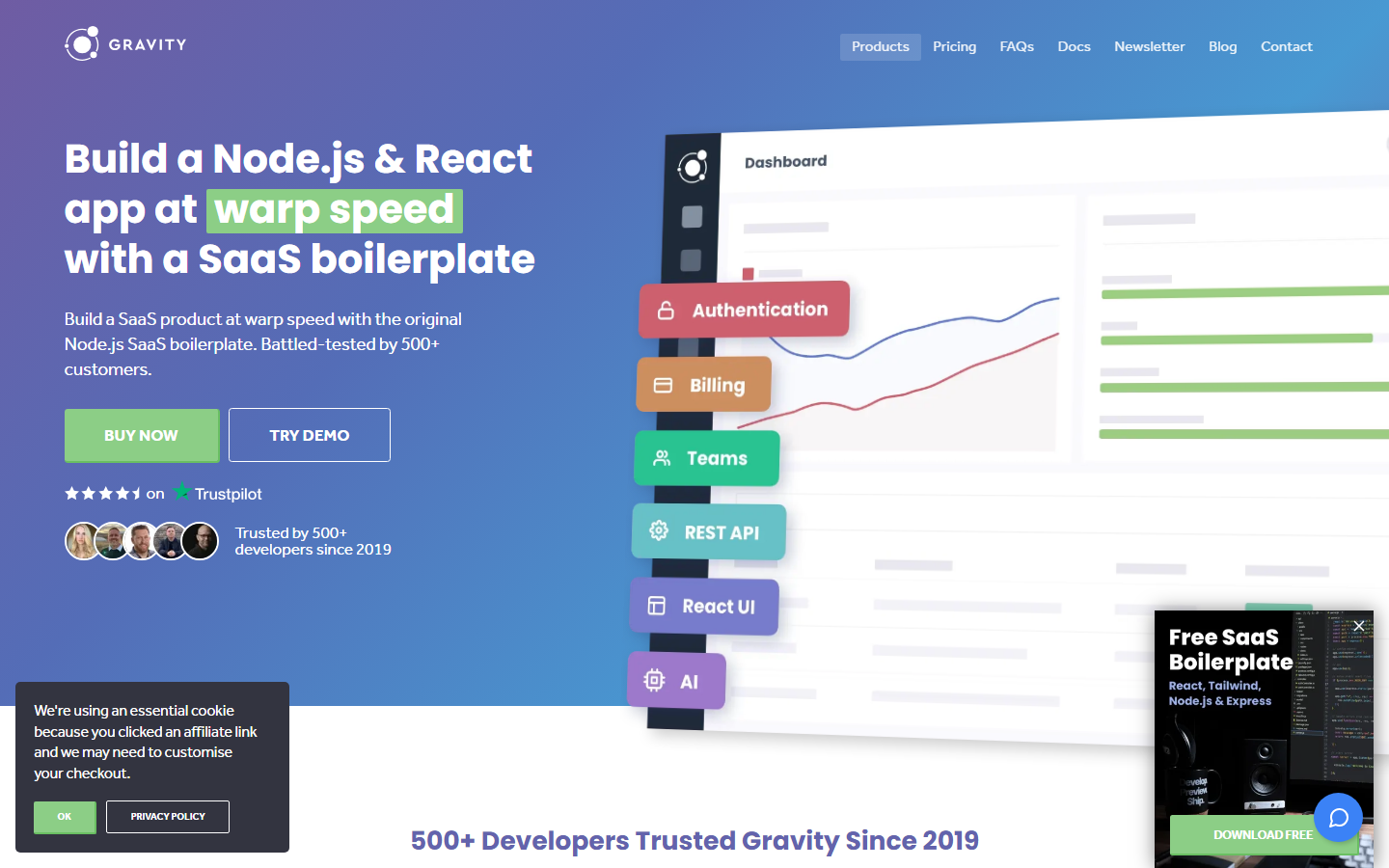
Gravity
Gravity splits a Node.js API from a React frontend rather than shipping a Next.js monolith, which suits developers who want the backend to stand on its own. Pricing starts at $506 and reaches $2,995, the highest in this group and more than triple the $157 median, so it reads as a team or agency purchase rather than a solo one. The listed features cover only auth, payments and AI. Catalog staples such as email, SEO and an admin panel do not appear, so budget time for those.
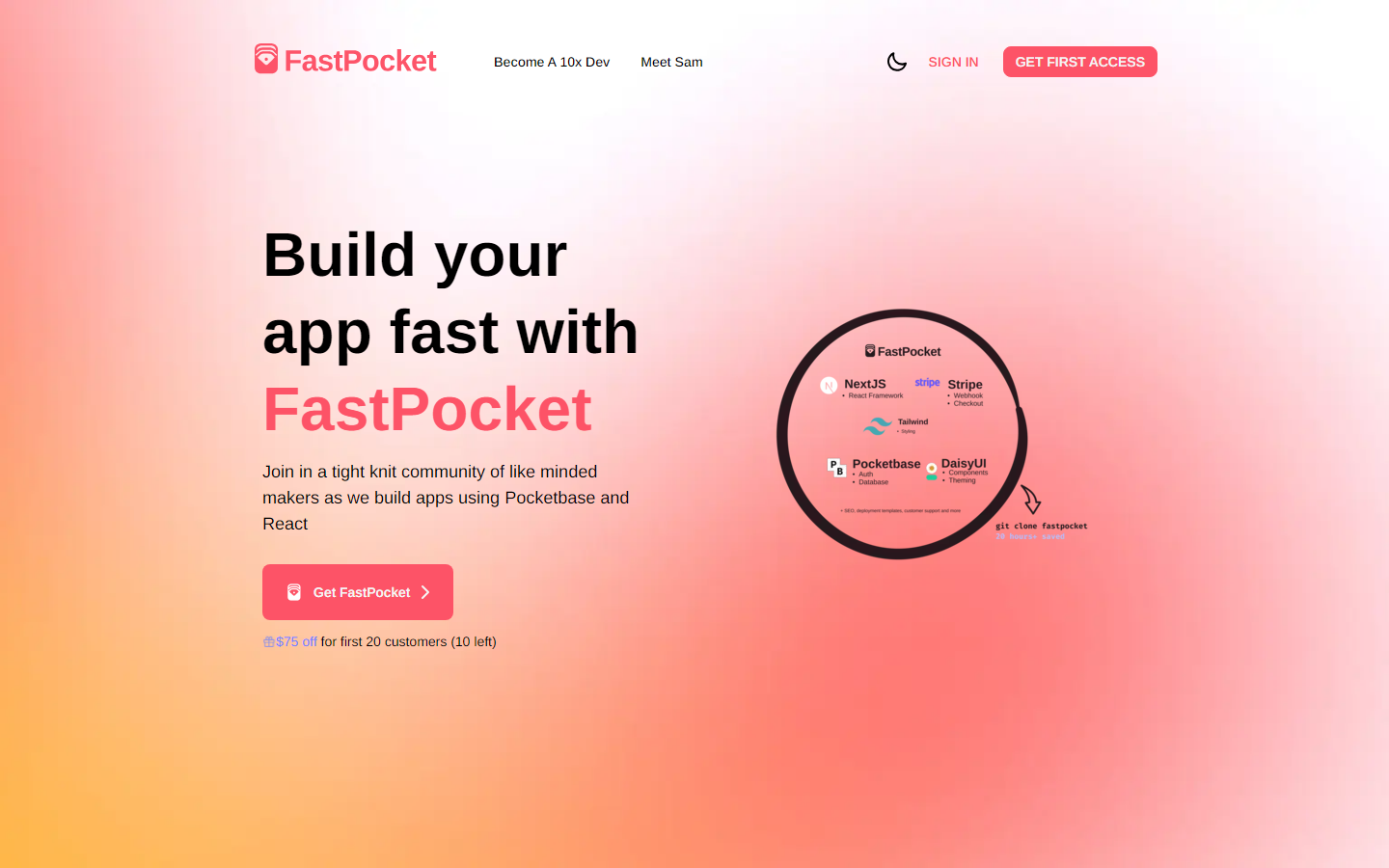
FastPocket
At a flat $55, FastPocket is the cheapest option here, roughly a third of the $157 median. It combines Next.js, Tailwind and DaisyUI with a PocketBase backend and Stripe, a genuinely light setup for developers who would rather run one binary than manage a hosted Postgres. The listed features stop at email and payments. Auth, which appears in 94 catalog entries, is absent from the listing, and PocketBase is uncommon in this catalog where Supabase leads with 27 uses, so you are off the well trodden path.
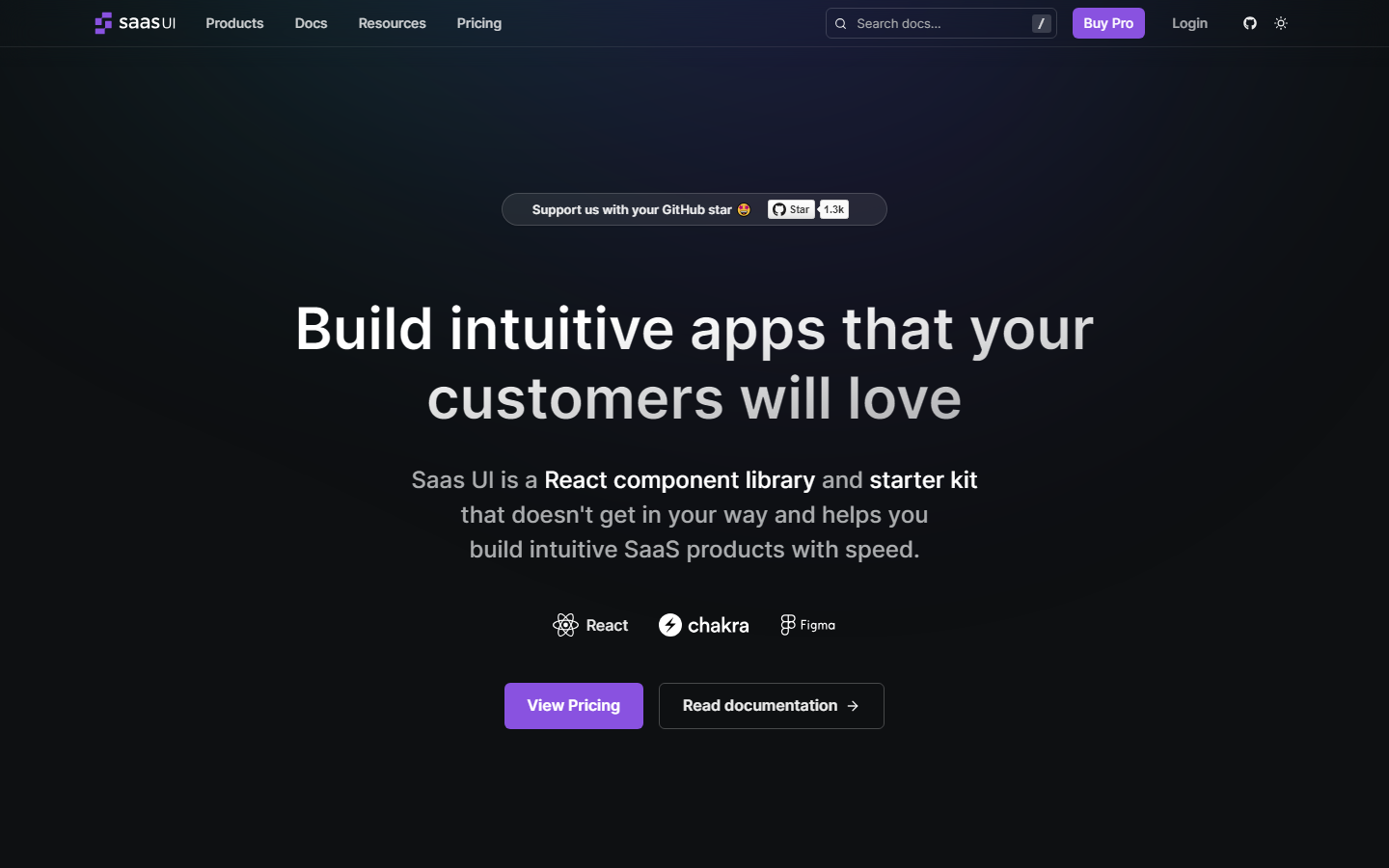
Saas UI
Saas UI is a component toolkit rather than a full application: 40 plus React components built on Chakra, production templates and a matching Figma design system, useful for developers who already have a backend and need the interface. Licenses range from $49 to $799, so the entry point undercuts the $157 median considerably while the top tier far exceeds it. The catch is scope. Auth, payments and database, the three most common features in this catalog, are not listed, making this the front end half of a boilerplate.
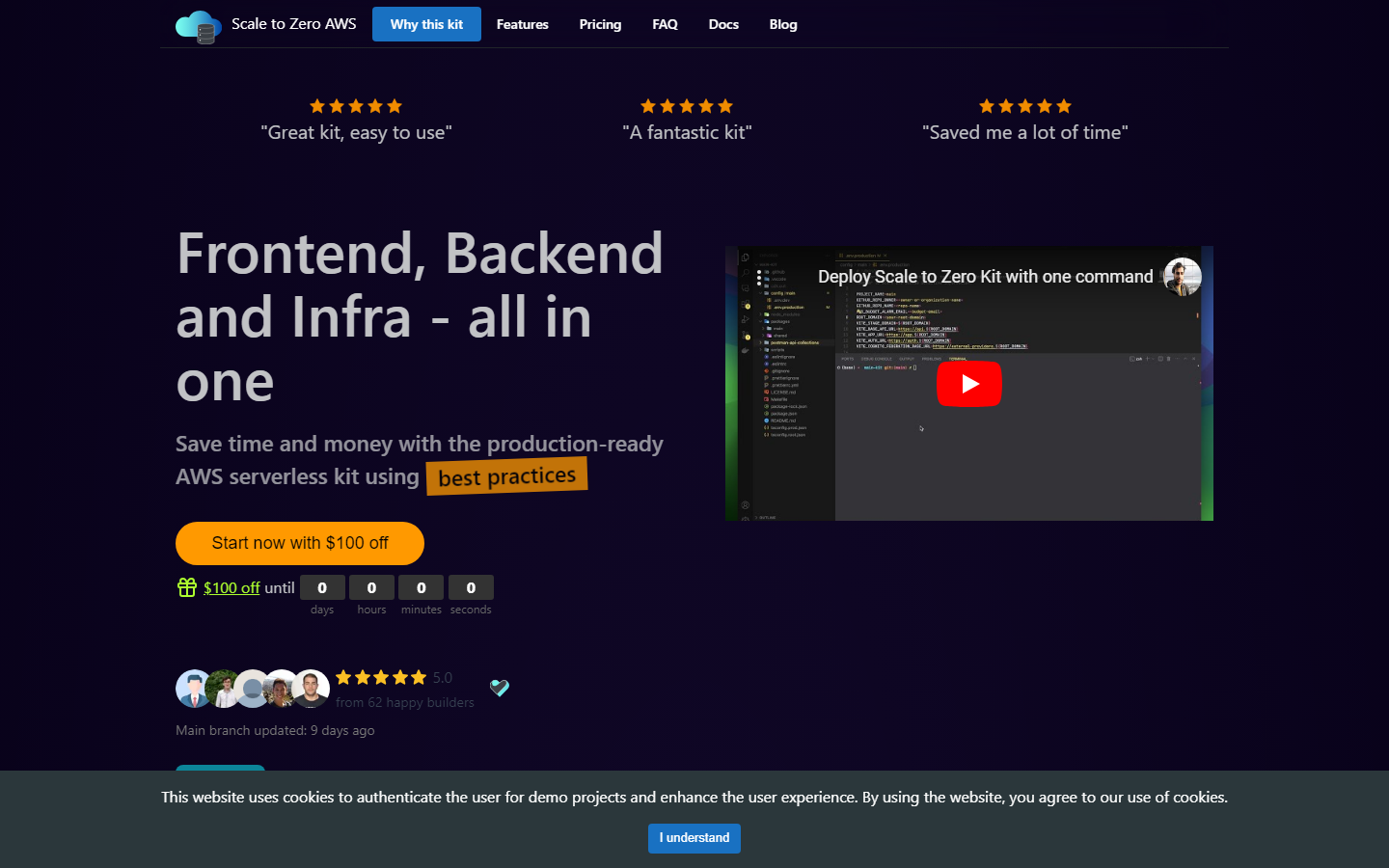
Scale to Zero AWS
Infrastructure led rather than UI led: a serverless AWS boilerplate with React and TypeScript on top, CI/CD pipelines, and a cost model that idles at zero. It suits developers who want to own their cloud account instead of leaning on a managed Postgres host. The feature list is unusually broad for the price, covering Auth, Blog, Database, Email, and Payments across $80 to $120, roughly half the $157 median. The catch is operational: AWS specific architecture means the setup does not port elsewhere, and no Admin Panel is included.
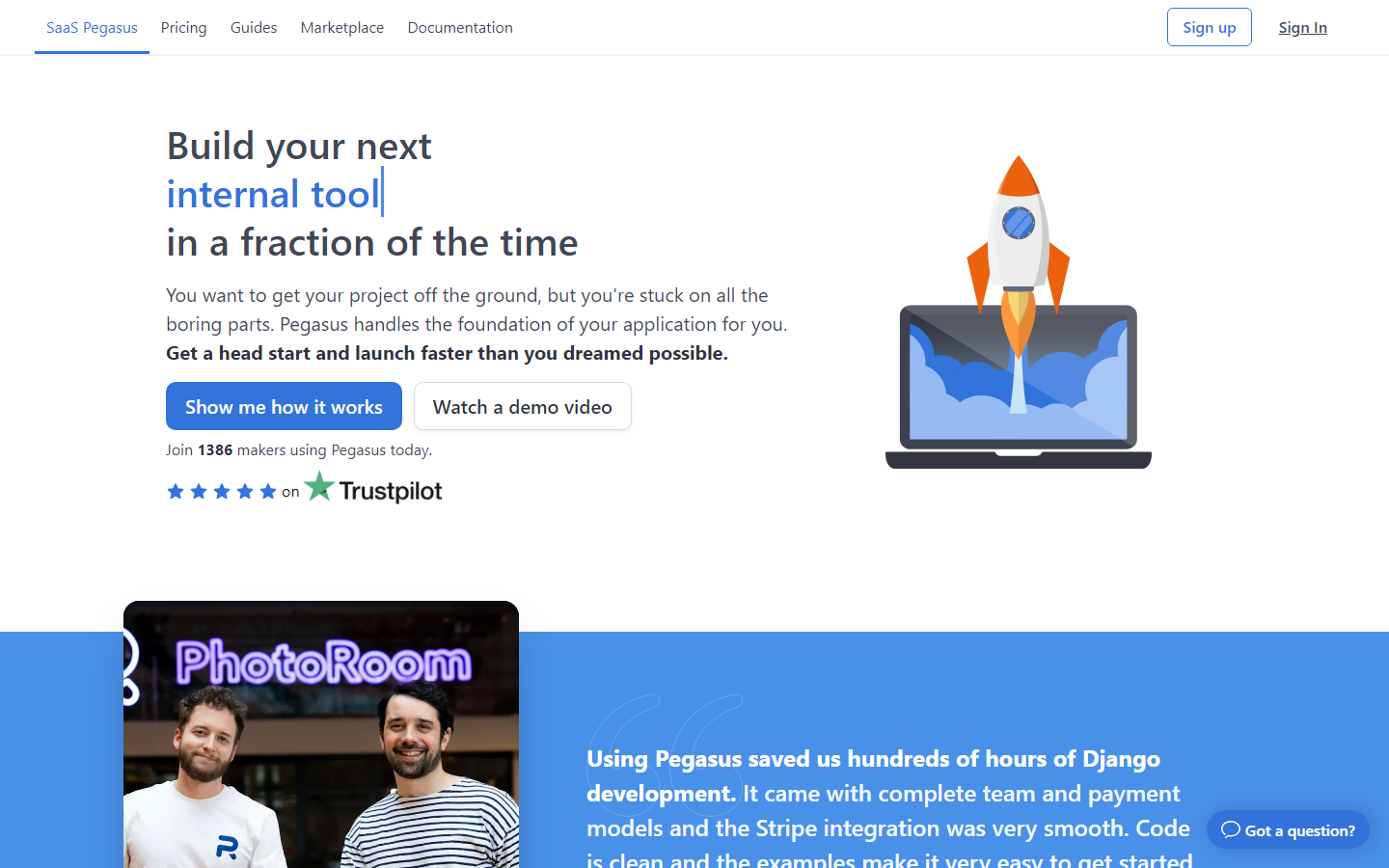
SaaS Pegasus
Django with Python underneath, offering a choice of React or HTMX on the front end and Tailwind, Bootstrap, or Bulma for styling. Teams, user accounts, Stripe billing, a CMS, and AI features come prebuilt, which makes it a serious option for developers who prefer a batteries included backend framework over a JavaScript runtime. Pricing of $249 to $999 is a clear premium over the $157 median, and the upper tiers are among the highest here. Python is the requirement to weigh: nothing carries over if your team is JavaScript only.
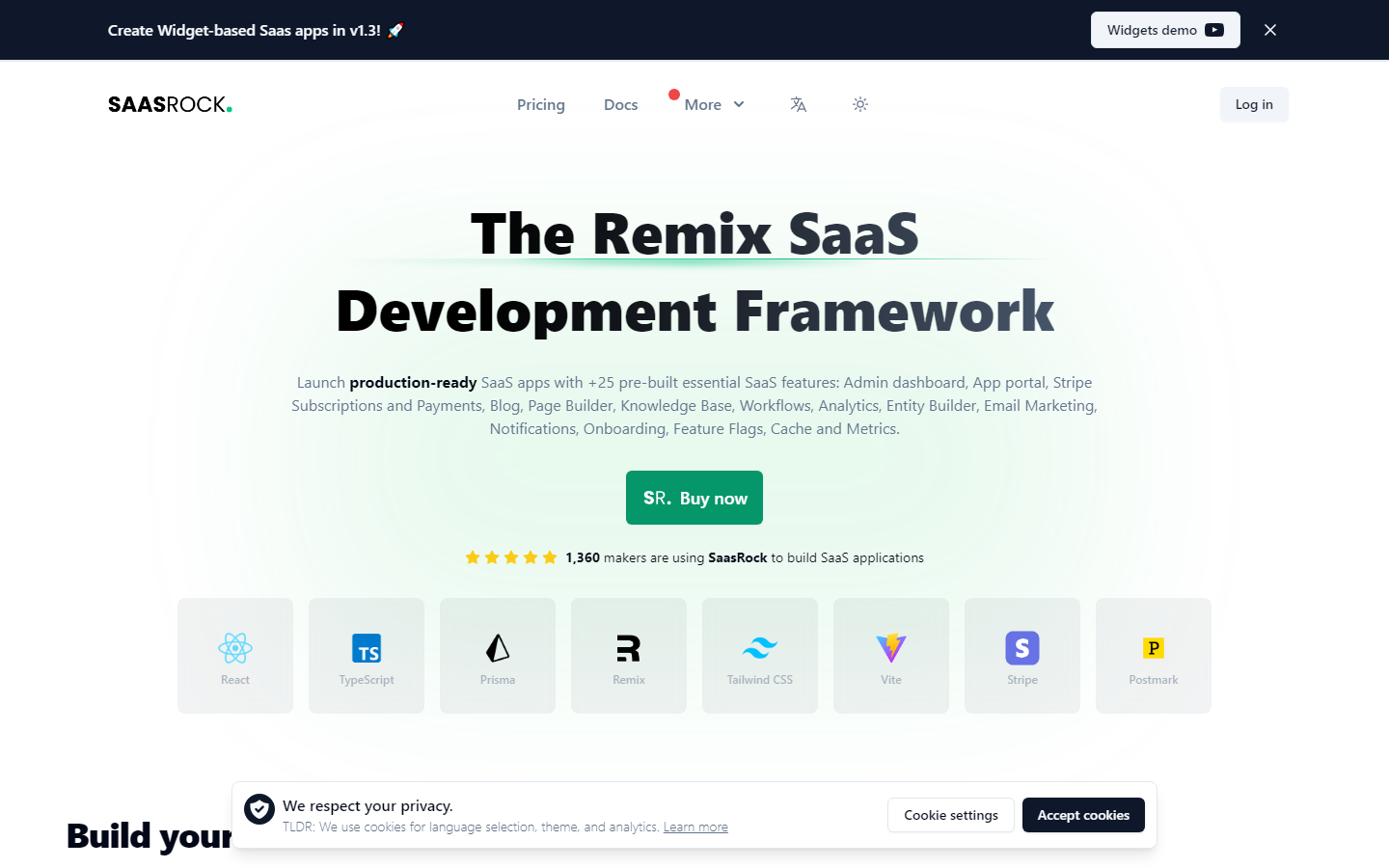
SaasRock
Aimed squarely at B2B SaaS, this Remix and Prisma boilerplate ships separate admin and app portals, a page builder, Stripe billing, and over 25 prebuilt features. TypeScript and Tailwind keep it familiar to React developers even though Remix itself is a rare choice in this catalog. Entry pricing of $149 sits just under the $157 median, but the range extends to $1999, the top of anything listed here, so feature parity depends heavily on tier. Remix lock-in is the structural bet you are making.
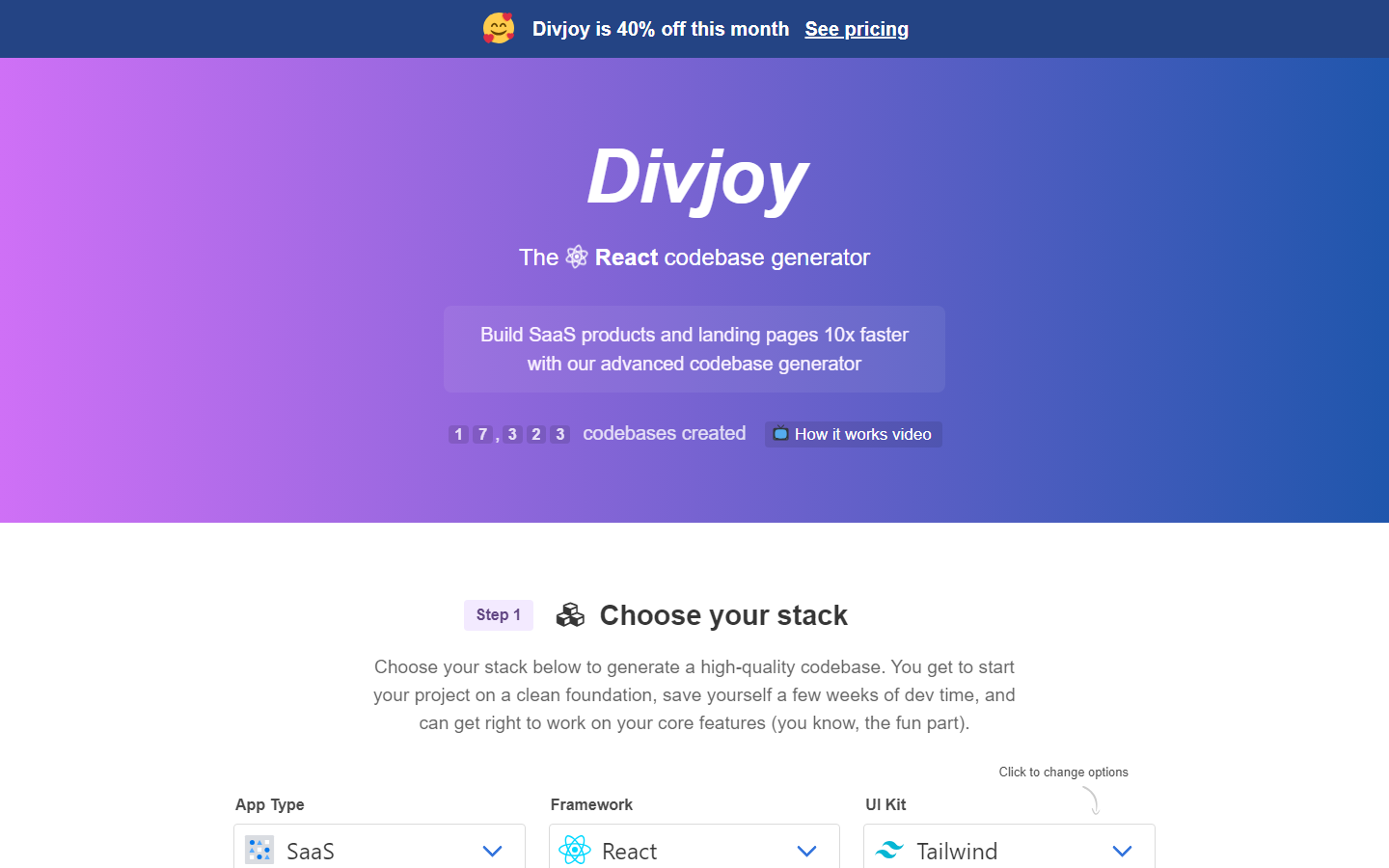
Divjoy
Divjoy takes a generator approach: you pick a framework, UI kit, and integrations, then export a React codebase with auth, billing, and analytics already connected. That suits developers who want to make stack decisions once through a UI instead of reading setup docs. At a flat $199 it carries a modest premium over the $157 median. Listed features stop at Auth, Billing, and Payments, with no Database, Email, or Admin Panel included, so expect to wire persistence and transactional mail in after the initial export.
NextBase
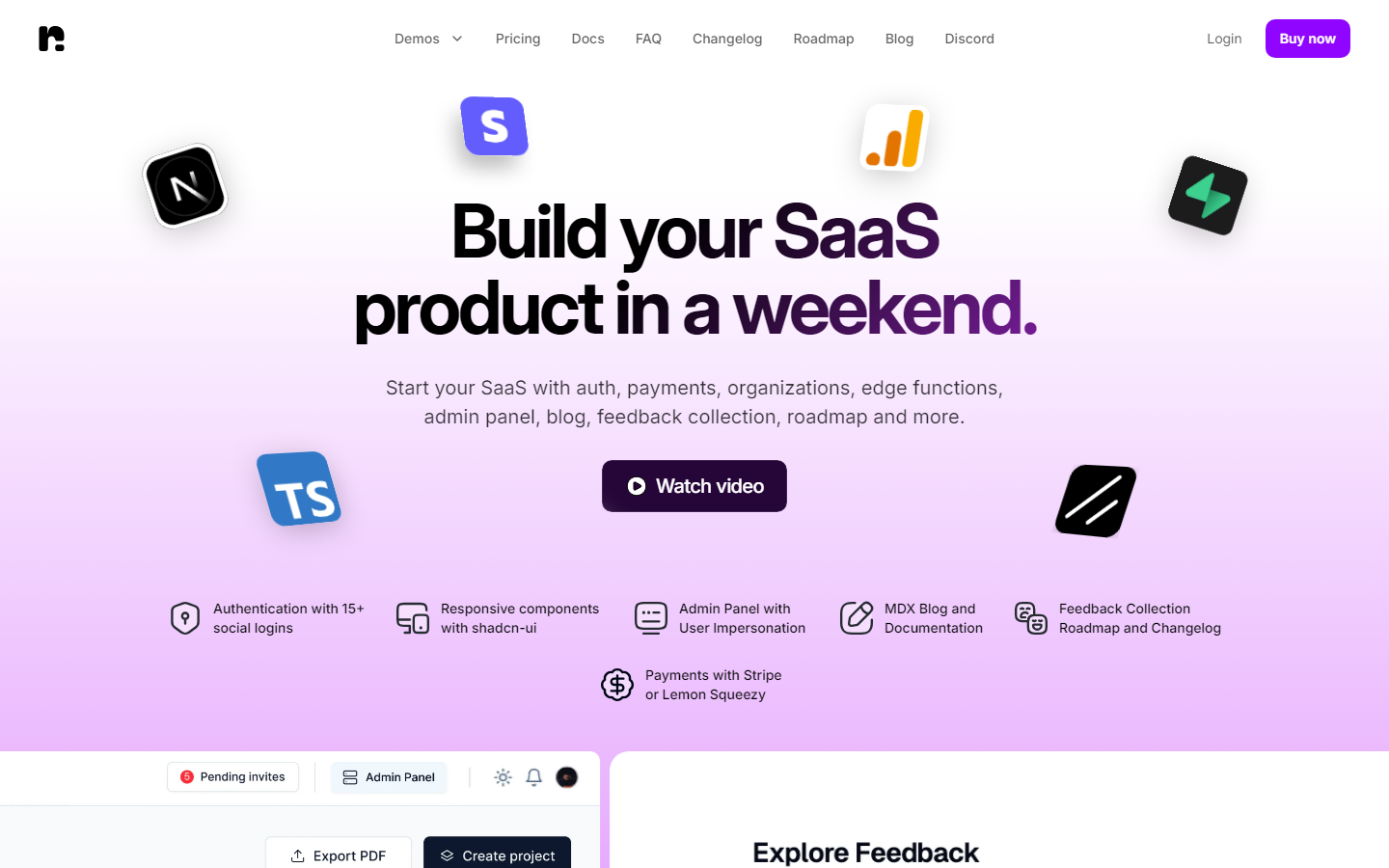
This one runs the catalog default stack end to end: NextJS, React, TypeScript, Tailwind, and Supabase, with an admin panel and payments included plus documentation as a listed feature. If your team already works in that combination, onboarding cost is low. The $99 to $399 spread means the entry tier undercuts the $157 median while the top tier roughly doubles it, so compare tiers carefully before buying. Email is not in the feature list despite appearing in 38 other listings, so transactional messaging needs its own integration.
Paralect Ship
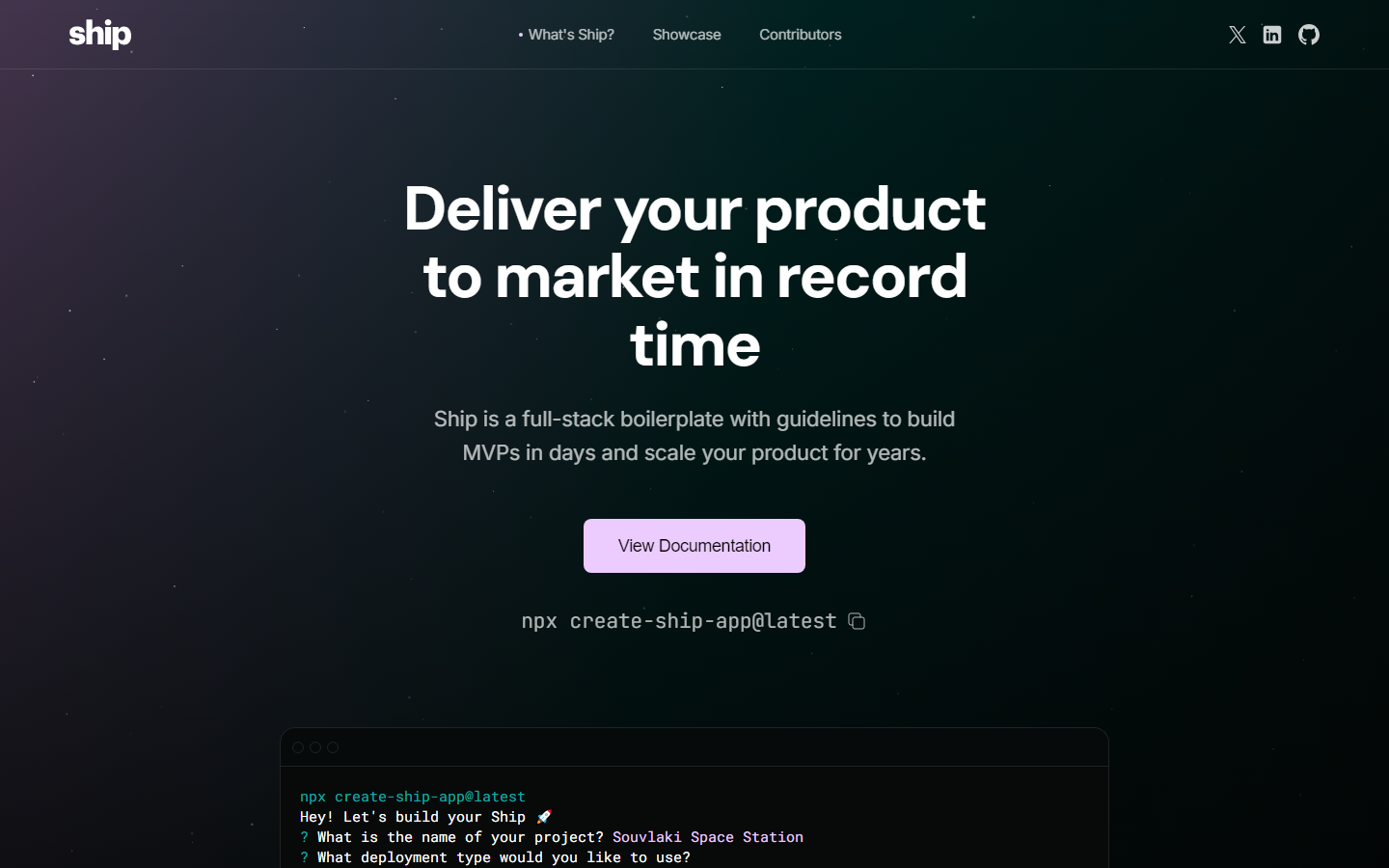
Free and open, Ship pairs NextJS and React with MongoDB and a microservices layout, plus CI/CD out of the box. The vendor cites use across 100 or more live products, and the architecture leans toward projects expected to grow past a single service. Zero cost against a $157 median makes it an easy thing to evaluate before committing money elsewhere. Two caveats: Auth and Payments are not in its listed features despite being near universal in this catalog, and MongoDB diverges from the Postgres and Supabase norm here.
MakerKit
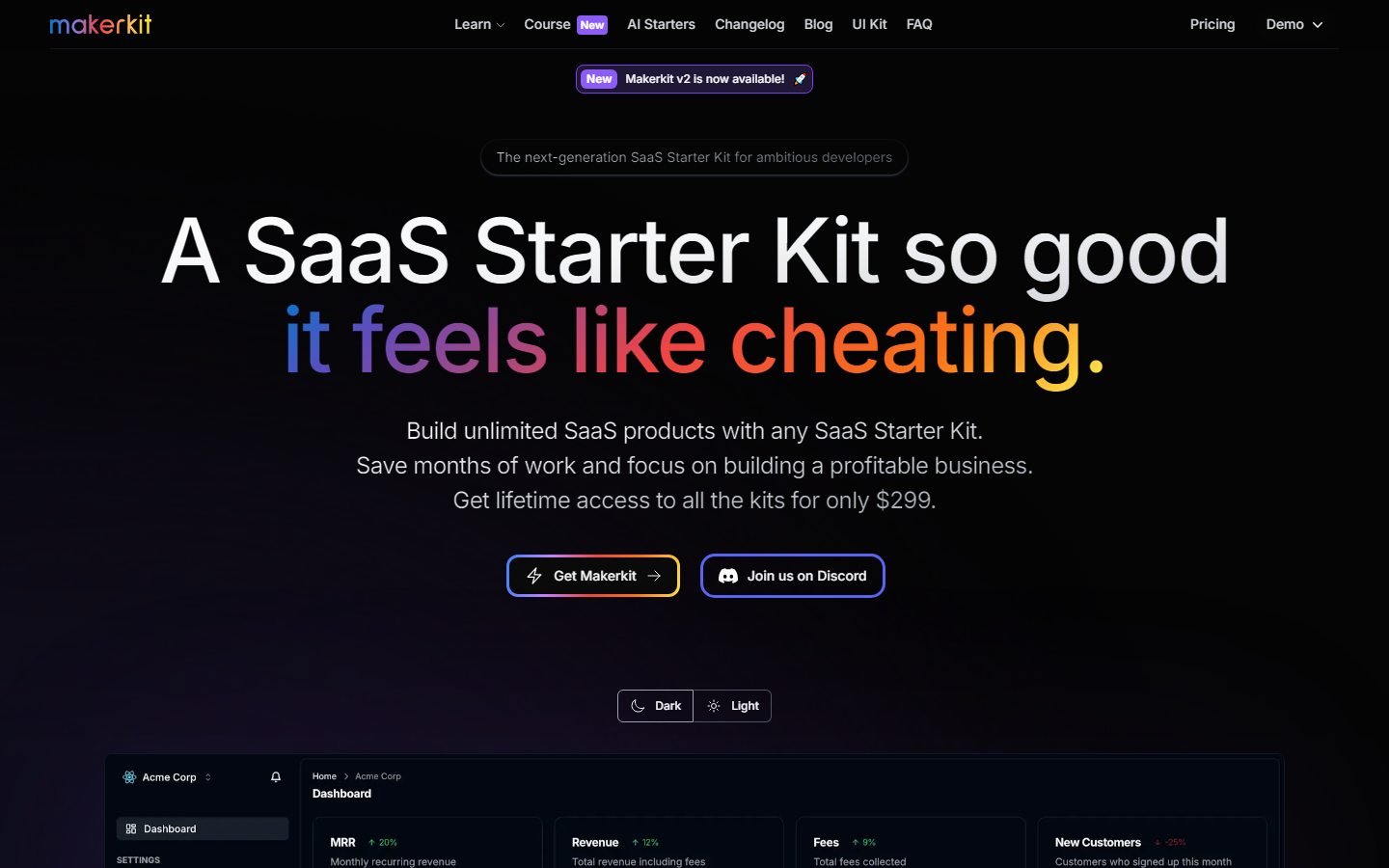
Multi-tenancy is the differentiator: a production-grade NextJS and Supabase foundation, also available for Remix, covering teams, roles, Stripe billing, admin panel, documentation and a plugin system. That B2B focus explains the $299 to $599 range, roughly two to four times the $157 median and among the pricier options here. Documentation and plugins suggest it expects long-lived projects rather than weekend launches. The tradeoff is cost and complexity: if you are shipping a single-tenant consumer tool, you pay a premium for tenancy machinery you will not use.
SlimSaaS
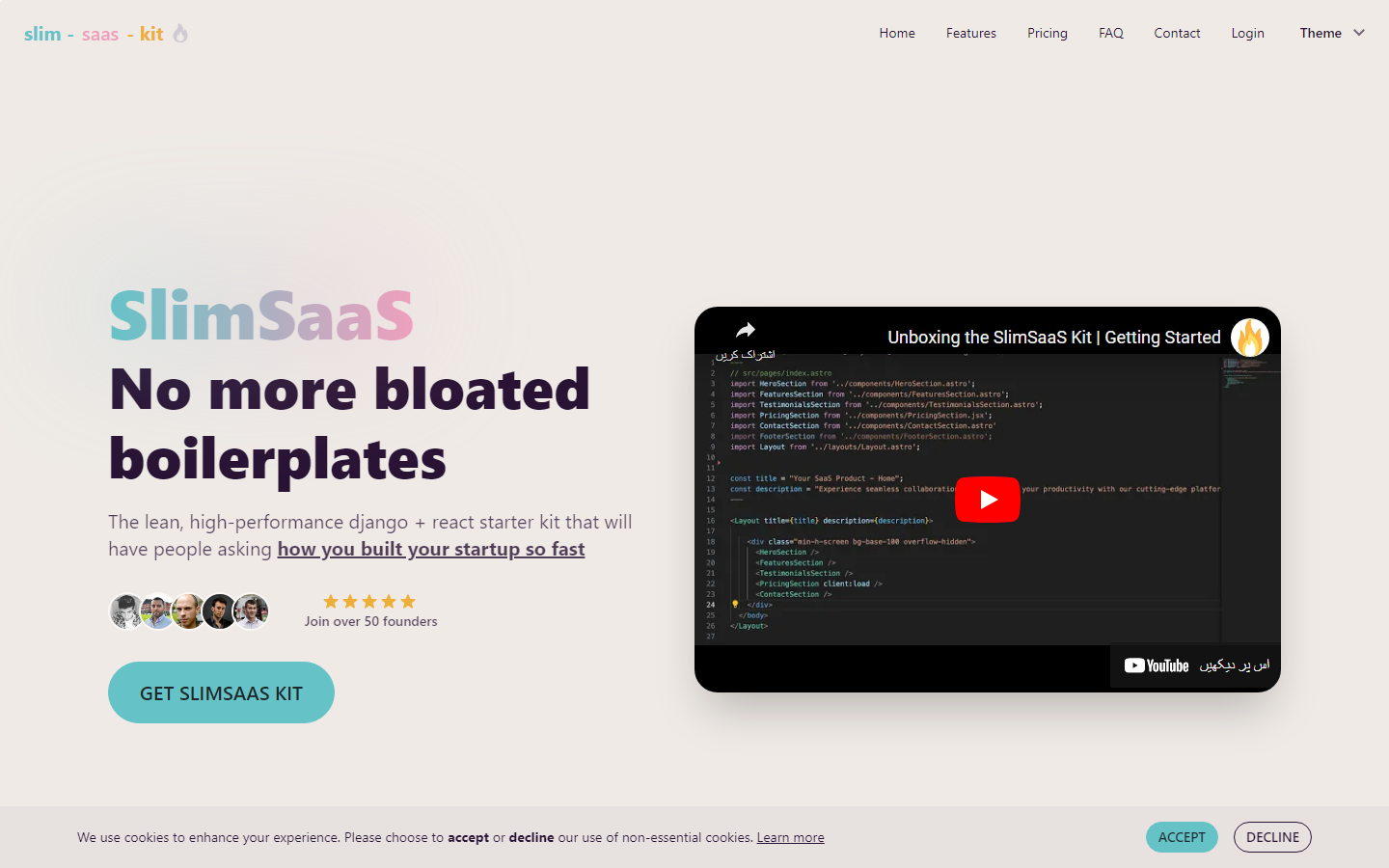
Django on the backend with React on the front is the appeal, aimed at Python teams who do not want to move to a JavaScript server runtime. Auth, Stripe payments, Resend email, documentation and a component library plus marketing site are included. Pricing of $169 to $199 runs a little above the $157 median. Because the catalog skews heavily NextJS, this is a deliberate outlier: no admin panel, AI or SEO tooling is listed, so you trade some out-of-the-box breadth for staying in Python.
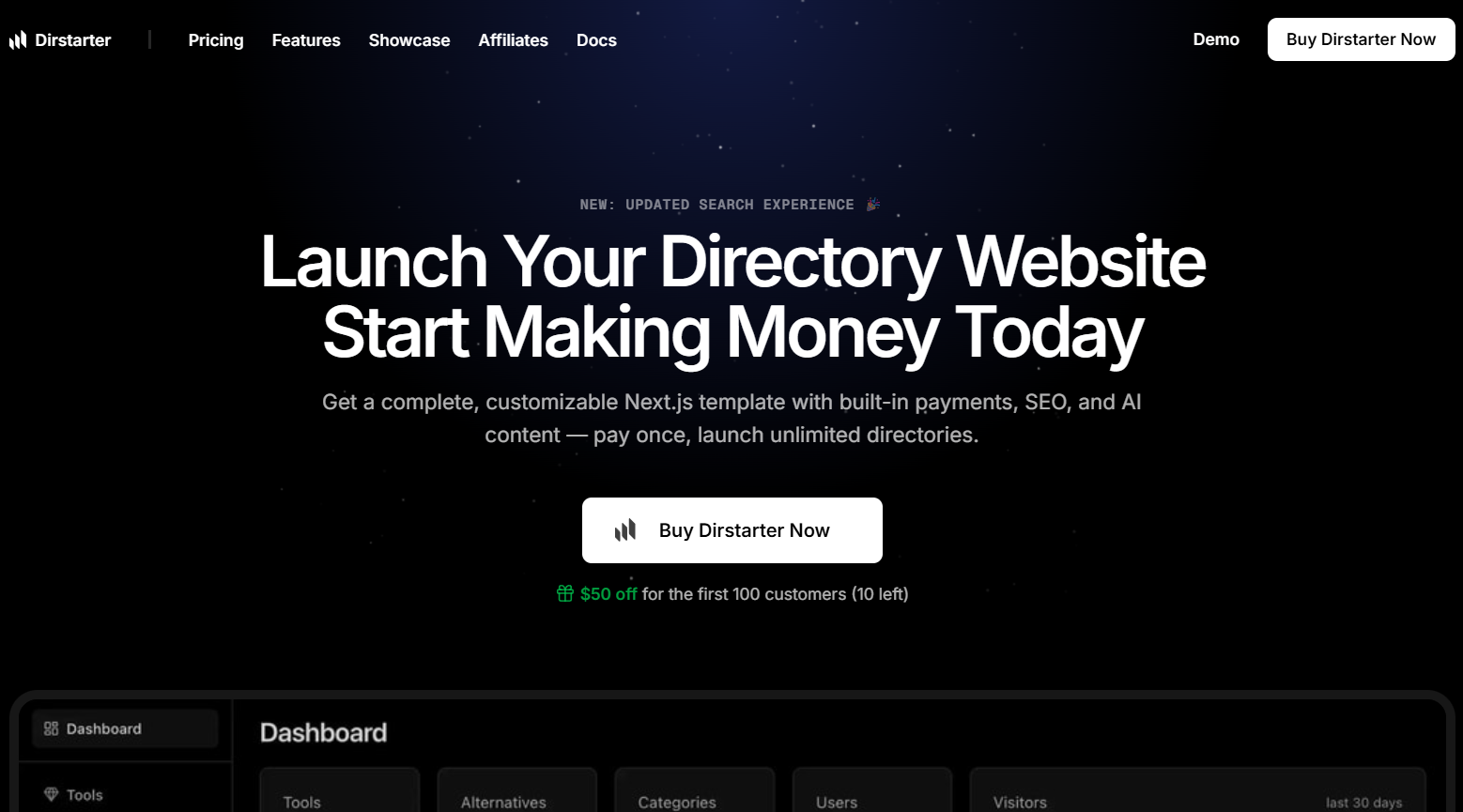
Dirstarter
Another directory-focused NextJS build, using React, TypeScript, Tailwind, Prisma and Stripe, with AI-assisted content generation, analytics and SEO included under a pay-once license covering unlimited directories. At $159 to $199 it starts right at the $157 median and stays reasonable at the top tier. The unlimited-sites term matters if you plan several niche directories rather than one. Feature-wise it is leaner than some rivals: no auth, database or email appear in the listing, so account handling and transactional mail need attention early.

Agentic Boilerplate
A Next.js SaaS starter that ships only the services you pick, plus the AGENTS.md, rules, skills and subagents your coding agent needs to work in it.
How to choose a React boilerplate
Decide first whether you need a full stack framework or a client application. Most kits in this category are really NextJS or Remix kits, which give you server rendering, API routes and a deployment story out of the box. A pure React and Vite starter is lighter and faster in development, but you supply your own backend, which means auth, billing webhooks and email land on you.
Look closely at the auth provider. Supabase and Clerk are the common choices and both are quick to start with, but they shape your user model, session handling and pricing as you grow. Self hosted options like Auth.js keep costs flat and put maintenance on your side.
Finally, check what the UI layer actually is. Shadcn based kits give you components you own and can edit freely, while kits built on a component library tie you to that library's design decisions and upgrade path.
Frequently Asked Questions
What is the difference between a React boilerplate and a Next.js boilerplate?
A React boilerplate is typically a client-side rendered (SPA) application, while a Next.js boilerplate adds server-side rendering, API routes, and a file-based routing system on top of React. For SEO-heavy SaaS products, Next.js is usually the better choice. For highly interactive dashboards or internal tools, a React SPA may work better.
Do React SaaS boilerplates include authentication?
Yes. Most React SaaS boilerplates include authentication via Firebase Auth, Supabase Auth, Auth0, or custom JWT implementations. Check the auth filter above to find boilerplates with pre-built login, signup, and OAuth flows.
What backend do React SaaS boilerplates use?
React SaaS boilerplates typically pair with Node.js/Express, Firebase, Supabase, or a serverless API layer. Some use a full BaaS (backend as a service) like Supabase or Firebase to avoid building a backend entirely. Filter by your preferred backend technology above.