
Best Prisma SaaS Boilerplates (2026)
Prisma is the most popular TypeScript-first ORM for Node.js, offering a type-safe database client, an intuitive schema language, and powerful migration tooling. SaaS boilerplates built on Prisma come with a fully typed database layer out of the box — every query is checked at compile time, making refactoring safe and IDE autocomplete precise. The Prisma boilerplates listed here pair with Next.js, SvelteKit, or Remix, and support PostgreSQL, MySQL, SQLite, and MongoDB.
At a glance: 11 Prisma boilerplates listed, priced from $99 to $349 (median $159). Lowest entry price: Agentic Boilerplate at $99. Most features: Agentic Boilerplate (24 listed). Most often paired with NextJS, Stripe, TypeScript. Updated 2026-10-18.
Quick picks

Agentic Boilerplate
 NextJS
  React
React  TypeScript
  Tailwind
  Drizzle



 Nuxt
Nuxt 


Shipped.club
 Prisma
  NextAuth



 Supabase

DirectoryFast



Dirstarter





LaunchToday
 Expo
Expo  Firebase
MakerKit
 Remix
Remix 



SaasCore


SaasRock

staarter.dev
 Lemon Squeezy
Best SaaS Boilerplates in 2026
BoilerplateHub curates 100+ vetted SaaS boilerplates so you can compare options side by side and pick the one that fits your stack. Whether you need the best Next.js SaaS boilerplate, a Laravel starter kit, a Django SaaS template, or a React Native mobile boilerplate, every listing includes verified pricing, tech stack details, and a full feature breakdown, so you know exactly what you're getting before you buy.
Most Popular SaaS Boilerplates
The most-used SaaS boilerplates are built on Next.js. Options like ShipFast, LaunchFast, and Shipped dominate because Next.js is the default choice for production React apps. For PHP teams, Laravel SaaS boilerplates like Larafast and SaaSykit offer the same batteries-included experience. Python developers lean on SaaS Pegasus, the most mature Django SaaS boilerplate available. And for mobile-first products, React Native and Expo SaaS starter kits let you share auth, billing, and API logic across iOS and Android from a single codebase.
What Separates Good SaaS Boilerplates from Great Ones
The best SaaS boilerplates go beyond wiring up auth and Stripe. Look for active maintenance: GitHub commits in the last 90 days signal a healthy project. Multi-tenancy support matters if you're building B2B. A built-in blog and landing page saves another week of work. Admin panels, dark mode, and onboarding flows ship products that feel polished from day one. Use the feature filters above to find SaaS boilerplates that match your exact checklist.
Free vs. Paid SaaS Boilerplates
Free SaaS boilerplates on GitHub are a solid starting point, but they often lack documentation, support, and regular updates as frameworks evolve. Paid SaaS boilerplates in the $49–$300 range come with setup guides, author support, and updates that track Next.js, Laravel, and other framework releases. For a production product, the license fee pays back in the first sprint. A developer's time costs far more per hour than a one-time boilerplate purchase.
Prisma Boilerplates Compared
Every boilerplate below is listed in our catalog with verified pricing. We compare by stack fit, included integrations, and price, not by affiliate payout.
| Boilerplate | Price | Auth | Payments | Database | AI | ||
|---|---|---|---|---|---|---|---|
| supastarter | $349 - $1499 | ✓ | ✓ | ✓ | ✓ | ✓ | Review → |
| Shipped.club | $157 - $207 | ✓ | ✓ | – | ✓ | – | Review → |
| LaunchToday | $249 | ✓ | ✓ | – | – | – | Review → |
| SaasRock | $149 - $1999 | ✓ | ✓ | – | – | – | Review → |
| DirectoryFast | $147 - $847 | ✓ | ✓ | ✓ | ✓ | – | Review → |
| staarter.dev | $249 | – | ✓ | ✓ | ✓ | – | Review → |
| MakerKit | $299 - $599 | ✓ | ✓ | – | – | – | Review → |
| SaasCore | $149 | ✓ | ✓ | ✓ | ✓ | – | Review → |
| Achromatic | Free | ✓ | ✓ | ✓ | ✓ | – | Review → |
| Dirstarter | $159 - $199 | – | ✓ | – | – | ✓ | Review → |
| Agentic Boilerplate | $99 | ✓ | ✓ | ✓ | ✓ | ✓ | Review → |
All 11 Prisma Boilerplates
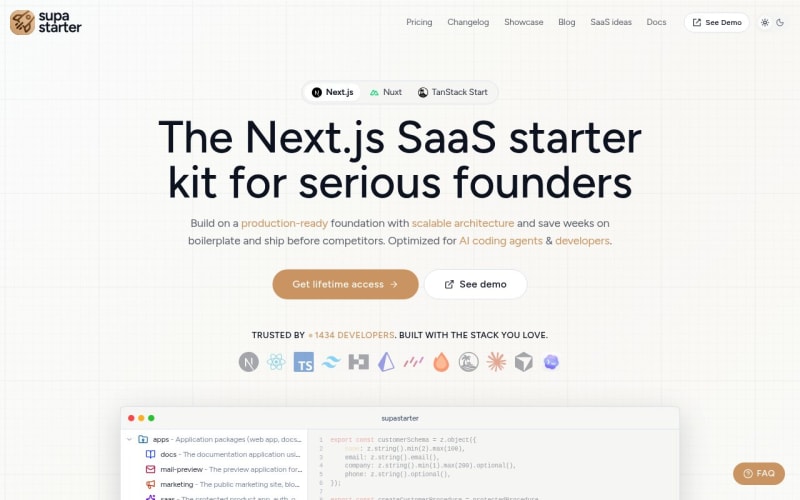
supastarter
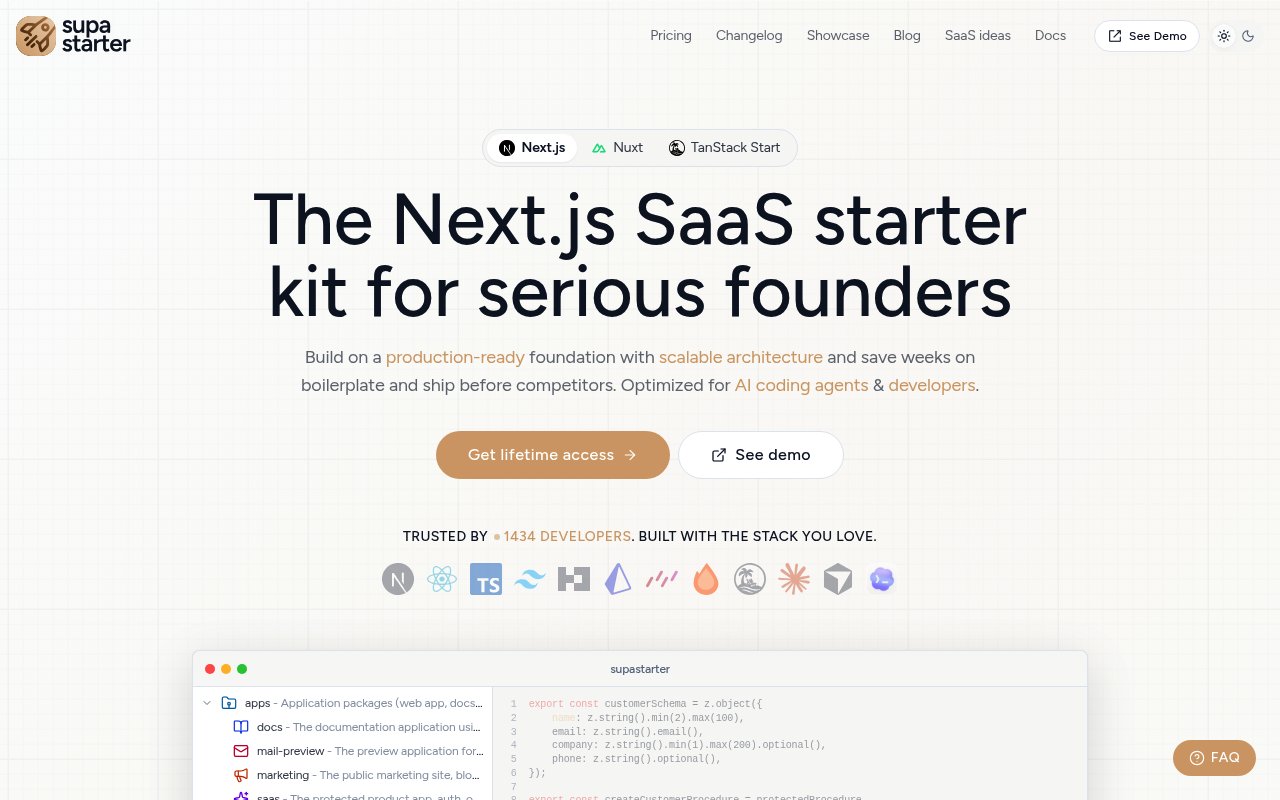
supastarter targets teams building multi-tenant B2B SaaS on Next.js or Nuxt, and it carries the deepest feature list in this group: multi-tenancy, i18n, admin panel, dashboard, user management, blog, documentation and AI on top of the usual auth and payments. At $349 to $1,499 it is the most expensive entry here, more than double the $157 median, so it only pays off if you genuinely need organization accounts, roles and translations. For a single-tenant side project, most of that surface area is weight you will never touch.
Shipped.club
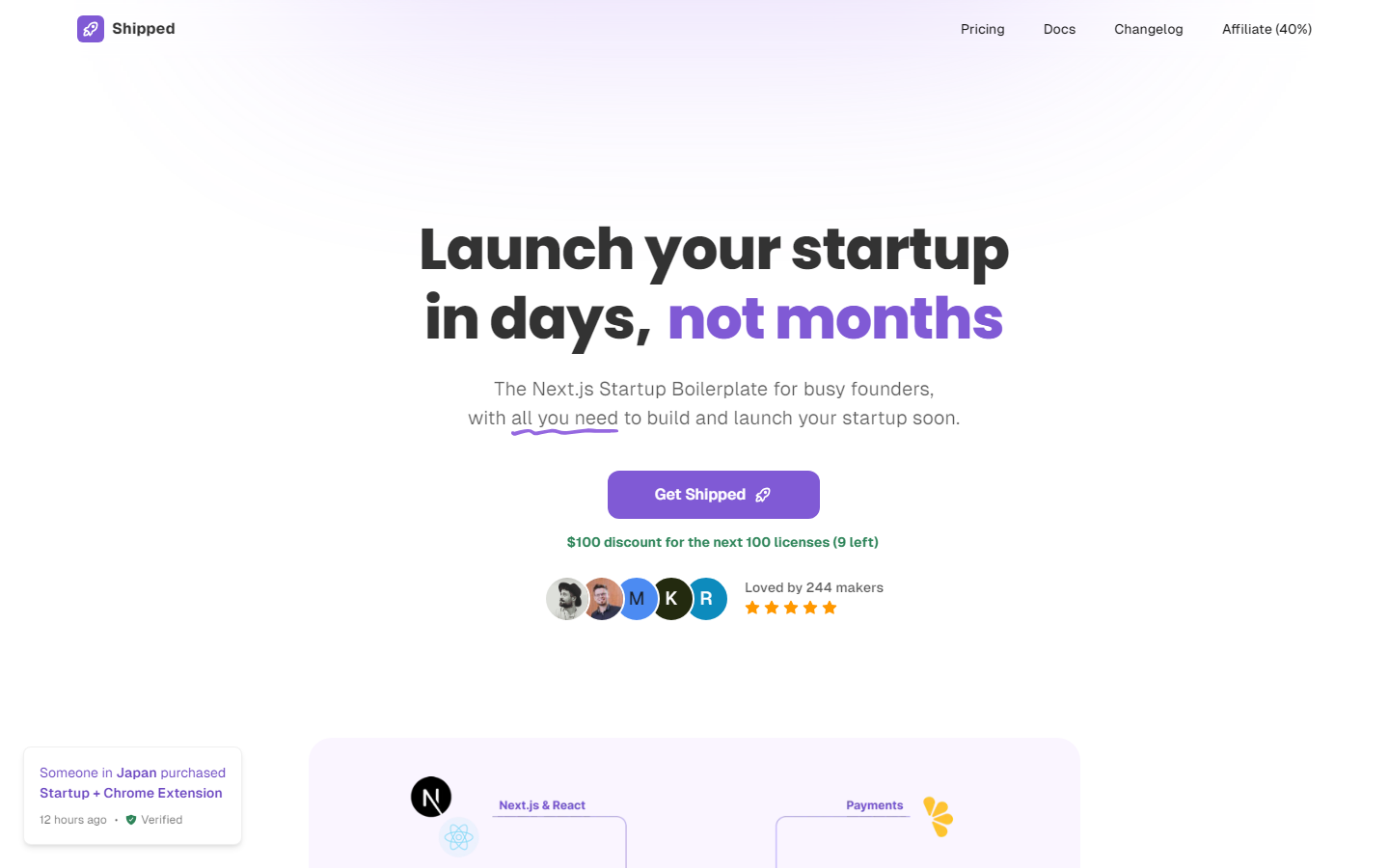
Built around Lemon Squeezy checkout, NextAuth or Supabase authentication and prebuilt landing pages, Shipped.club is a Next.js starter for founders who want a marketing page and a paywall live on day one. At $157 to $207 the entry tier lands exactly on the catalog median, and the Next.js base is the best supported stack in this directory. The listed feature set is thinner than peers at the same price, though: no SEO, analytics or admin panel, all of which are common across the catalog.
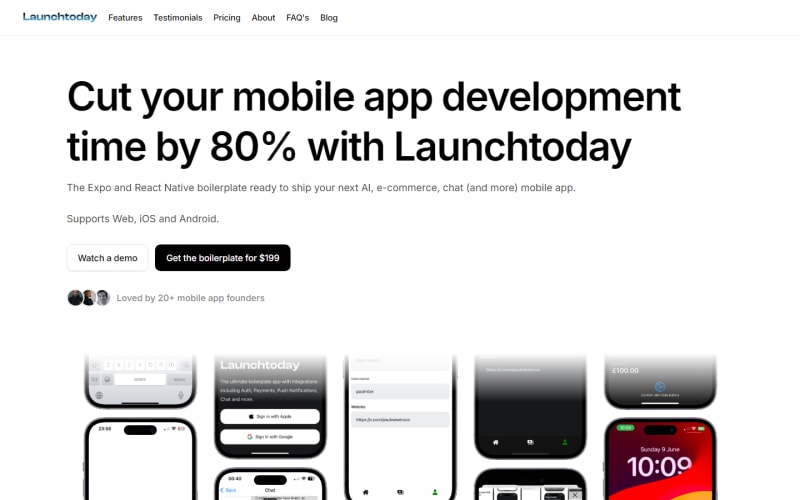
LaunchToday
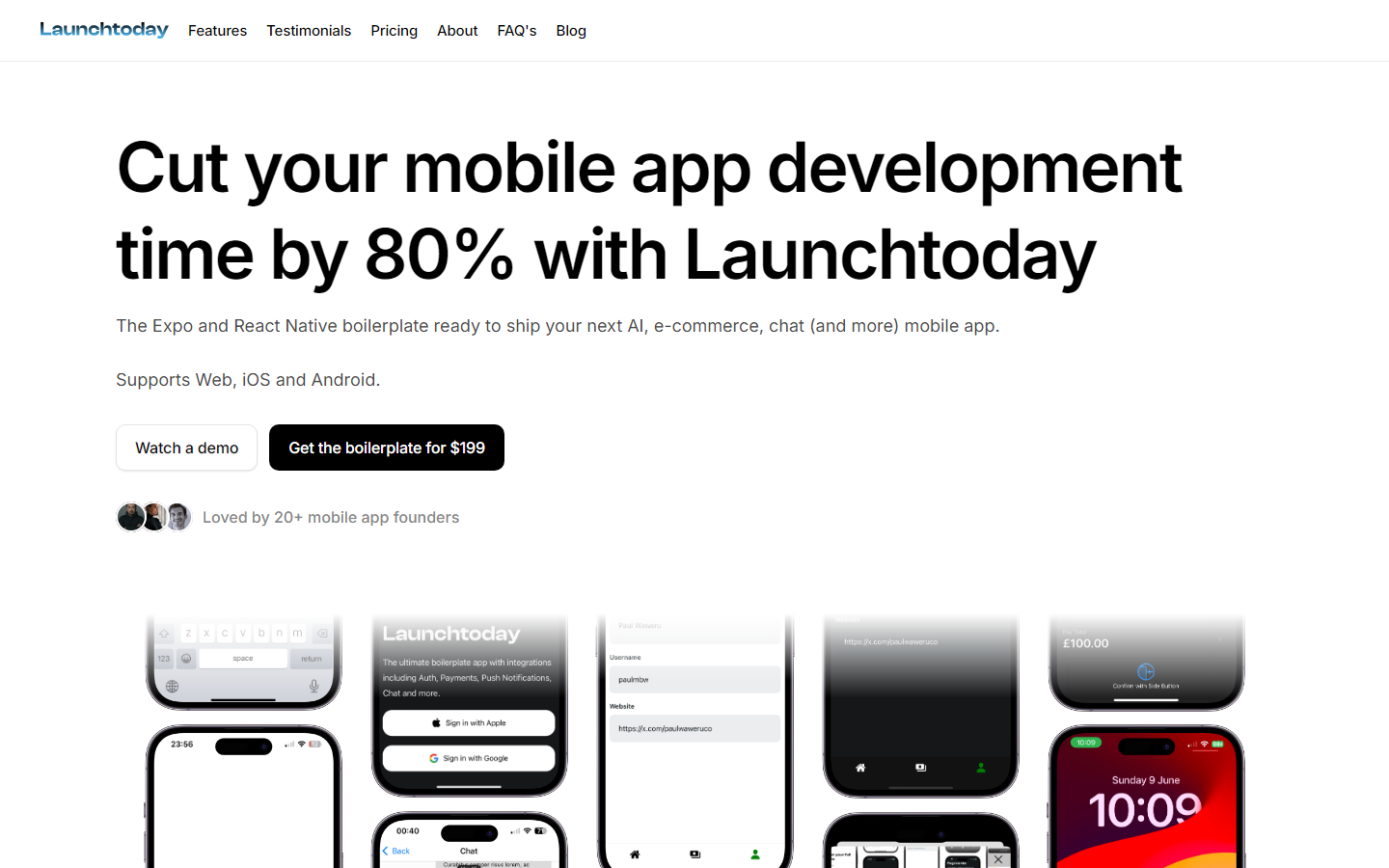
LaunchToday is an Expo and React Native starter with Supabase and Firebase wired in, plus AI, chat and e-commerce pieces, for developers shipping one codebase to both app stores. The flat $249 price sits around 60 percent above the $157 median, which is the cost of cross-platform mobile rather than another Next.js kit. Only auth and payments appear among the listed features, a short set at that price, and with no admin panel or email included, account management and user messaging start from scratch.
SaasRock
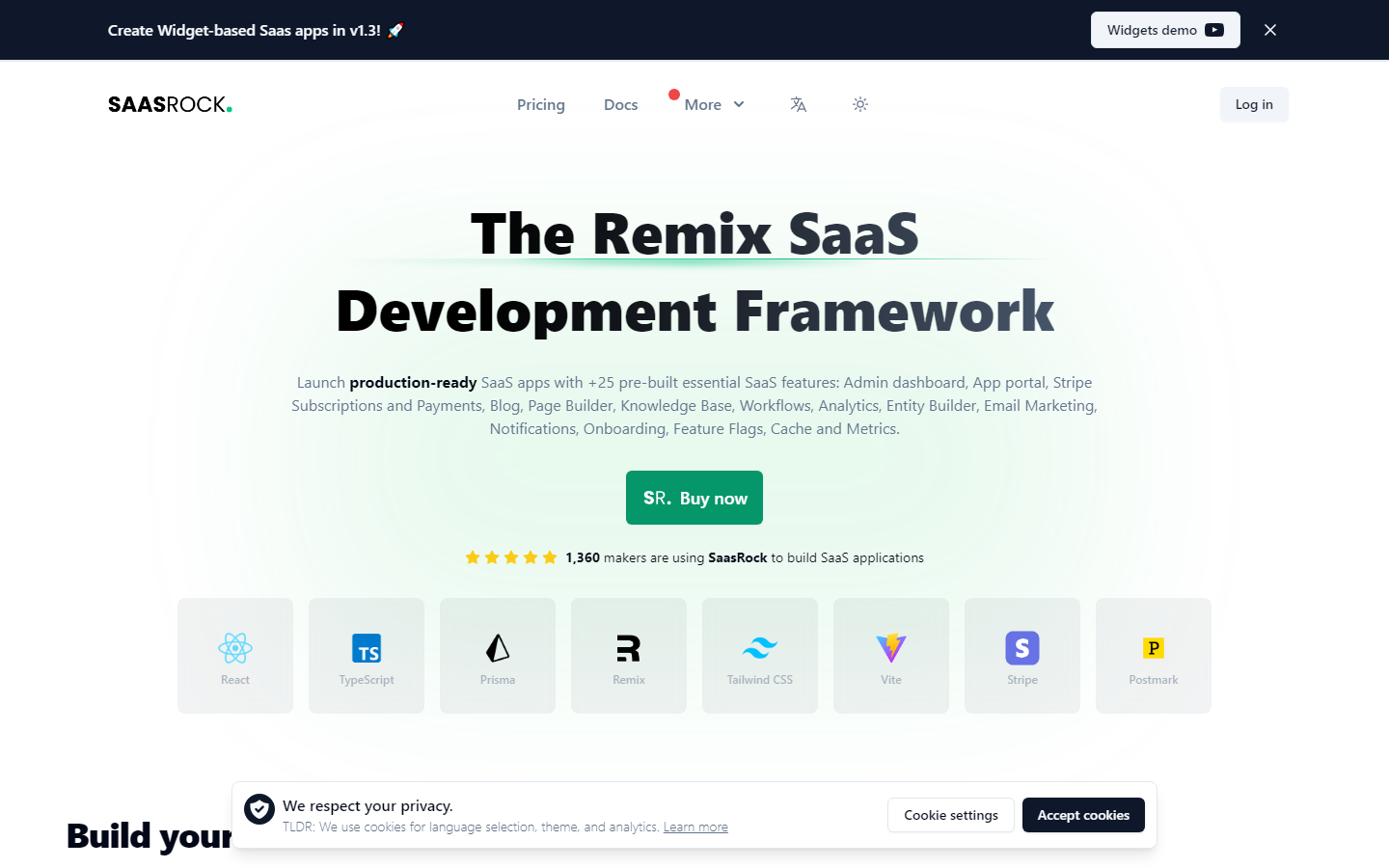
Aimed squarely at B2B SaaS, this Remix and Prisma boilerplate ships separate admin and app portals, a page builder, Stripe billing, and over 25 prebuilt features. TypeScript and Tailwind keep it familiar to React developers even though Remix itself is a rare choice in this catalog. Entry pricing of $149 sits just under the $157 median, but the range extends to $1999, the top of anything listed here, so feature parity depends heavily on tier. Remix lock-in is the structural bet you are making.
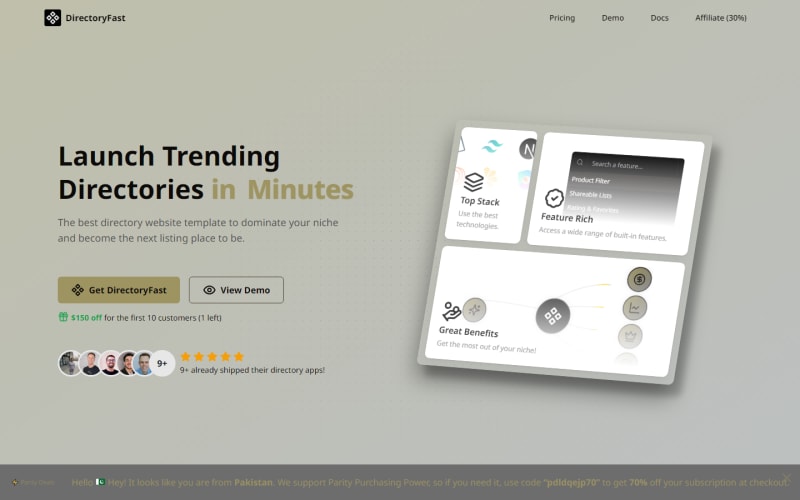
DirectoryFast
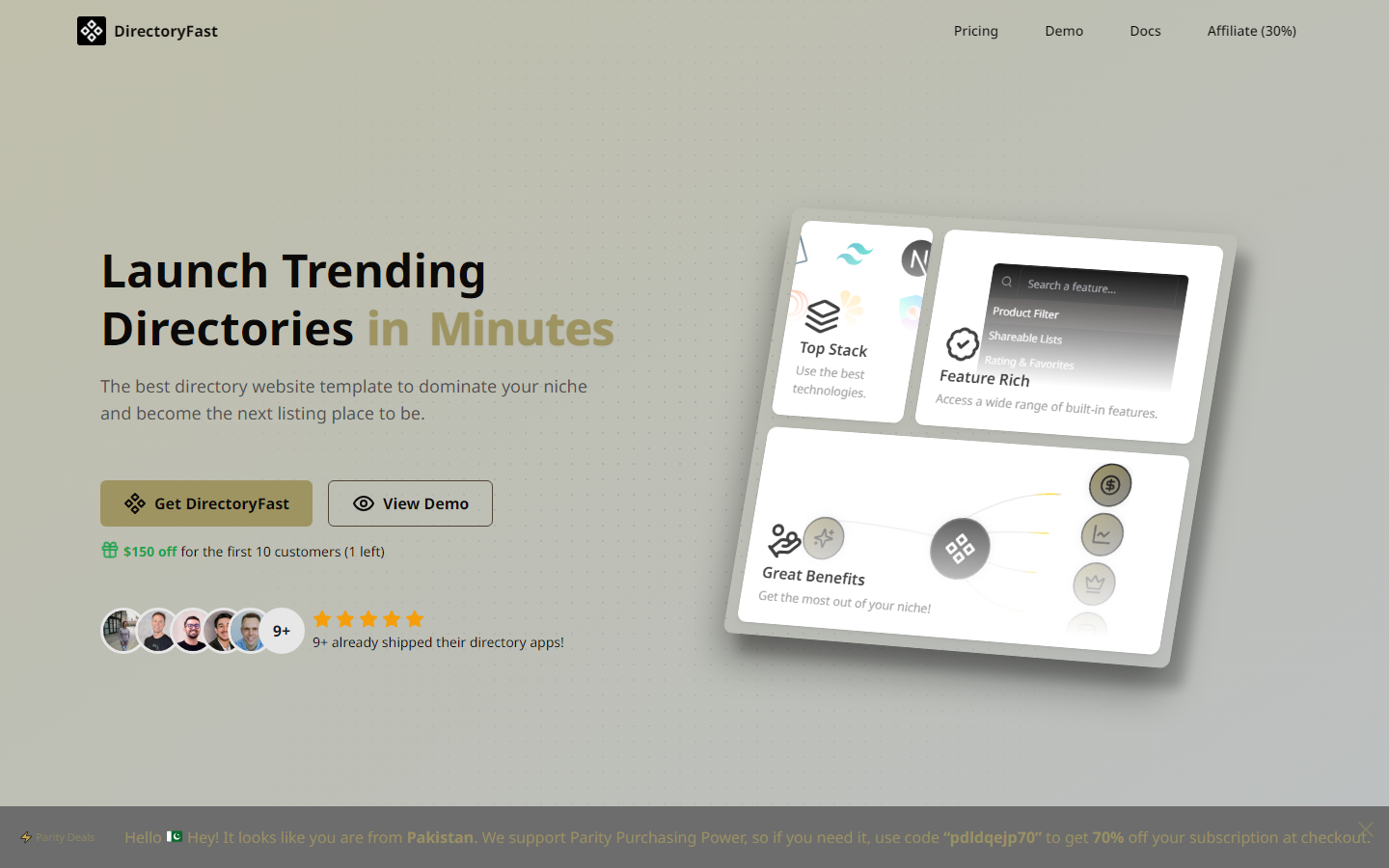
Directory sites are the whole point here, built on NextJS, TypeScript, Tailwind and Prisma with an admin panel, submissions flow, SEO and Stripe-style payments already wired. The listed feature set is one of the broadest in the catalog: auth, dashboard, database, email, payments and SEO all present. Pricing spans $147 to $847, so the entry tier undercuts the $157 median while the top tier is among the most expensive listings anywhere in the directory. Value depends entirely on your building directories repeatedly rather than one general-purpose SaaS.
staarter.dev
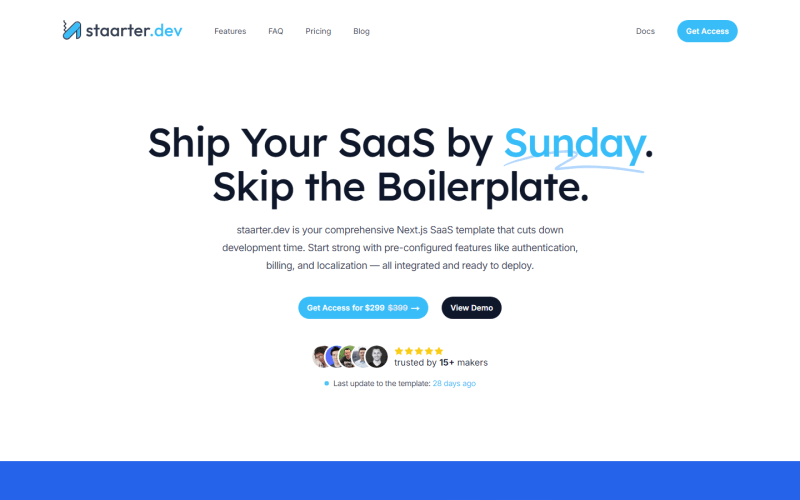
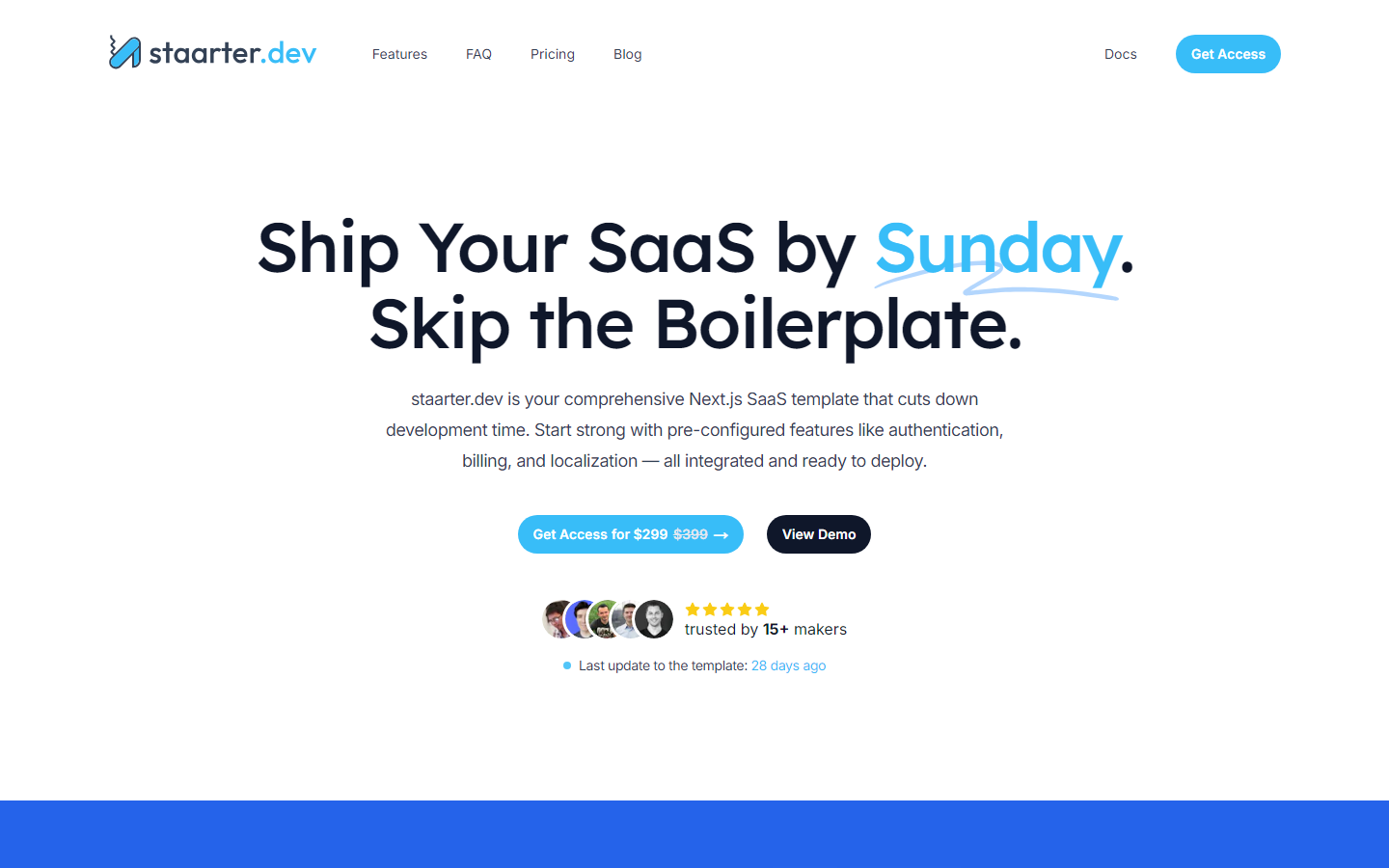
Positioned as a comprehensive NextJS and TypeScript SaaS template with three billing providers supported out of the box, Stripe, Paddle and LemonSqueezy, plus localization, blog, database, email, storage and SEO. Flat $249 pricing is roughly 60 percent above the $157 median, which you are paying for breadth rather than niche focus. Multi-provider billing genuinely matters if you sell internationally. The gap: no admin panel appears in the listed features, so internal tooling for support and account management is on you once real customers arrive.
MakerKit
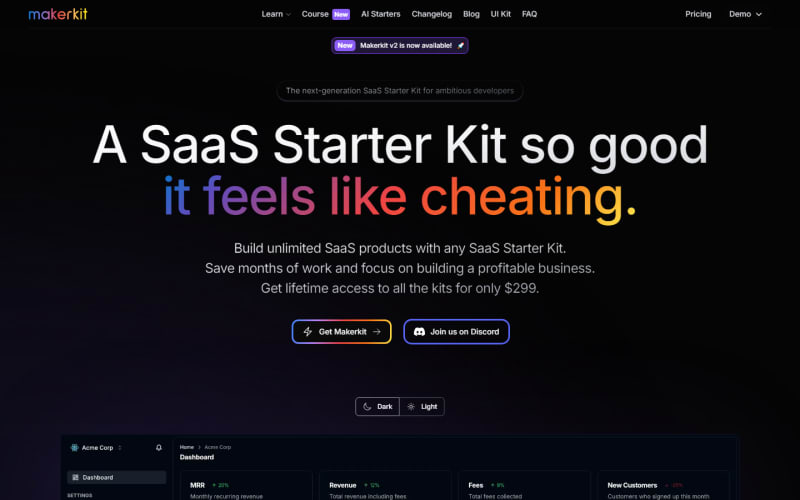
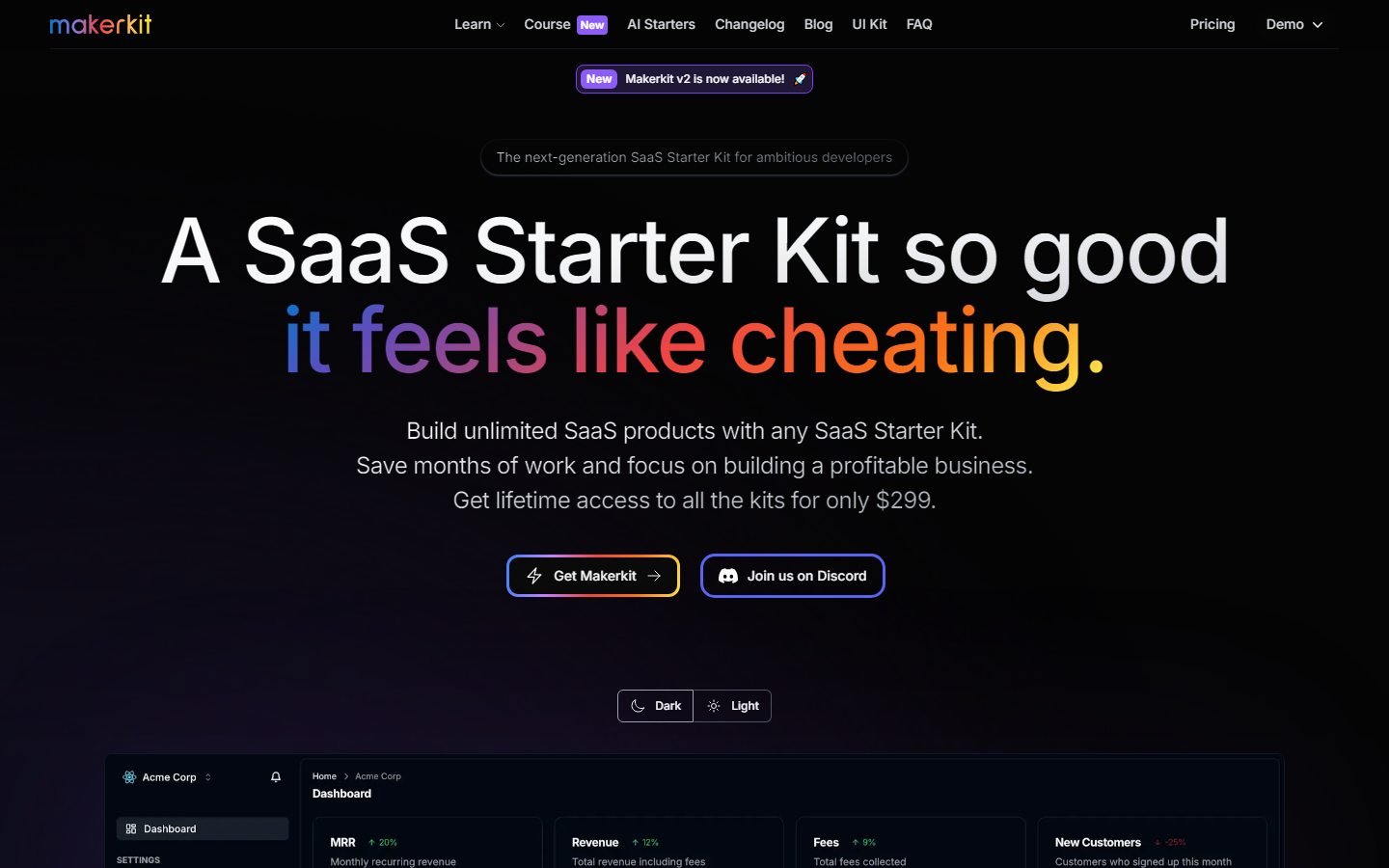
Multi-tenancy is the differentiator: a production-grade NextJS and Supabase foundation, also available for Remix, covering teams, roles, Stripe billing, admin panel, documentation and a plugin system. That B2B focus explains the $299 to $599 range, roughly two to four times the $157 median and among the pricier options here. Documentation and plugins suggest it expects long-lived projects rather than weekend launches. The tradeoff is cost and complexity: if you are shipping a single-tenant consumer tool, you pay a premium for tenancy machinery you will not use.
SaasCore
Next.js 15 SaaS boilerplate with NextAuth 5, Prisma, PostgreSQL on Neon, Stripe billing, and built-in admin, client and affiliate dashboards.
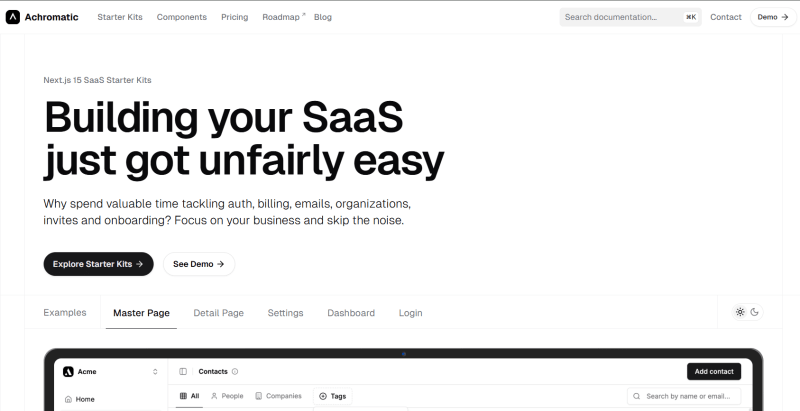
Achromatic
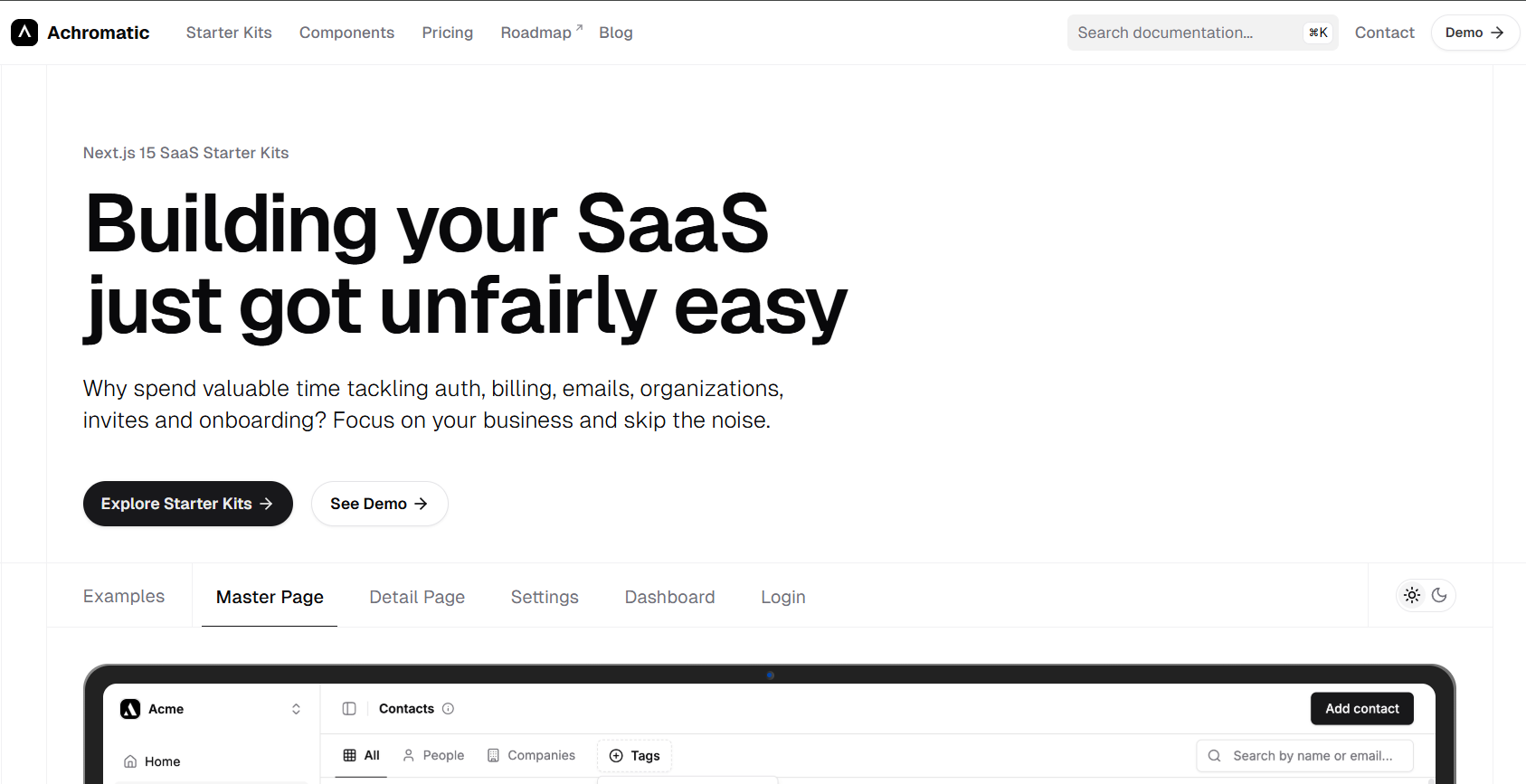
Building your SaaS just got unfairly easy. Why spend valuable time tackling auth, billing, emails, organizations, invites and onboarding? Focus on your business and skip the noise.
Dirstarter
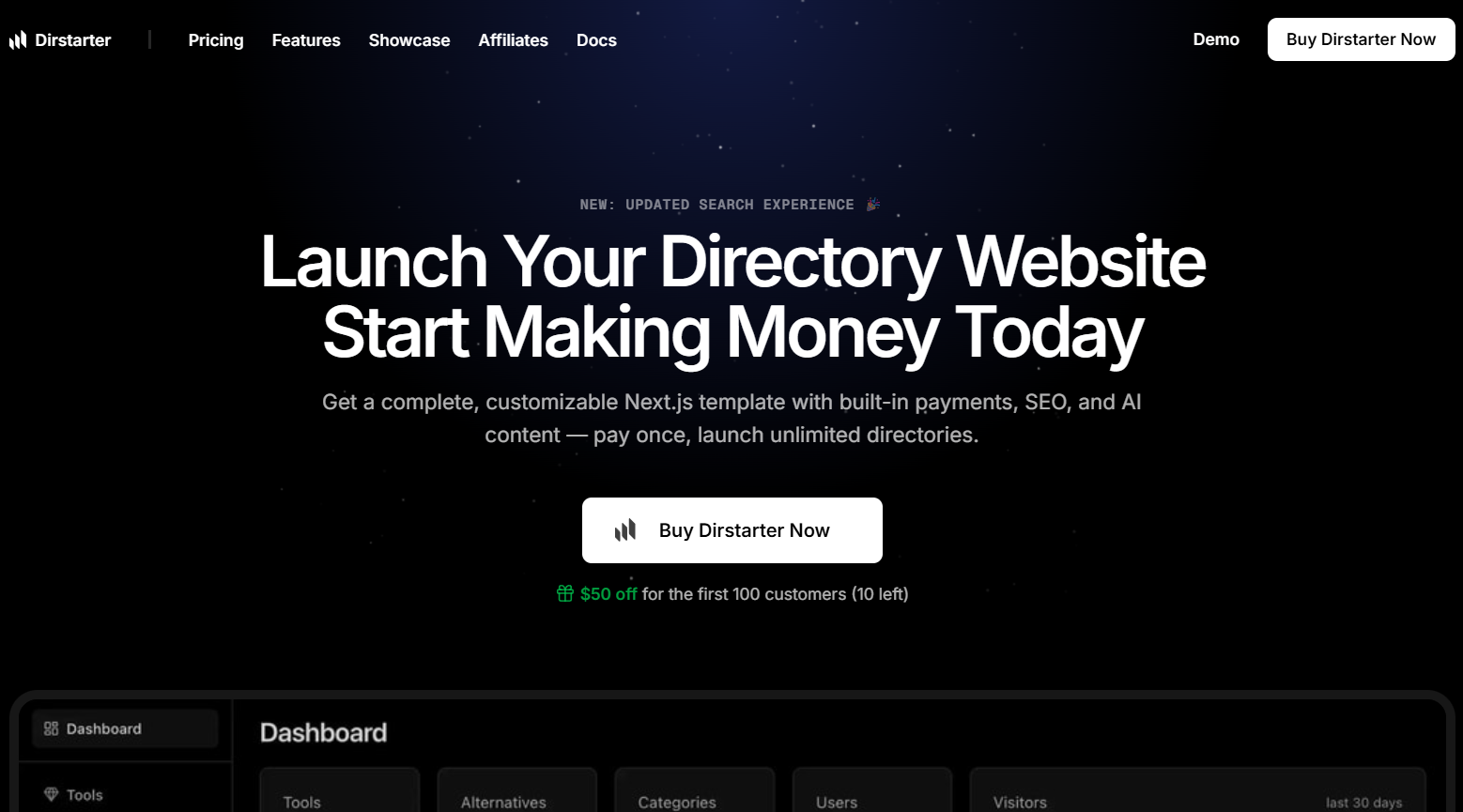
Another directory-focused NextJS build, using React, TypeScript, Tailwind, Prisma and Stripe, with AI-assisted content generation, analytics and SEO included under a pay-once license covering unlimited directories. At $159 to $199 it starts right at the $157 median and stays reasonable at the top tier. The unlimited-sites term matters if you plan several niche directories rather than one. Feature-wise it is leaner than some rivals: no auth, database or email appear in the listing, so account handling and transactional mail need attention early.
Agentic Boilerplate
A Next.js SaaS starter that ships only the services you pick, plus the AGENTS.md, rules, skills and subagents your coding agent needs to work in it.
Frequently Asked Questions
Should I use Prisma or Drizzle in a SaaS boilerplate?
Prisma offers a higher-level abstraction with auto-generated types and a visual schema, making it easier to get started. Drizzle is more lightweight and closer to raw SQL, with better performance at the edges (Cloudflare Workers, Vercel Edge). For most SaaS products, Prisma is the safer starting choice. Drizzle is worth considering for edge-deployed apps.
Which databases does Prisma support in SaaS boilerplates?
Prisma supports PostgreSQL, MySQL, SQLite, SQL Server, CockroachDB, and MongoDB. Most SaaS boilerplates use PostgreSQL (via Supabase, Neon, or PlanetScale) as the primary database, with Prisma handling the ORM layer and migrations.