
Best PHP SaaS Boilerplates (2026)
PHP powers a huge share of the web, and for SaaS development in 2026 that almost always means Laravel. The PHP boilerplates listed here are largely Laravel-based, including options like Larafast and SaaSykit, and come with Cashier for Stripe billing, authentication, and admin panels built with Livewire or FilamentPHP. If your team already knows PHP, these boilerplates let you ship a full-stack SaaS product on familiar hosting with a mature, well-documented ecosystem behind you.
 Laravel
  Vue
Vue  PHP
PHP  Tailwind
  Resend






Best SaaS Boilerplates in 2026
BoilerplateHub curates 100+ vetted SaaS boilerplates so you can compare options side by side and pick the one that fits your stack. Whether you need the best Next.js SaaS boilerplate, a Laravel starter kit, a Django SaaS template, or a React Native mobile boilerplate, every listing includes verified pricing, tech stack details, and a full feature breakdown, so you know exactly what you're getting before you buy.
Most Popular SaaS Boilerplates
The most-used SaaS boilerplates are built on Next.js. Options like ShipFast, LaunchFast, and Shipped dominate because Next.js is the default choice for production React apps. For PHP teams, Laravel SaaS boilerplates like Larafast and SaaSykit offer the same batteries-included experience. Python developers lean on SaaS Pegasus, the most mature Django SaaS boilerplate available. And for mobile-first products, React Native and Expo SaaS starter kits let you share auth, billing, and API logic across iOS and Android from a single codebase.
What Separates Good SaaS Boilerplates from Great Ones
The best SaaS boilerplates go beyond wiring up auth and Stripe. Look for active maintenance: GitHub commits in the last 90 days signal a healthy project. Multi-tenancy support matters if you're building B2B. A built-in blog and landing page saves another week of work. Admin panels, dark mode, and onboarding flows ship products that feel polished from day one. Use the feature filters above to find SaaS boilerplates that match your exact checklist.
Free vs. Paid SaaS Boilerplates
Free SaaS boilerplates on GitHub are a solid starting point, but they often lack documentation, support, and regular updates as frameworks evolve. Paid SaaS boilerplates in the $49–$300 range come with setup guides, author support, and updates that track Next.js, Laravel, and other framework releases. For a production product, the license fee pays back in the first sprint. A developer's time costs far more per hour than a one-time boilerplate purchase.
All 1 PHP Boilerplates
Larafast
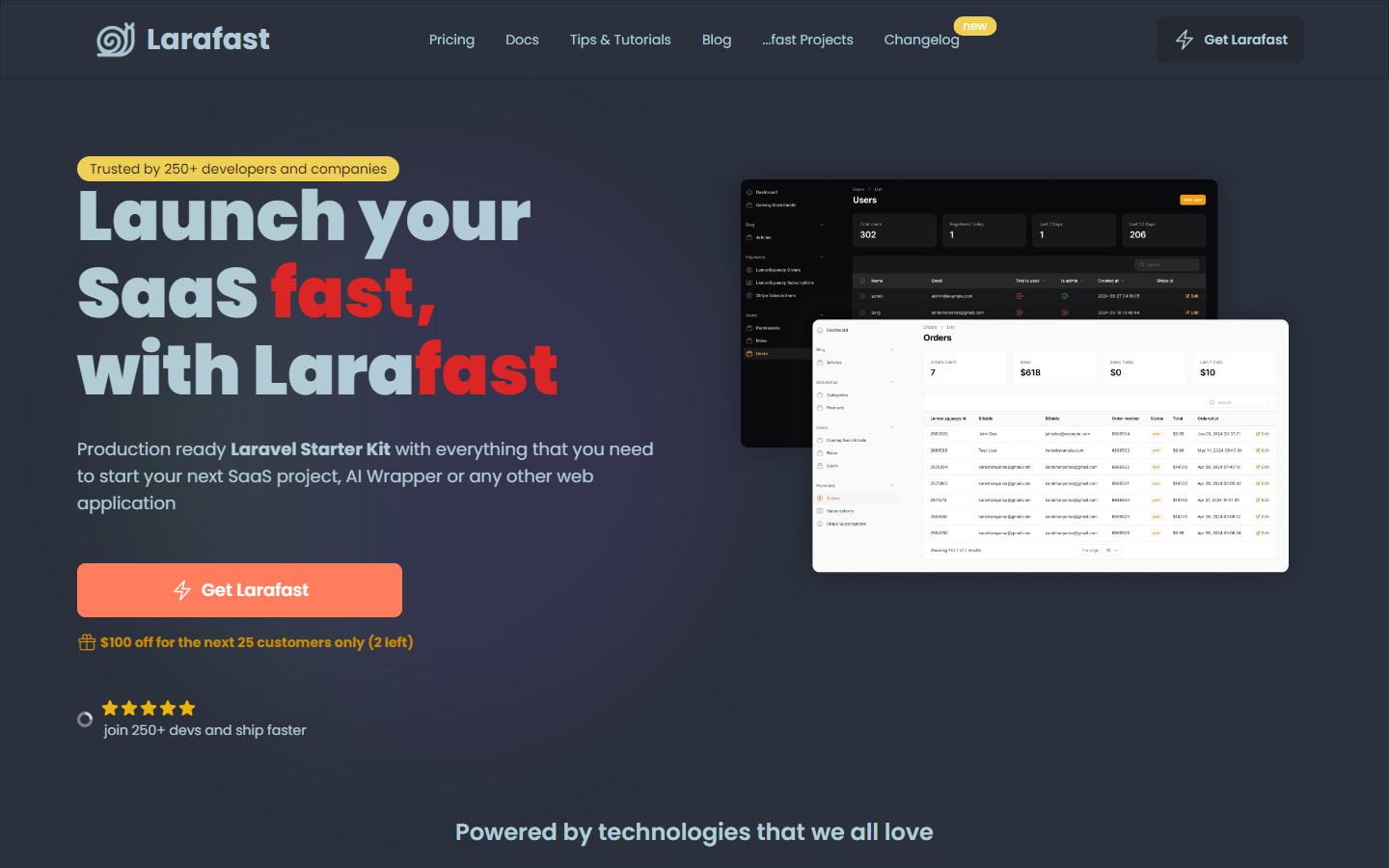
PHP shops are the audience for Larafast, a Laravel and Vue starter with Tailwind, Stripe and Lemon Squeezy billing, an admin panel and AI features. At $169 to $199 it prices slightly above the $157 median while sitting outside the Next.js mainstream that covers 61 catalog entries, which is the point if your team already runs Laravel and the wrong call if it does not. One gap in the listing: no email feature, something 38 catalog entries include, so transactional mail and sequences need wiring yourself.
Frequently Asked Questions
What is the best PHP SaaS boilerplate?
The most popular PHP SaaS boilerplates are Laravel-based, with Larafast and SaaSykit being well-known options. They include Cashier billing, authentication, and admin tooling out of the box. Browse the full PHP list above and use the feature filters to match the stack you need.
Are PHP boilerplates all built on Laravel?
Mostly, yes. Laravel dominates modern PHP SaaS development thanks to its Eloquent ORM, queue system, and packages like Cashier and Sanctum. If you specifically want the Laravel ecosystem, the dedicated Laravel category covers it in more depth; this page lists everything in the catalog that runs on PHP.
Do PHP boilerplates include Stripe billing?
Yes. PHP SaaS boilerplates typically handle billing through Laravel Cashier, which wraps Stripe subscriptions, webhooks, and invoicing. Use the Stripe filter above to see only the boilerplates with payment processing pre-configured.
Do PHP boilerplates come with an admin panel?
Many do. Livewire and FilamentPHP are the common choices for admin panels and reactive UI in PHP boilerplates, keeping the entire stack in PHP without requiring a separate JavaScript frontend. Check the individual boilerplate pages above for which admin approach each one uses.