
Best Flutter SaaS Boilerplates (2026)
Flutter lets you ship iOS and Android apps from a single Dart codebase, with a rendering engine that produces consistent UI on both platforms. For founders targeting mobile, a Flutter boilerplate removes the repetitive setup: authentication, subscriptions, push notifications, and store deployment configuration. The Flutter boilerplates listed here include Fast Flutter ($159-199) for subscription apps and ShipFlutter ($30) for ecommerce apps built on Firebase. Use the filters above to narrow by features and price.
At a glance: 3 Flutter boilerplates listed, priced from $30 to $159 (median $99). Lowest entry price: ShipFlutter at $30. Most features: ShipFlutter (6 listed). Most often paired with Firebase, RevenueCat, Lemon Squeezy. Updated 2026-10-18.
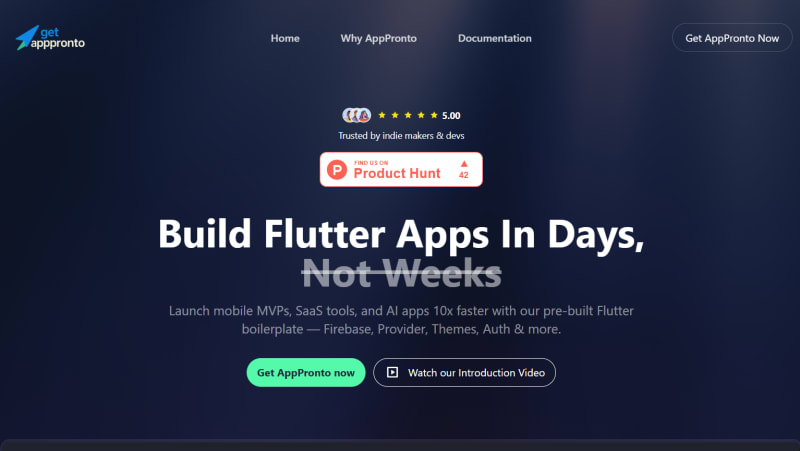
AppPronto
 Flutter



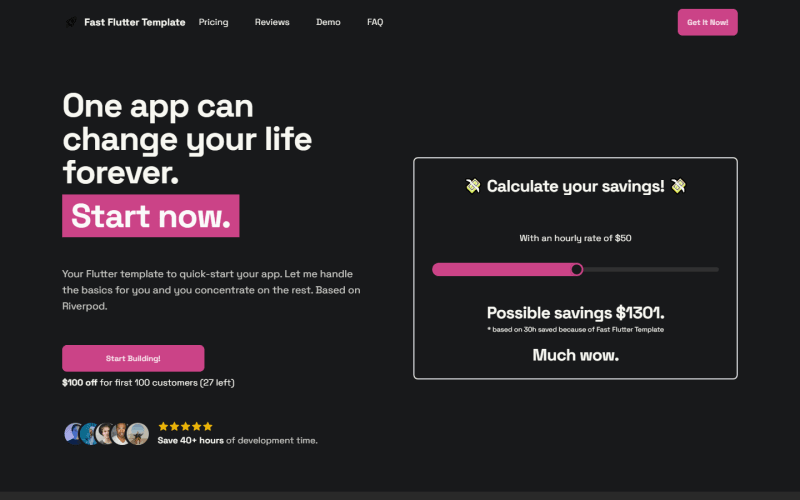
Fast Flutter
 Firebase
  RevenueCat

ShipFlutter
 Lemon Squeezy




Best SaaS Boilerplates in 2026
BoilerplateHub curates 100+ vetted SaaS boilerplates so you can compare options side by side and pick the one that fits your stack. Whether you need the best Next.js SaaS boilerplate, a Laravel starter kit, a Django SaaS template, or a React Native mobile boilerplate, every listing includes verified pricing, tech stack details, and a full feature breakdown, so you know exactly what you're getting before you buy.
Most Popular SaaS Boilerplates
The most-used SaaS boilerplates are built on Next.js. Options like ShipFast, LaunchFast, and Shipped dominate because Next.js is the default choice for production React apps. For PHP teams, Laravel SaaS boilerplates like Larafast and SaaSykit offer the same batteries-included experience. Python developers lean on SaaS Pegasus, the most mature Django SaaS boilerplate available. And for mobile-first products, React Native and Expo SaaS starter kits let you share auth, billing, and API logic across iOS and Android from a single codebase.
What Separates Good SaaS Boilerplates from Great Ones
The best SaaS boilerplates go beyond wiring up auth and Stripe. Look for active maintenance: GitHub commits in the last 90 days signal a healthy project. Multi-tenancy support matters if you're building B2B. A built-in blog and landing page saves another week of work. Admin panels, dark mode, and onboarding flows ship products that feel polished from day one. Use the feature filters above to find SaaS boilerplates that match your exact checklist.
Free vs. Paid SaaS Boilerplates
Free SaaS boilerplates on GitHub are a solid starting point, but they often lack documentation, support, and regular updates as frameworks evolve. Paid SaaS boilerplates in the $49–$300 range come with setup guides, author support, and updates that track Next.js, Laravel, and other framework releases. For a production product, the license fee pays back in the first sprint. A developer's time costs far more per hour than a one-time boilerplate purchase.
Flutter Boilerplates Compared
Every boilerplate below is listed in our catalog with verified pricing. We compare by stack fit, included integrations, and price, not by affiliate payout.
| Boilerplate | Price | Auth | Payments | Database | AI | ||
|---|---|---|---|---|---|---|---|
| Fast Flutter | $159 - $199 | ✓ | – | – | – | – | Review → |
| ShipFlutter | $30 | ✓ | – | – | ✓ | ✓ | Review → |
| AppPronto | $99 - $129 | ✓ | – | – | – | – | Review → |
All 3 Flutter Boilerplates
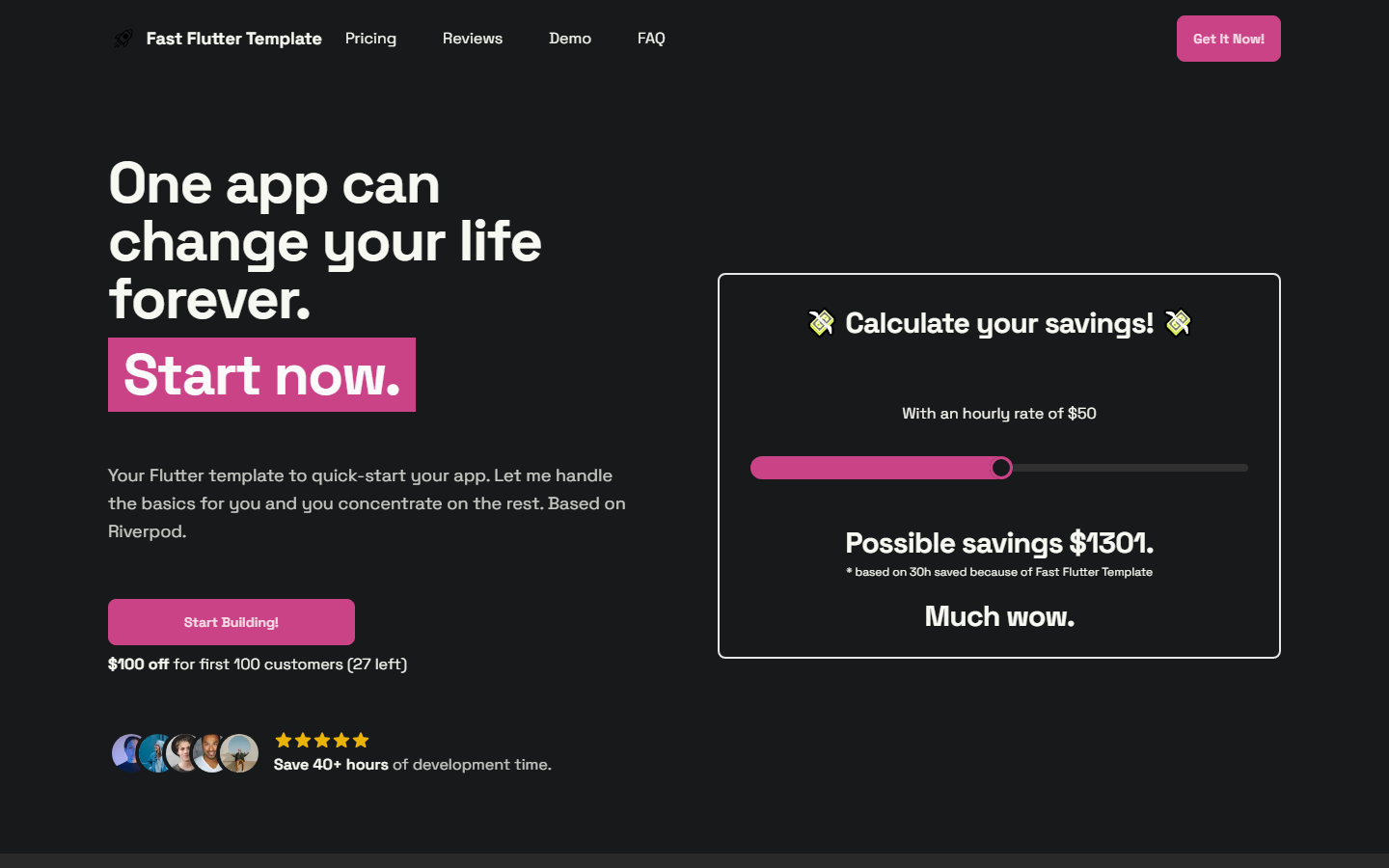
Fast Flutter
Mobile first and Flutter only, this template covers the parts of an app you rebuild every time: authentication, navigation, onboarding flow, and theming. It is one of the few non web stacks in the catalog, so it fills a real gap for developers shipping to iOS and Android from Dart. Pricing of $159 to $199 starts right at the $157 median and rises from there. No Payments or Database appear in the listed features, meaning subscriptions, in app purchase, and any backend persistence are not part of what you are buying.
ShipFlutter
Flutter and Firebase, not NextJS, which makes this one of the few genuinely mobile-native options in a catalog dominated by web stacks. The pitch is a deployable e-commerce app with auth, database, ads, onboarding and payments. At a flat $30 it is far below the $157 median, a low-risk way to skip Firebase wiring. The catch is stack lock-in and audience: Flutter skills are required, nothing here transfers to a web SaaS, and no email or admin panel appears in the listed features.
AppPronto
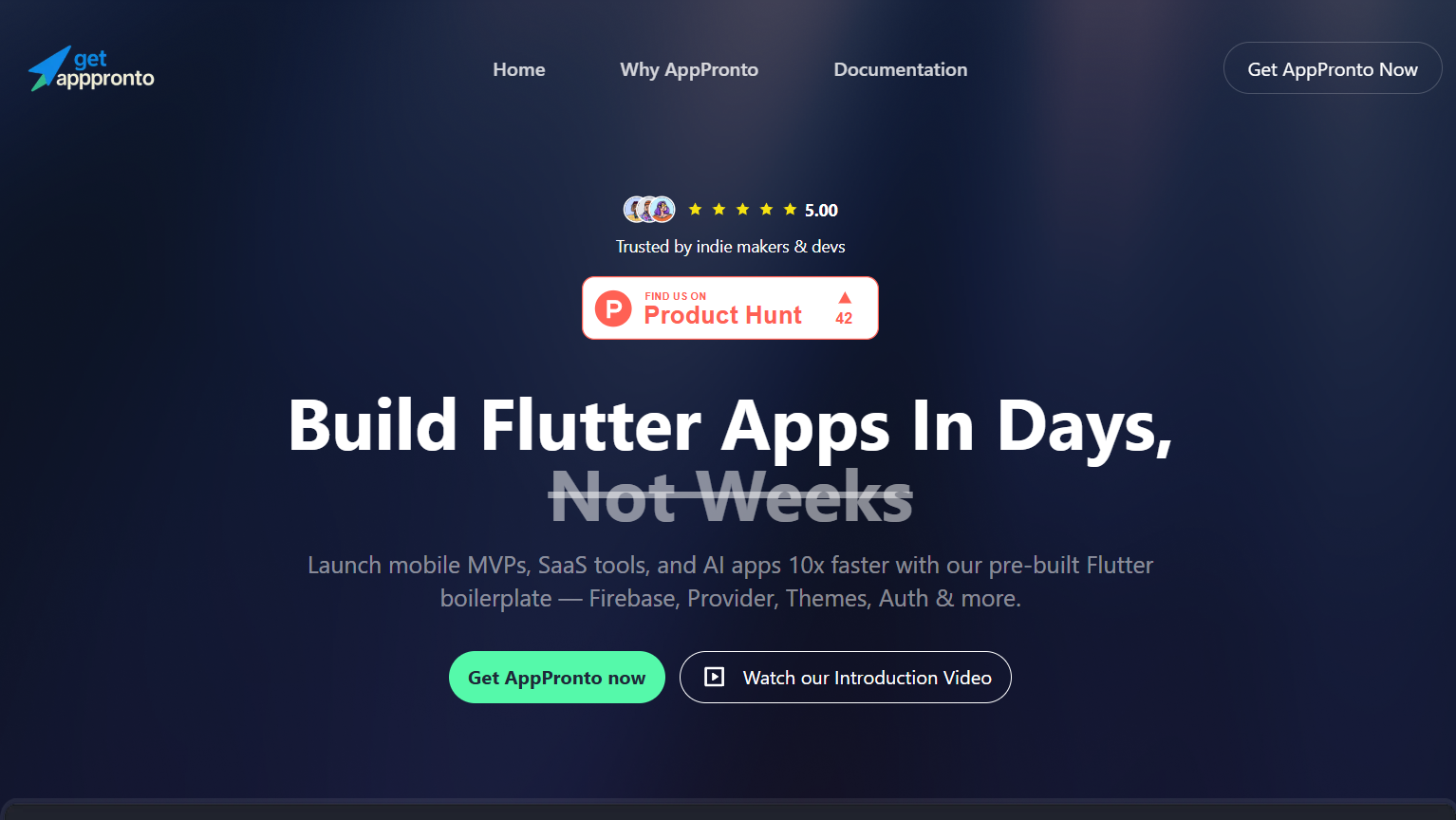
Launch mobile MVPs, SaaS tools, and AI apps 10x faster with our pre-built Flutter boilerplate — Firebase, Provider, Themes, Auth & more.
Building on Flutter?
Before you pick a starter, it helps to settle the layers around it and get your coding agent set up for the framework.
How to choose a Flutter boilerplate
Flutter's argument is one Dart codebase producing consistent UI on iOS and Android. That holds well for standard product surfaces and gets harder the more platform specific behaviour you need, so check what native integrations the kit already wires up rather than assuming parity.
Backend choice drives everything else. Firebase kits give you auth, database and push notifications quickly with first class Flutter SDKs, at the cost of coupling to Google's platform and pricing. Kits on a custom backend keep you portable and require more setup.
As with any mobile kit, billing must go through in app purchase for digital subscriptions. Confirm the kit handles store billing rather than a web payment provider, and check that push notifications and deep links are included, since both are fiddly to add later.
Frequently Asked Questions
What is the best Flutter boilerplate?
The Flutter boilerplates in the catalog include Fast Flutter ($159-199) and ShipFlutter ($30). Fast Flutter targets subscription-based apps, while ShipFlutter is focused on ecommerce and built on Firebase. Browse the full list above and compare their feature sets to match your app type.
Is Flutter good for building SaaS mobile apps?
Yes. Flutter compiles to native code on both iOS and Android from one Dart codebase, which halves the maintenance work compared to two native apps. It is a strong choice when you need both platforms at launch and want pixel-consistent UI across them.
Do Flutter boilerplates use Firebase?
Some do. ShipFlutter is built on Firebase for auth, database, and hosting, which is a common pairing since Firebase has first-class Flutter SDKs. Check each boilerplate page above for its backend choice before buying.
How much do Flutter boilerplates cost?
Flutter boilerplates in the catalog range from $30 (ShipFlutter) to $199 (the top Fast Flutter tier). That is at the affordable end for mobile boilerplates, and cheaper than building auth, billing, and store deployment setup from scratch for two platforms.