
NextJS SaaS Boilerplates and Starter Kits
Next.js is the most widely used framework for building SaaS products in 2026. Its App Router, built-in API routes, server components, and seamless Vercel deployment have made it the default choice for indie hackers and startup teams alike. The NextJS boilerplates below come pre-configured with everything you would normally spend weeks building: Stripe or Lemon Squeezy billing, NextAuth or Clerk authentication, Prisma or Drizzle ORM, transactional email, and a landing page ready to ship.
At a glance: 31 NextJS boilerplates listed, priced from $30 to $699 (median $148). Lowest entry price: WaitlistEasy at $30. Most features: Agentic Boilerplate (24 listed). Most often paired with Stripe, Supabase, Tailwind. Updated 2026-10-18.
Read our ranked pick list: Best Next.js Boilerplates in 2026 →Quick picks

Agentic Boilerplate
 NextJS
  React
React  TypeScript
  Tailwind
  Drizzle



 Nuxt
Nuxt 





AnotherWrapper
 Supabase



TurboStarter
 Expo
Expo  Plasmo

 Prisma





AIO - React Native & Next Template
 Firebase

 GraphQL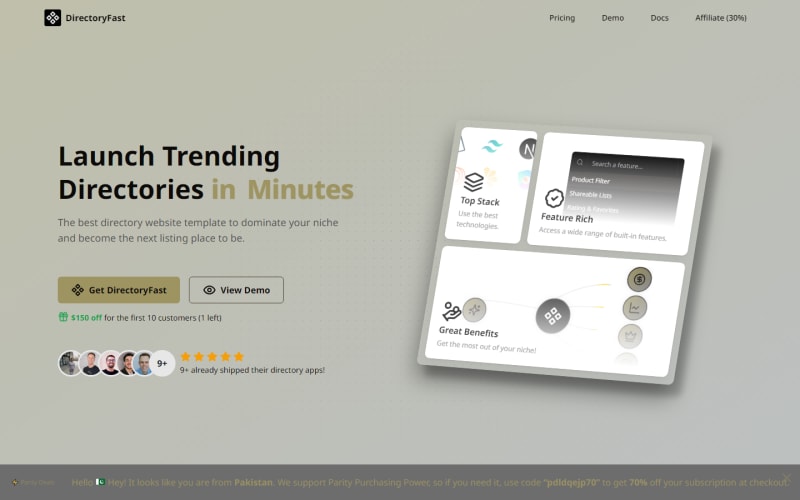
DirectoryFast



Dirstarter

 NodeJS

FastPocket
 DaisyUI
  Pocketbase

 Astro
Astro  SvelteKit
  Neon
Neon 
MakerKit
 Remix
Remix 


 Sanity

 Vercel


NextBase


NextNative



Nexty.dev

Paralect Ship
 MongoDB


PocketStarter
 Stripe


SaasCore


ShipFast
 NextAuth
  Resend
  Lemon Squeezy

Shipped.club

staarter.dev

Supaboost


Supastack


WaitlistEasy
 PostgreSQL

Best SaaS Boilerplates in 2026
BoilerplateHub curates 100+ vetted SaaS boilerplates so you can compare options side by side and pick the one that fits your stack. Whether you need the best Next.js SaaS boilerplate, a Laravel starter kit, a Django SaaS template, or a React Native mobile boilerplate, every listing includes verified pricing, tech stack details, and a full feature breakdown, so you know exactly what you're getting before you buy.
Most Popular SaaS Boilerplates
The most-used SaaS boilerplates are built on Next.js. Options like ShipFast, LaunchFast, and Shipped dominate because Next.js is the default choice for production React apps. For PHP teams, Laravel SaaS boilerplates like Larafast and SaaSykit offer the same batteries-included experience. Python developers lean on SaaS Pegasus, the most mature Django SaaS boilerplate available. And for mobile-first products, React Native and Expo SaaS starter kits let you share auth, billing, and API logic across iOS and Android from a single codebase.
What Separates Good SaaS Boilerplates from Great Ones
The best SaaS boilerplates go beyond wiring up auth and Stripe. Look for active maintenance: GitHub commits in the last 90 days signal a healthy project. Multi-tenancy support matters if you're building B2B. A built-in blog and landing page saves another week of work. Admin panels, dark mode, and onboarding flows ship products that feel polished from day one. Use the feature filters above to find SaaS boilerplates that match your exact checklist.
Free vs. Paid SaaS Boilerplates
Free SaaS boilerplates on GitHub are a solid starting point, but they often lack documentation, support, and regular updates as frameworks evolve. Paid SaaS boilerplates in the $49–$300 range come with setup guides, author support, and updates that track Next.js, Laravel, and other framework releases. For a production product, the license fee pays back in the first sprint. A developer's time costs far more per hour than a one-time boilerplate purchase.
NextJS Boilerplates Compared
Every boilerplate below is listed in our catalog with verified pricing. We compare by stack fit, included integrations, and price, not by affiliate payout.
| Boilerplate | Price | Auth | Payments | Database | AI | ||
|---|---|---|---|---|---|---|---|
| ShipFast | $129 - $149 | ✓ | ✓ | ✓ | ✓ | – | Review → |
| LaunchFast | $99 - $249 | ✓ | ✓ | ✓ | ✓ | – | Review → |
| supastarter | $349 - $1499 | ✓ | ✓ | ✓ | ✓ | ✓ | Review → |
| Shipped.club | $157 - $207 | ✓ | ✓ | – | ✓ | – | Review → |
| FastPocket | $55 | – | ✓ | ✓ | – | – | Review → |
| Supaboost | $150 | ✓ | ✓ | – | ✓ | – | Review → |
| Ecommerce Boilerplate | $39 - $63 | ✓ | ✓ | – | – | – | Review → |
| Shipixen | $87 - $259 | – | – | – | – | – | Review → |
| TemplateAI | Free | ✓ | ✓ | – | ✓ | ✓ | Review → |
| SupaLaunch | Free | ✓ | ✓ | – | – | ✓ | Review → |
| Bedrock by Mxstbr | Free | ✓ | ✓ | ✓ | – | – | Review → |
| Modular NextJS | $699 - $2099 | – | – | – | – | – | Review → |
| NextBase | $99 - $399 | ✓ | ✓ | – | – | – | Review → |
| AIO - React Native & Next Template | $499 | ✓ | ✓ | – | ✓ | – | Review → |
| Paralect Ship | Free | – | – | – | – | – | Review → |
| DirectoryFast | $147 - $847 | ✓ | ✓ | ✓ | ✓ | – | Review → |
| AnotherWrapper | $127 - $157 | – | ✓ | ✓ | – | ✓ | Review → |
| staarter.dev | $249 | – | ✓ | ✓ | ✓ | – | Review → |
| WaitlistEasy | $30 - $60 | – | – | – | – | – | Review → |
| MakerKit | $299 - $599 | ✓ | ✓ | – | – | – | Review → |
| TurboStarter | $299 - $499 | ✓ | ✓ | – | – | ✓ | Review → |
| SaasCore | $149 | ✓ | ✓ | ✓ | ✓ | – | Review → |
| Mkdirs | $119 | ✓ | ✓ | – | – | ✓ | Review → |
| Achromatic | Free | ✓ | ✓ | ✓ | ✓ | – | Review → |
| Dirstarter | $159 - $199 | – | ✓ | – | – | ✓ | Review → |
| Nexty.dev | Free | ✓ | ✓ | ✓ | ✓ | ✓ | Review → |
| MkSaaS | Free | ✓ | ✓ | ✓ | – | – | Review → |
| NextNative | $98 - $125 | ✓ | ✓ | – | – | – | Review → |
| PocketStarter | $89 | ✓ | ✓ | – | – | ✓ | Review → |
| Supastack | $249 - $499 | ✓ | ✓ | ✓ | – | ✓ | Review → |
| Agentic Boilerplate | $99 | ✓ | ✓ | ✓ | ✓ | ✓ | Review → |
All 31 NextJS Boilerplates
ShipFast
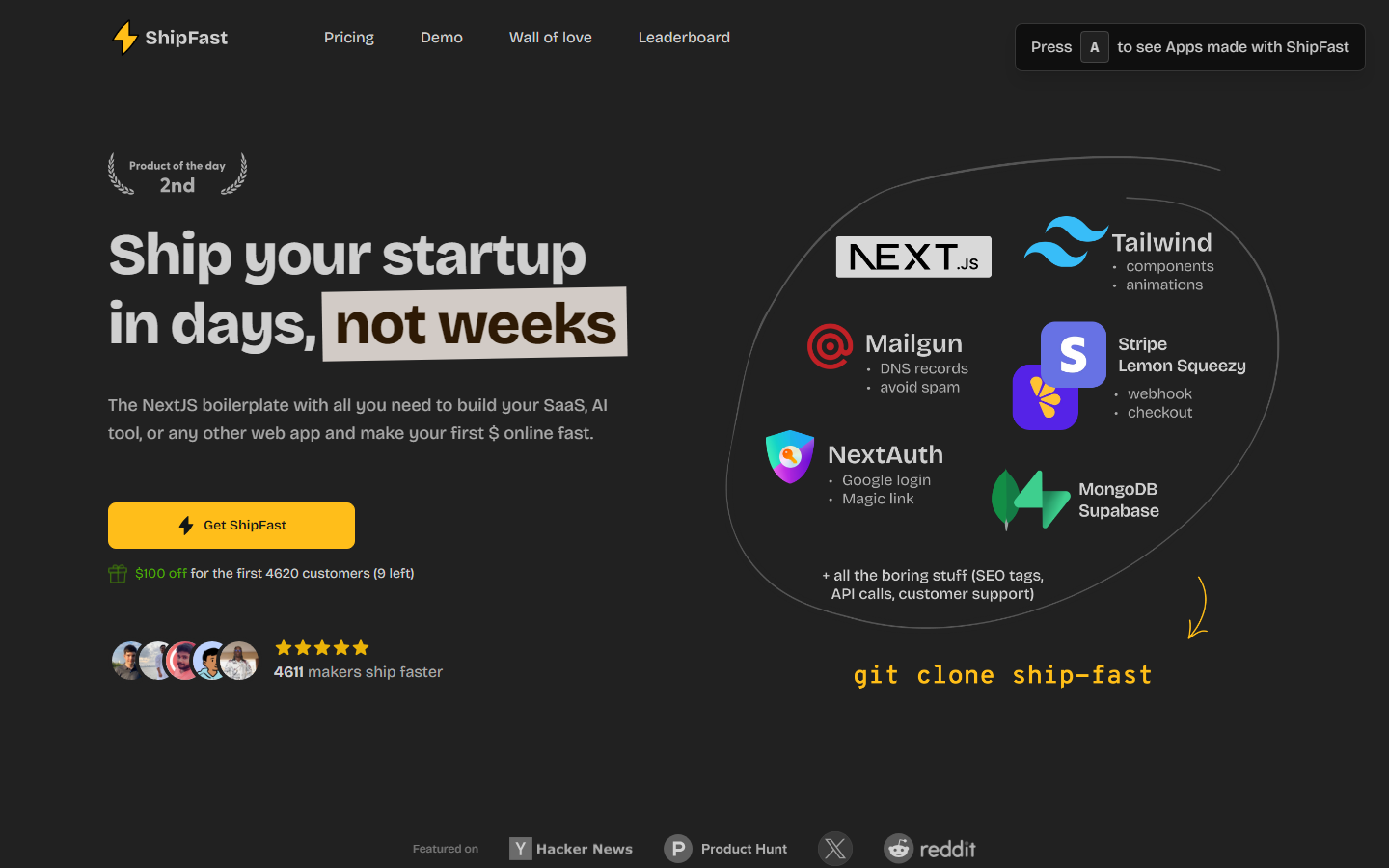
ShipFast is a Next.js and Stripe starter aimed at solo founders shipping a paid web app quickly. The $129 to $149 range sits just under the $157 catalog median, and the stack is the most conventional choice available: Next.js appears in 61 catalog entries, so documentation and outside help are easy to find. Listed coverage runs across auth, database, payments, email, SEO and components, which is broad for the money. The gap is tooling for yourself: no admin panel is listed, so user management and moderation screens are on you.
LaunchFast
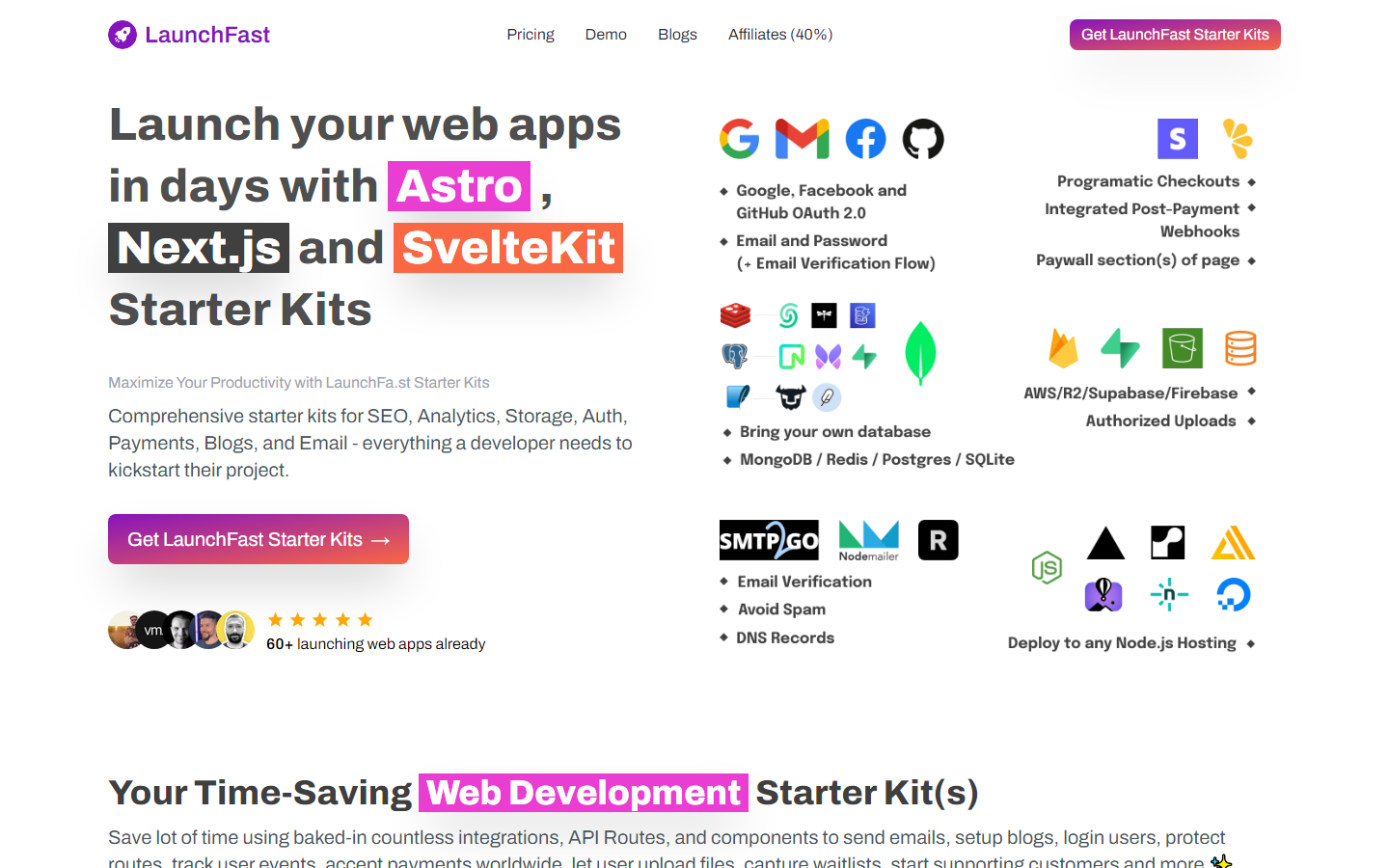
Three separate starter kits ship under the LaunchFast name, for Next.js, Astro and SvelteKit, with Stripe and Lemon Squeezy billing wired into each. That multi-framework spread is unusual in a catalog where Next.js dominates, and it suits developers who want Astro's content model or Svelte's ergonomics without rebuilding auth and payments. Pricing from $99 to $249 straddles the $157 median, so the entry tier undercuts most peers. Worth noting: no admin panel or AI tooling appears in the feature list, so dashboards and moderation are yours to build.
supastarter
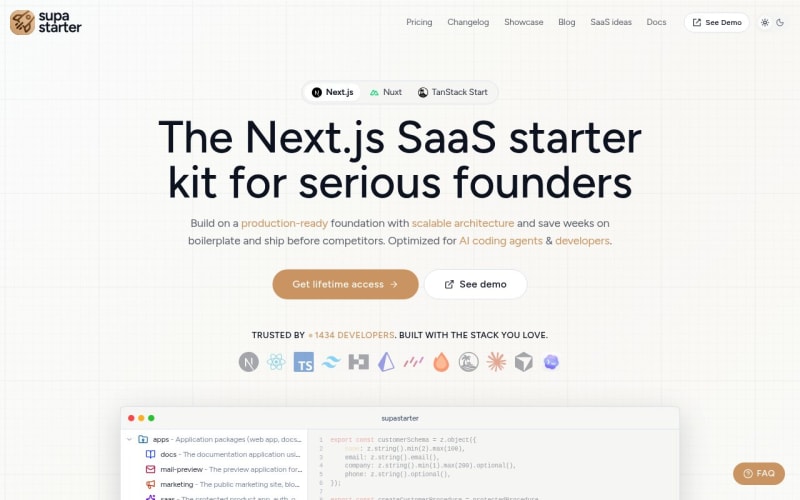
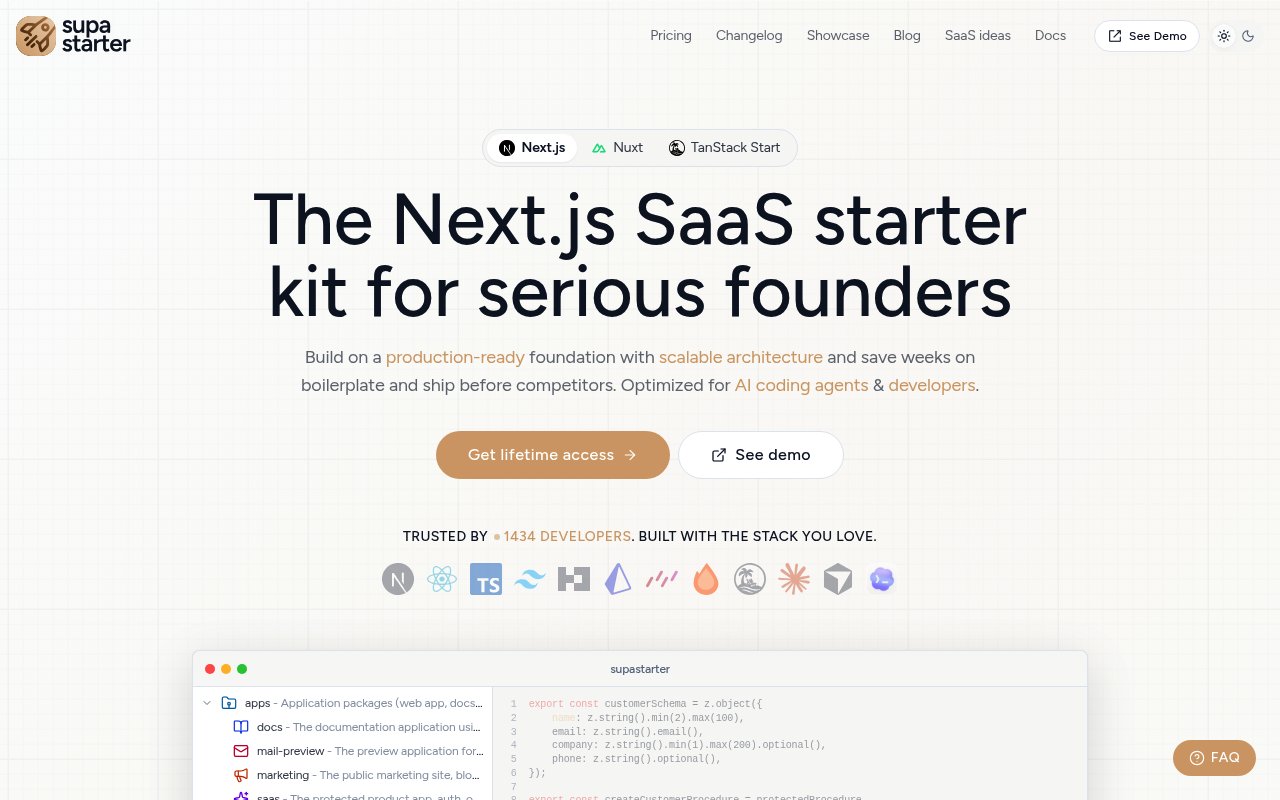
supastarter targets teams building multi-tenant B2B SaaS on Next.js or Nuxt, and it carries the deepest feature list in this group: multi-tenancy, i18n, admin panel, dashboard, user management, blog, documentation and AI on top of the usual auth and payments. At $349 to $1,499 it is the most expensive entry here, more than double the $157 median, so it only pays off if you genuinely need organization accounts, roles and translations. For a single-tenant side project, most of that surface area is weight you will never touch.
Shipped.club
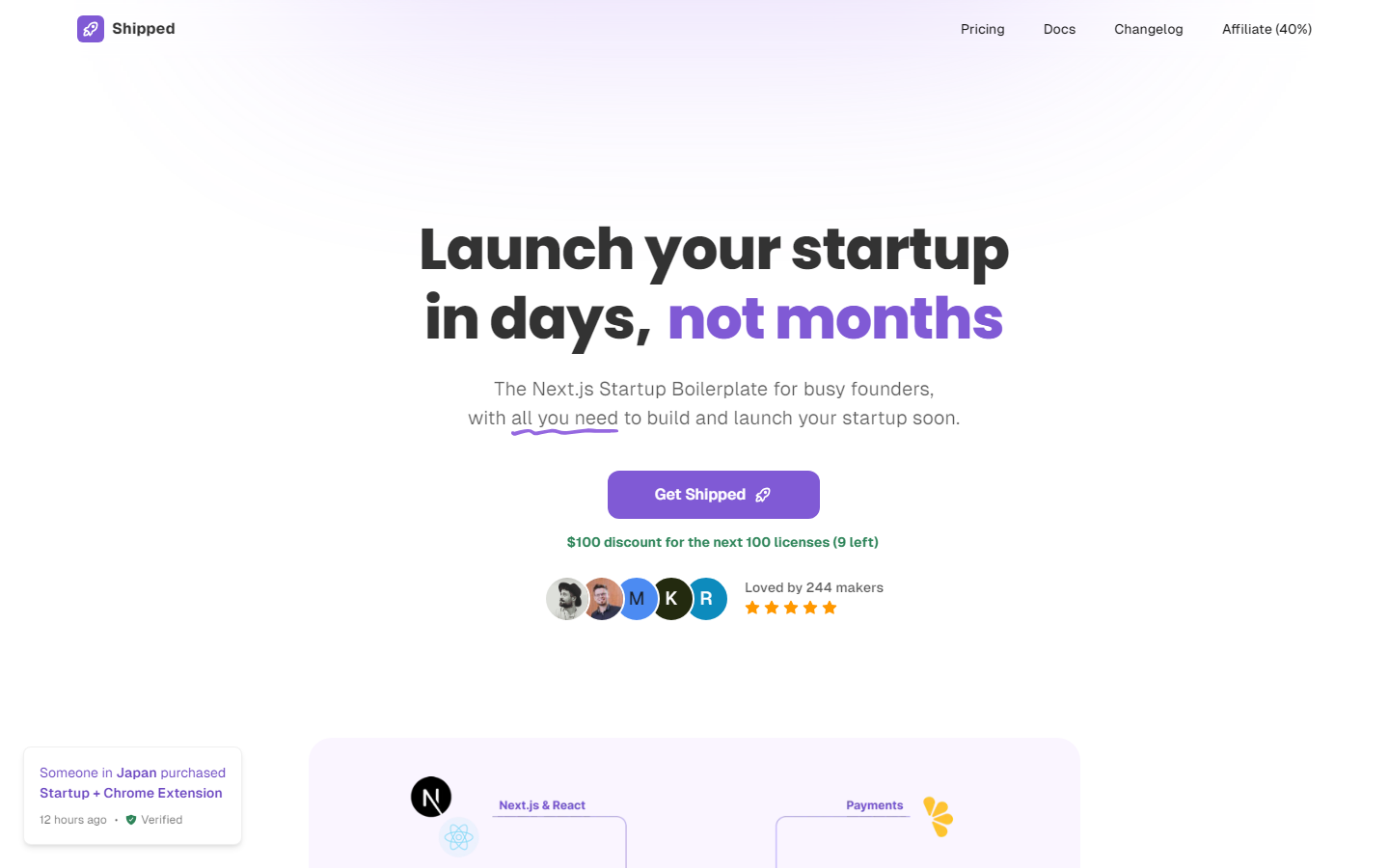
Built around Lemon Squeezy checkout, NextAuth or Supabase authentication and prebuilt landing pages, Shipped.club is a Next.js starter for founders who want a marketing page and a paywall live on day one. At $157 to $207 the entry tier lands exactly on the catalog median, and the Next.js base is the best supported stack in this directory. The listed feature set is thinner than peers at the same price, though: no SEO, analytics or admin panel, all of which are common across the catalog.
FastPocket
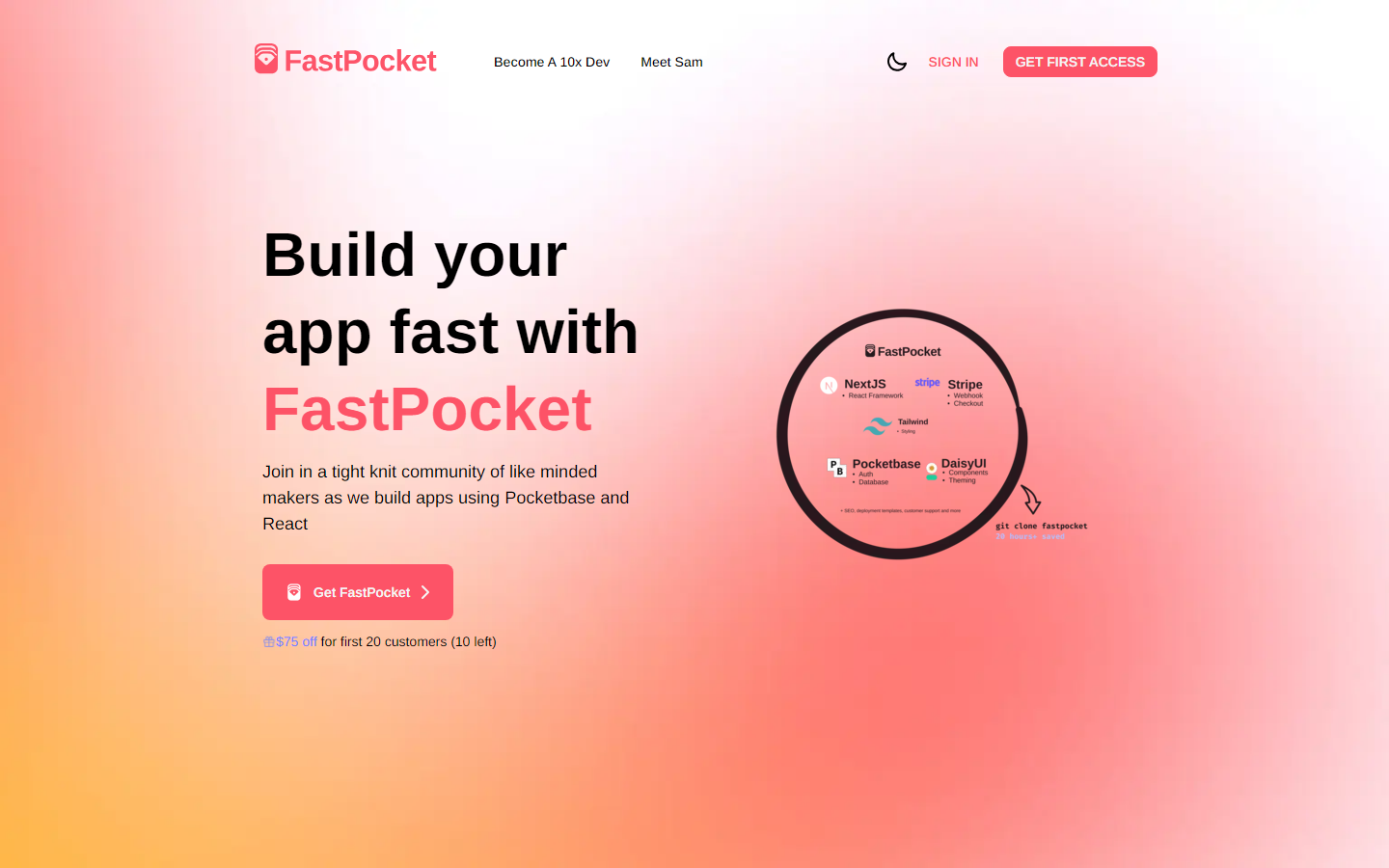
At a flat $55, FastPocket is the cheapest option here, roughly a third of the $157 median. It combines Next.js, Tailwind and DaisyUI with a PocketBase backend and Stripe, a genuinely light setup for developers who would rather run one binary than manage a hosted Postgres. The listed features stop at email and payments. Auth, which appears in 94 catalog entries, is absent from the listing, and PocketBase is uncommon in this catalog where Supabase leads with 27 uses, so you are off the well trodden path.
Supaboost
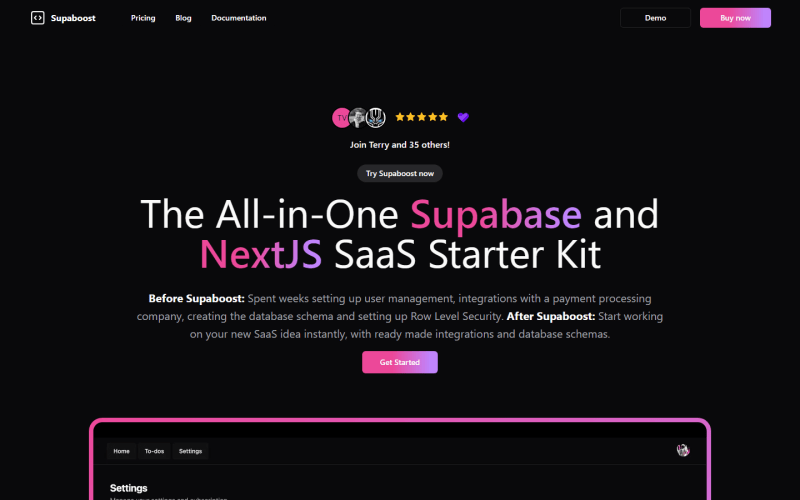
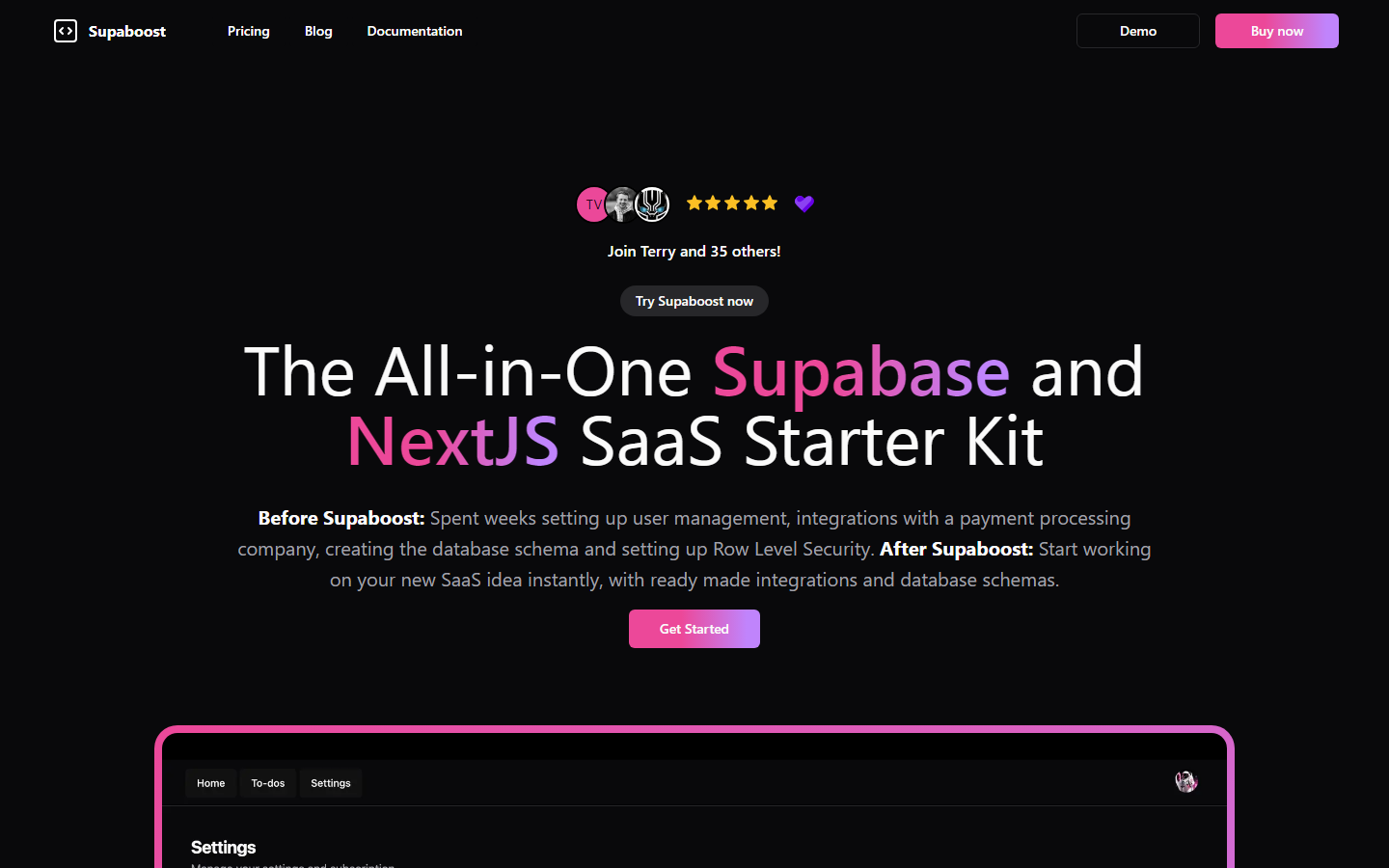
A NextJS 14 and Supabase starter aimed at solo founders who want user management and billing wired up before they write product code. Payments run through Lemon Squeezy rather than Stripe, which suits merchant-of-record selling but puts it outside the Stripe path most of this catalog follows. At $150 it sits just under the $157 median, and the Supabase pairing is the second most common backend choice here. The listed feature set is limited to Auth, Database, and Payments, so transactional email and any admin tooling are yours to build.
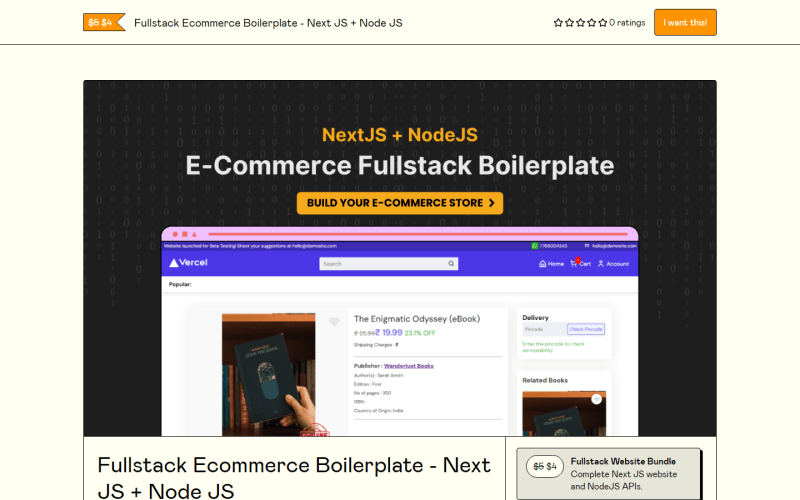
Ecommerce Boilerplate
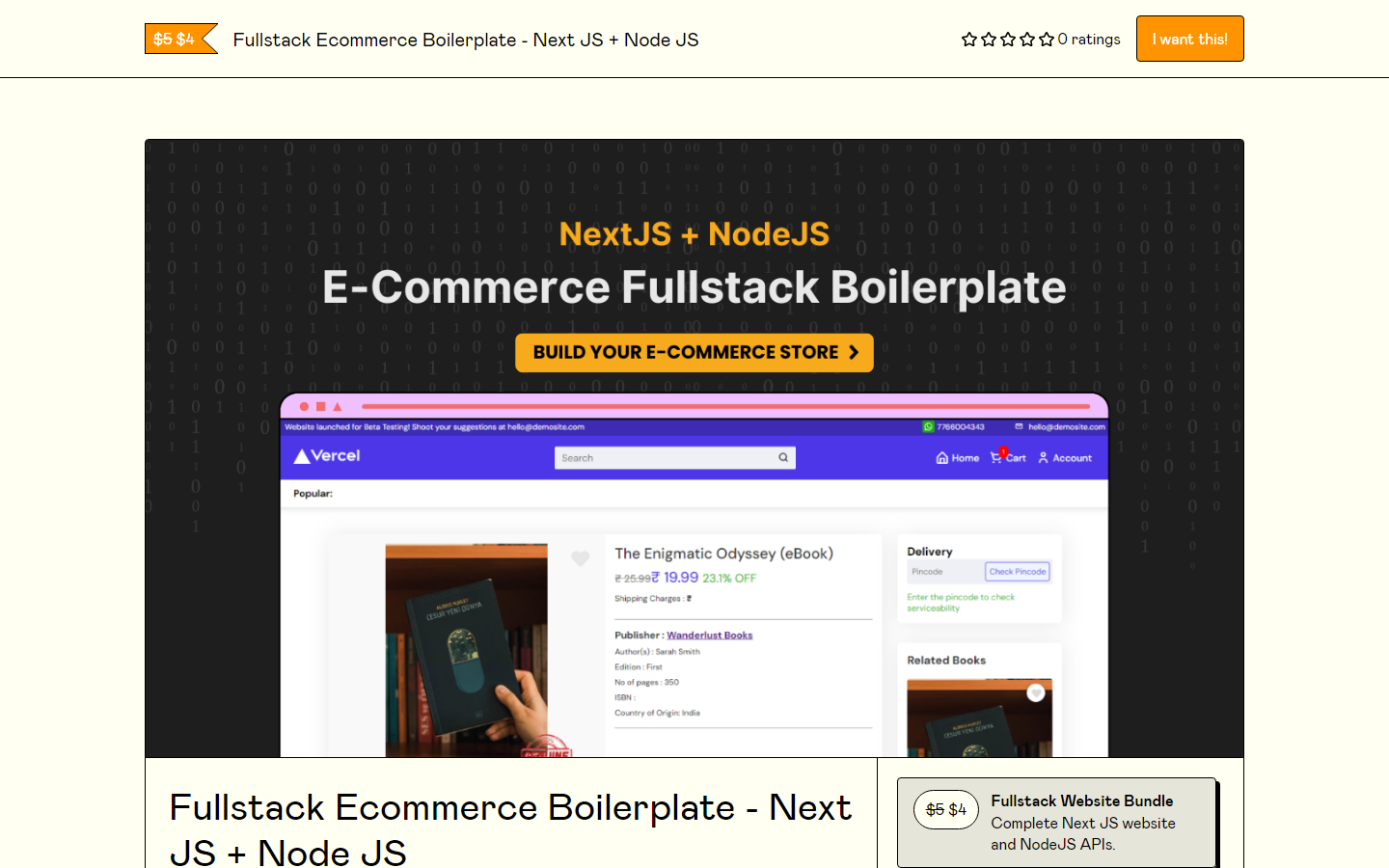
Rather than a SaaS starter, this is a storefront kit: NextJS on the front, Node.js behind it, with a React admin panel and Strapi as the CMS. Categorized products and checkout are the core, so it fits developers building a shop instead of a subscription app. Pricing of $39 to $63 is the cheapest paid entry in this group and well under the $157 median. The trade-off is scope: Auth, Components, and Payments are the only listed features, and running Strapi means operating a second service.
Shipixen
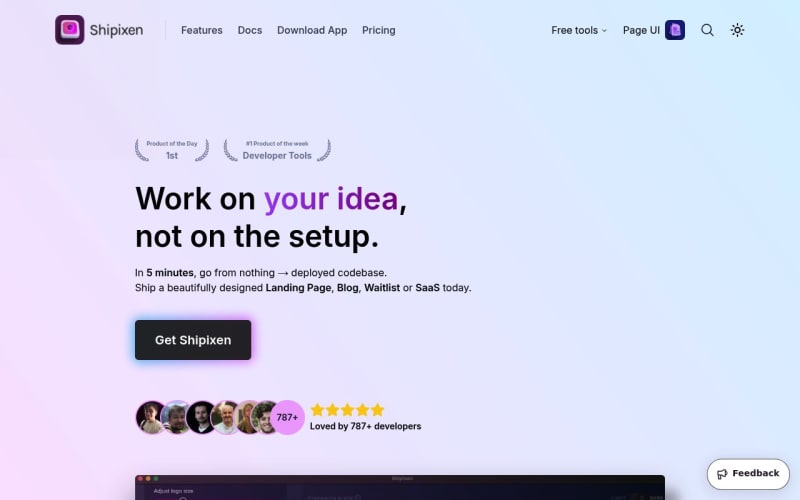
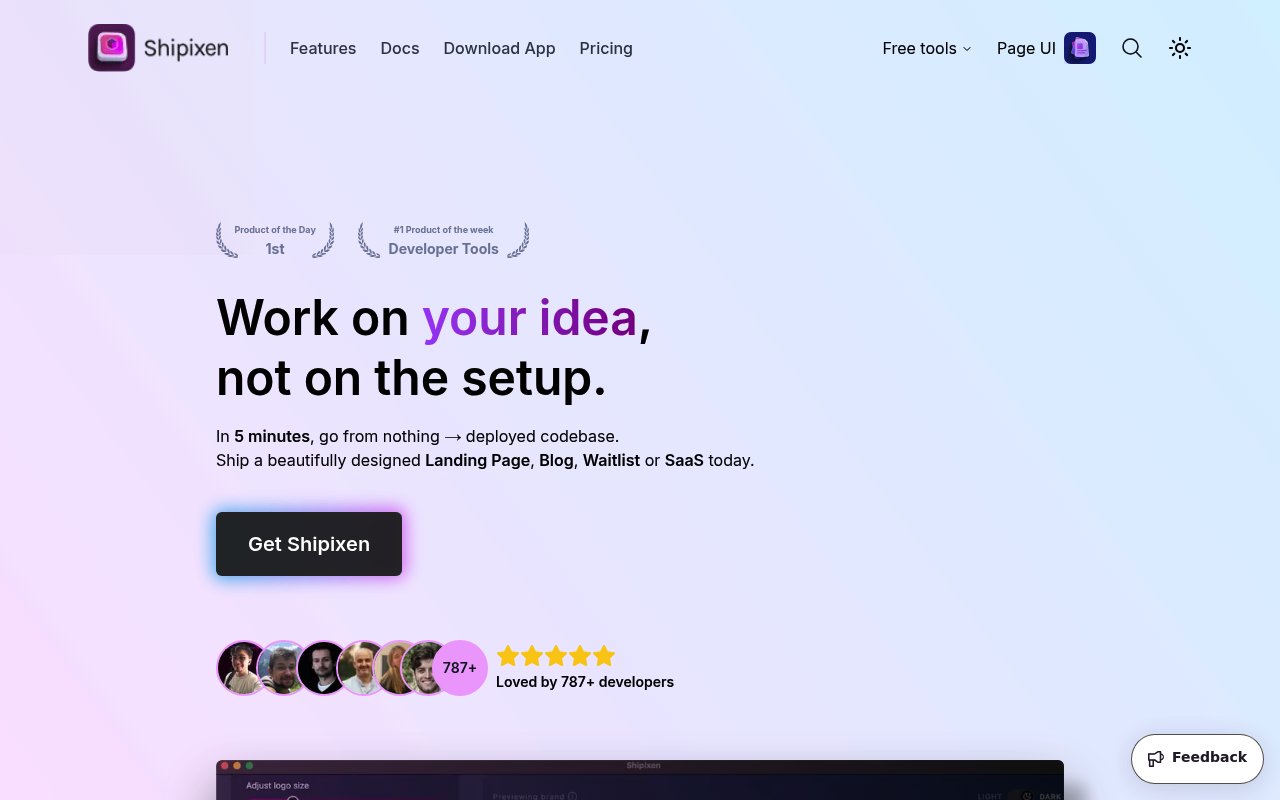
Shipixen generates NextJS and Tailwind sites from templates, with one-click Vercel deploys, so it targets developers shipping marketing sites, blogs, and docs rather than an application backend. Blog tooling, component library, dark mode, and theming are the listed features, and the $87 to $259 range straddles the $157 median depending on tier. Note what is absent: no Auth, Payments, or Database appear in its feature list, which is unusual given Auth and Payments show up in over 90 listings each. Treat it as a site builder, not a SaaS foundation.
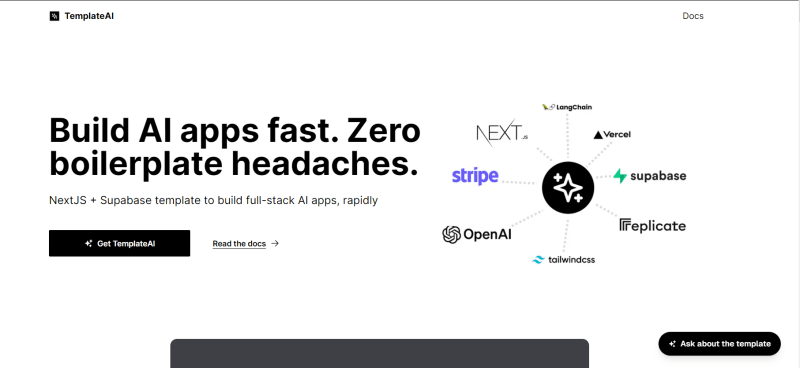
TemplateAI
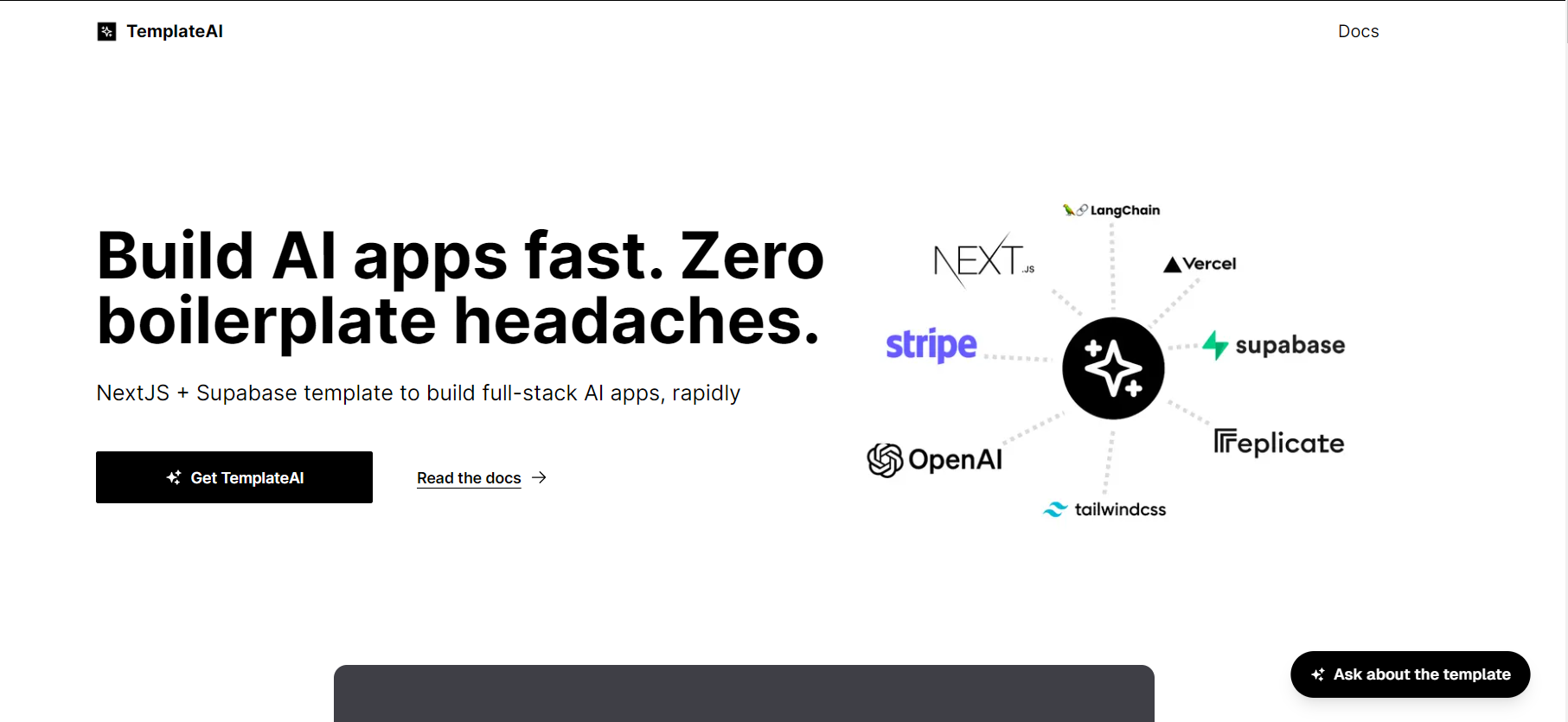
Streamlined solution for building AI apps without the complexity of traditional boilerplate setups.
SupaLaunch
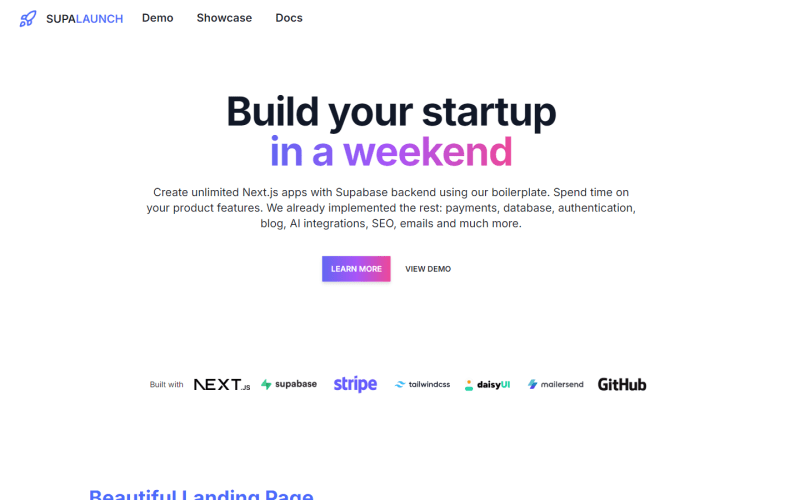
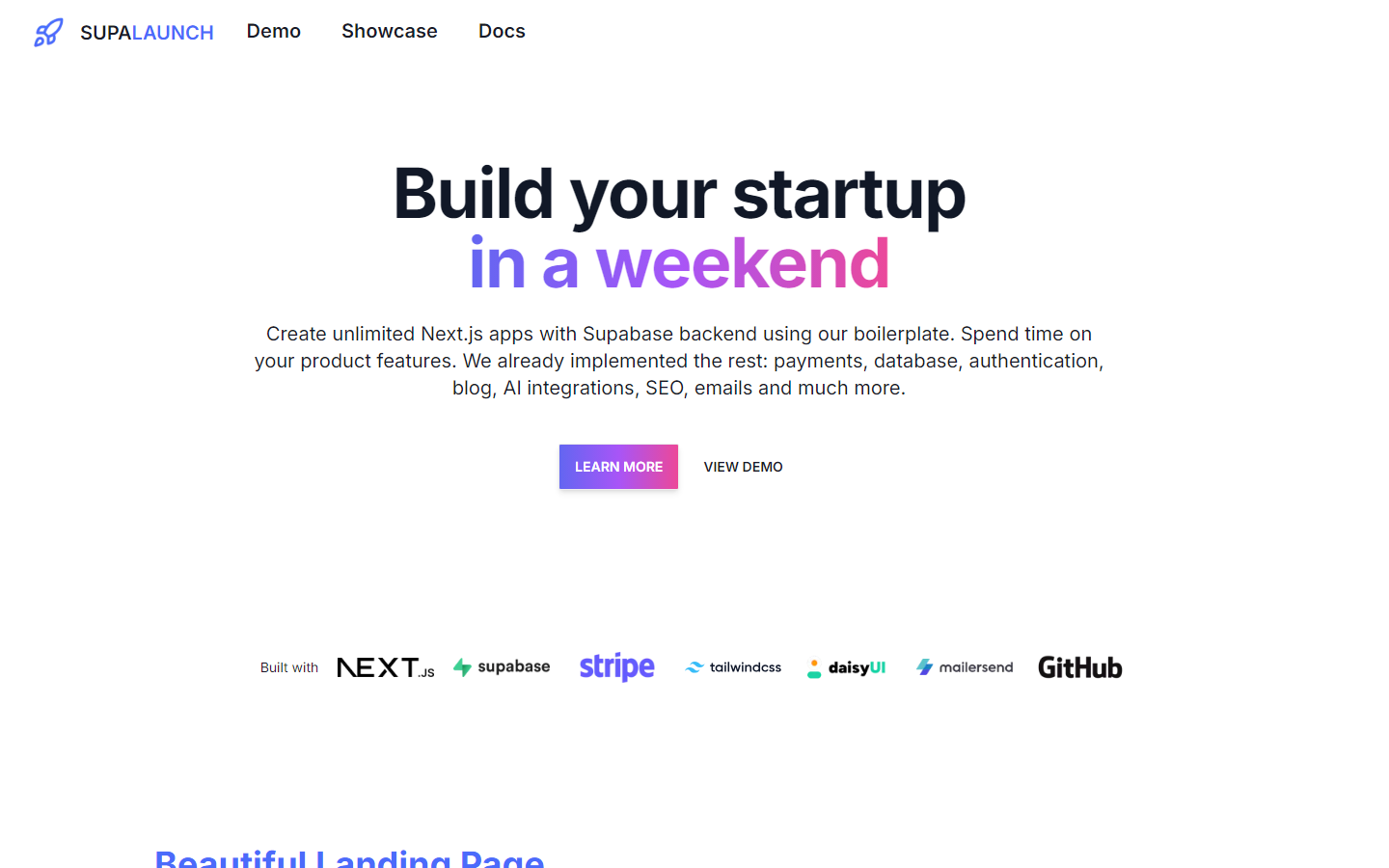
Integrated startup launch kit combining Supabase and NextJS for rapid development and deployment.
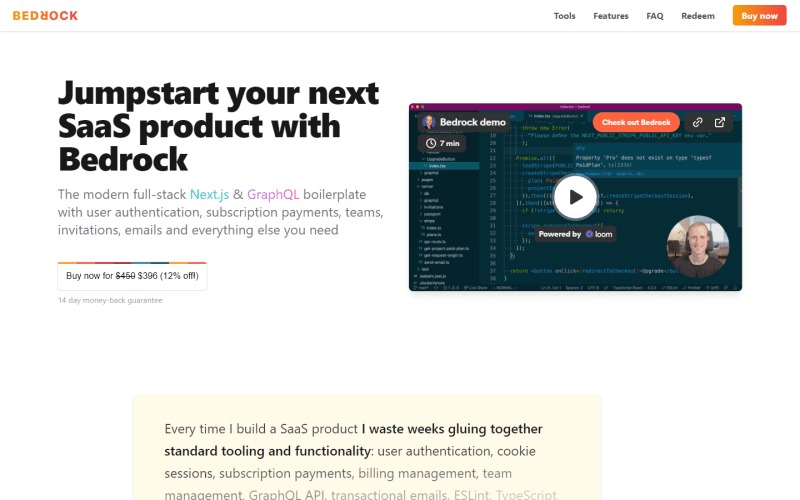
Bedrock by Mxstbr
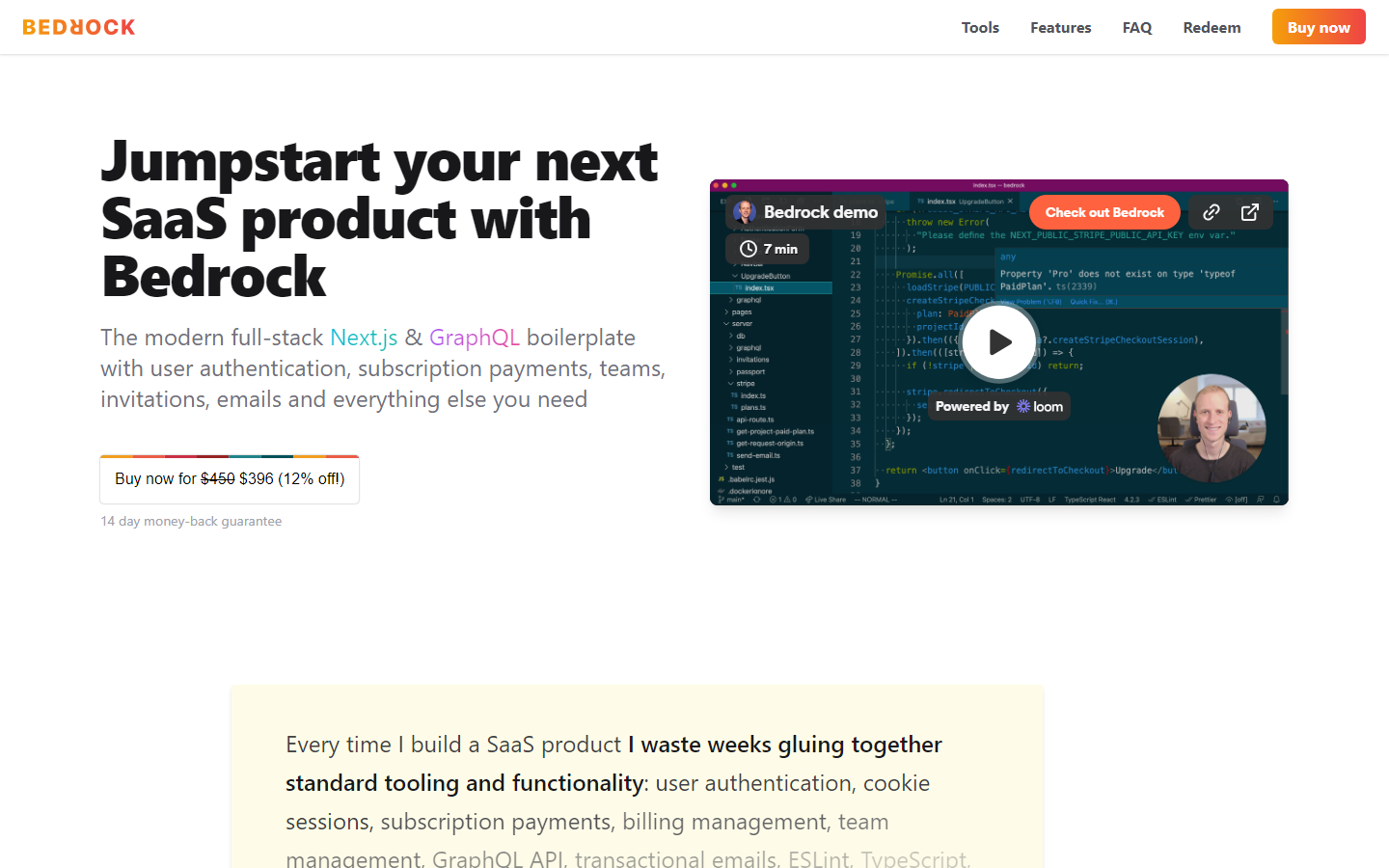
Full-stack NextJS & GraphQL boilerplate with comprehensive features for modern web app development.
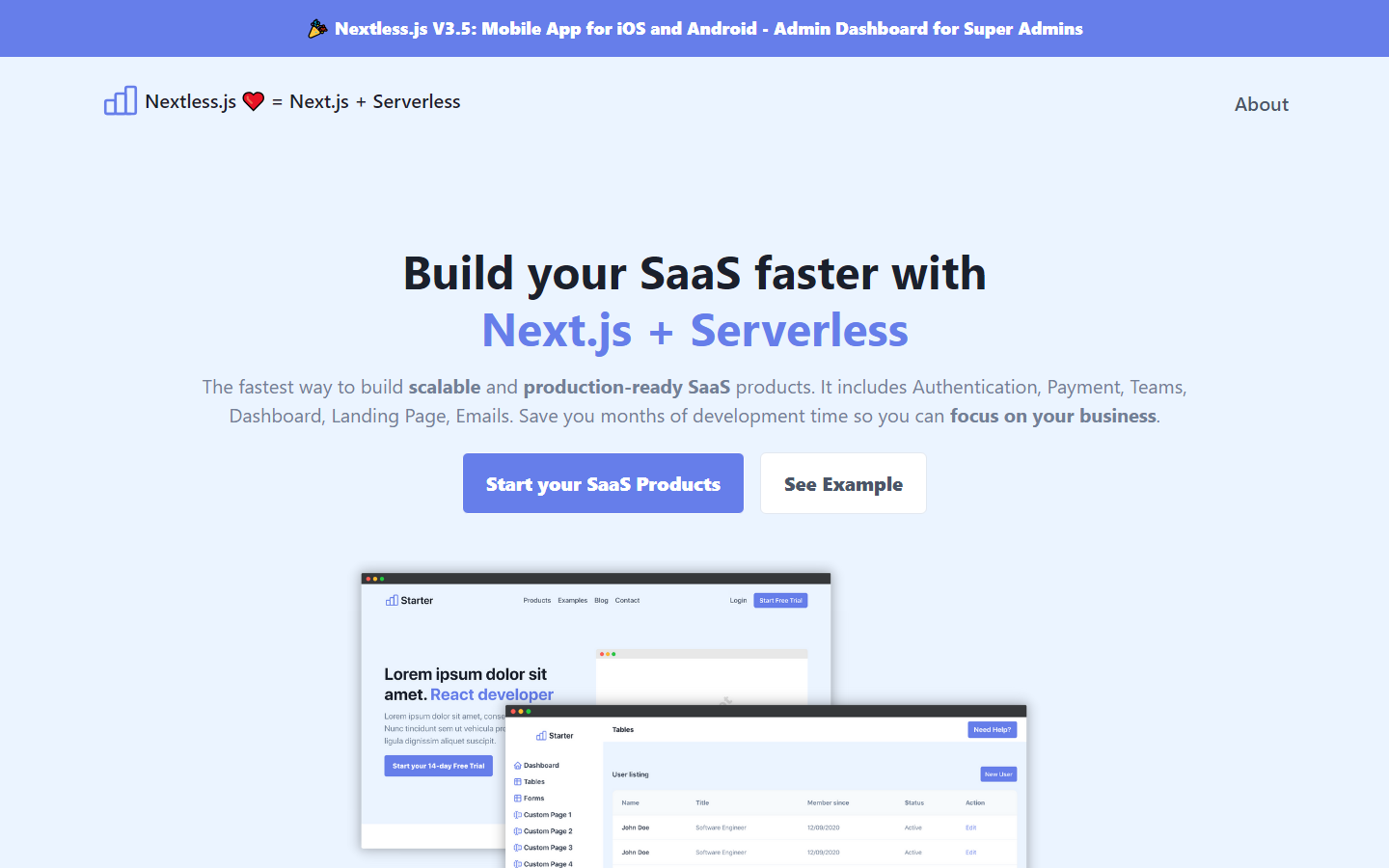
Modular NextJS
Modular NextJS: Scalable architecture for efficient SaaS development with modular components.
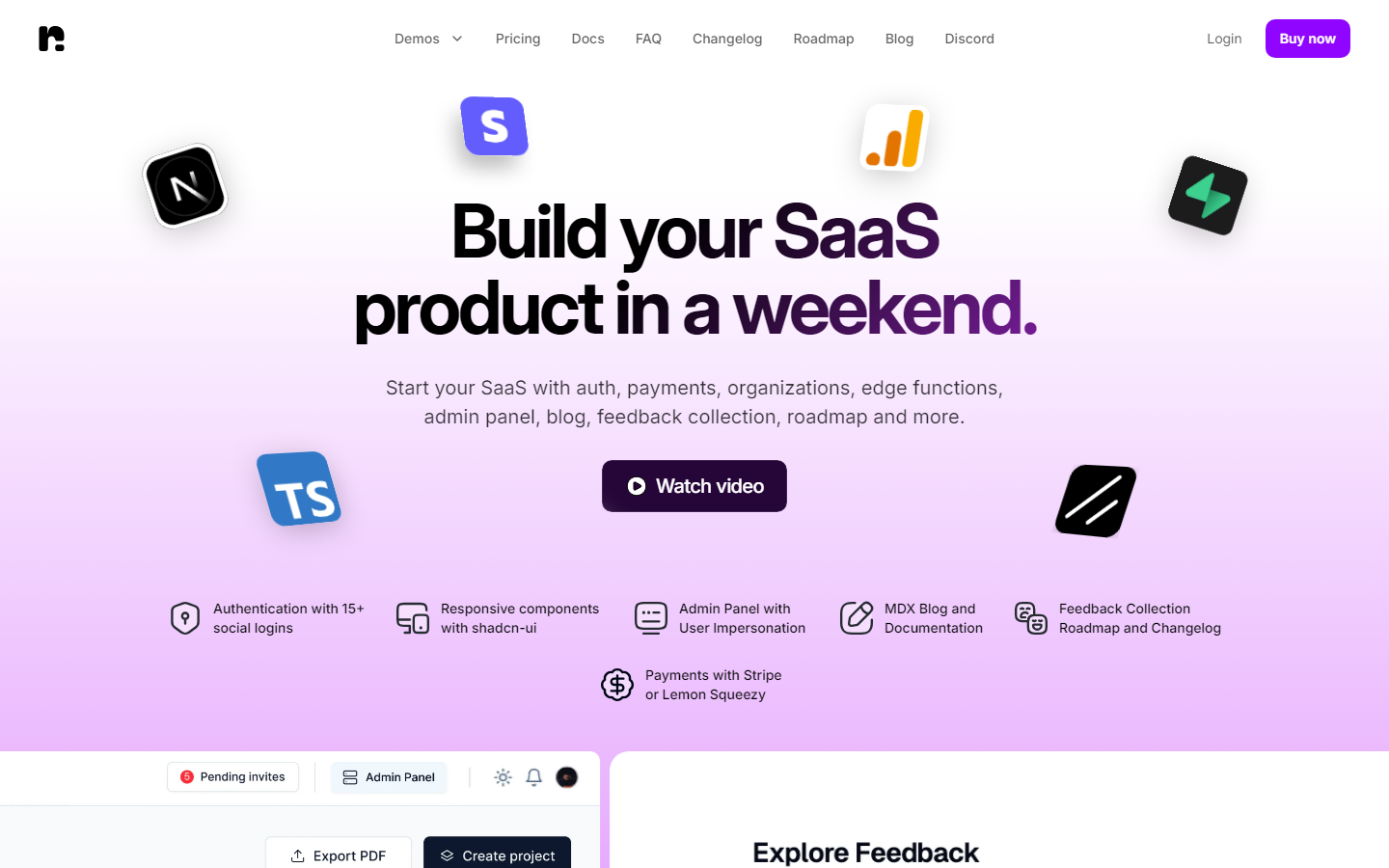
NextBase
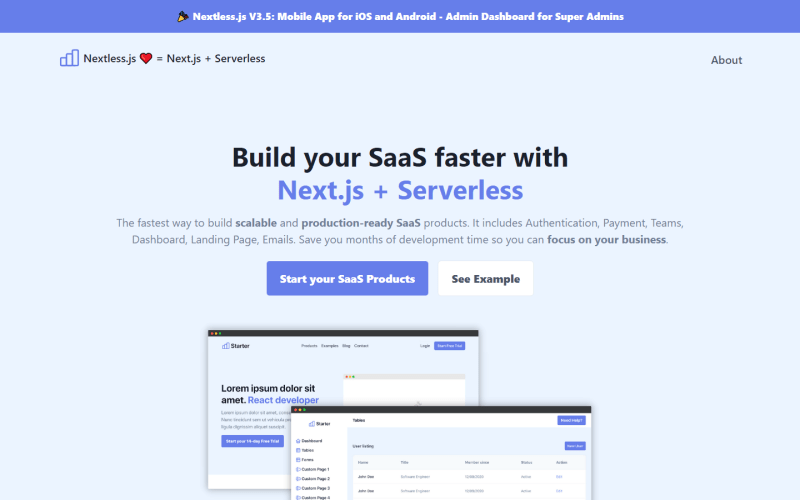
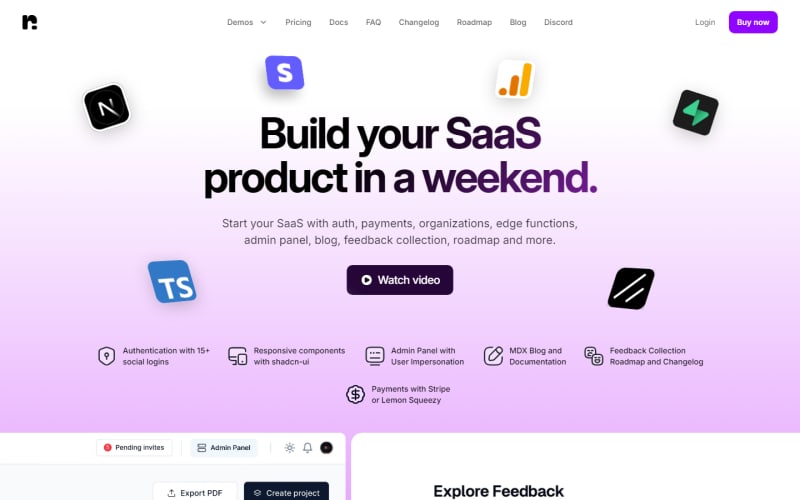
This one runs the catalog default stack end to end: NextJS, React, TypeScript, Tailwind, and Supabase, with an admin panel and payments included plus documentation as a listed feature. If your team already works in that combination, onboarding cost is low. The $99 to $399 spread means the entry tier undercuts the $157 median while the top tier roughly doubles it, so compare tiers carefully before buying. Email is not in the feature list despite appearing in 38 other listings, so transactional messaging needs its own integration.

AIO - React Native & Next Template
One codebase covering iOS, Android, and web, built on NextJS with Expo and React Native and typed throughout. Auth, payments, analytics, database, and SEO are all preintegrated, making it the most complete cross platform option in this group for developers who genuinely need all three targets. At $499 it is near the $506 ceiling of the catalog and more than triple the $157 median, so the value case rests entirely on needing mobile and web together. Single target projects will find cheaper, more focused kits here.
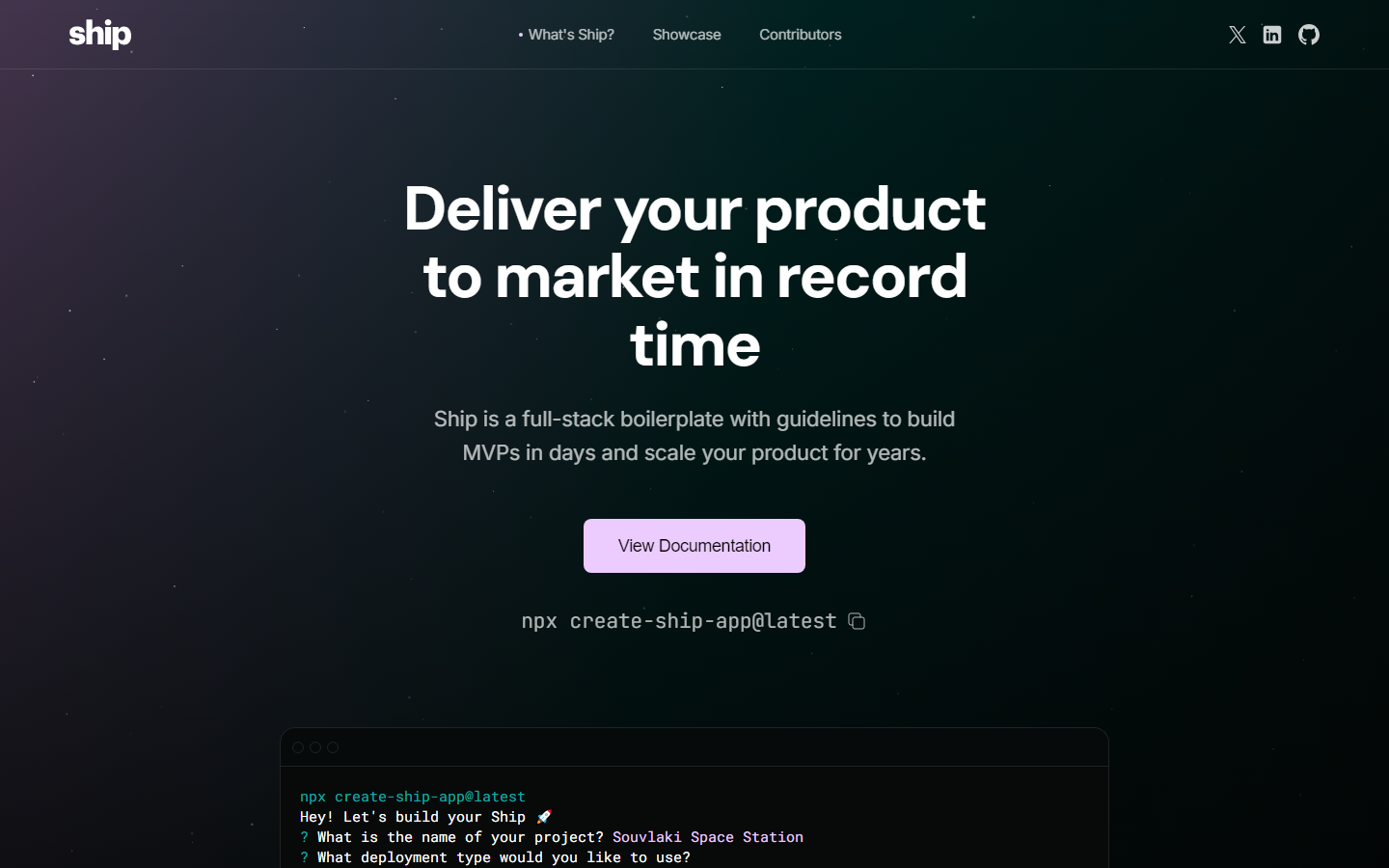
Paralect Ship
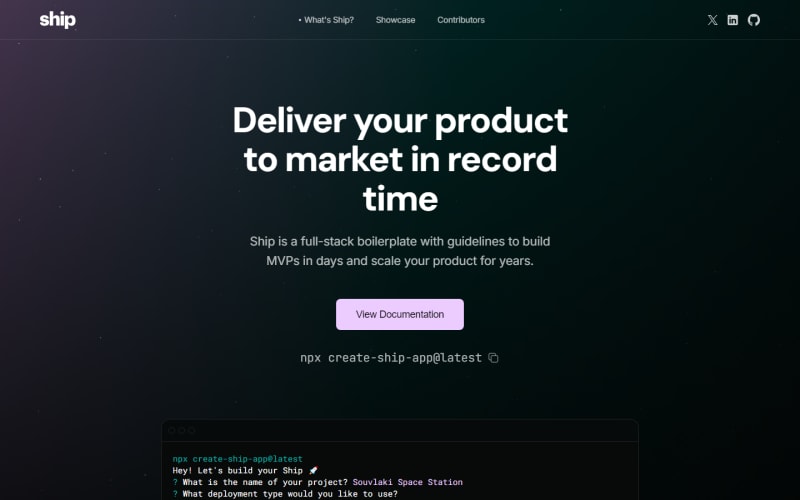
Free and open, Ship pairs NextJS and React with MongoDB and a microservices layout, plus CI/CD out of the box. The vendor cites use across 100 or more live products, and the architecture leans toward projects expected to grow past a single service. Zero cost against a $157 median makes it an easy thing to evaluate before committing money elsewhere. Two caveats: Auth and Payments are not in its listed features despite being near universal in this catalog, and MongoDB diverges from the Postgres and Supabase norm here.
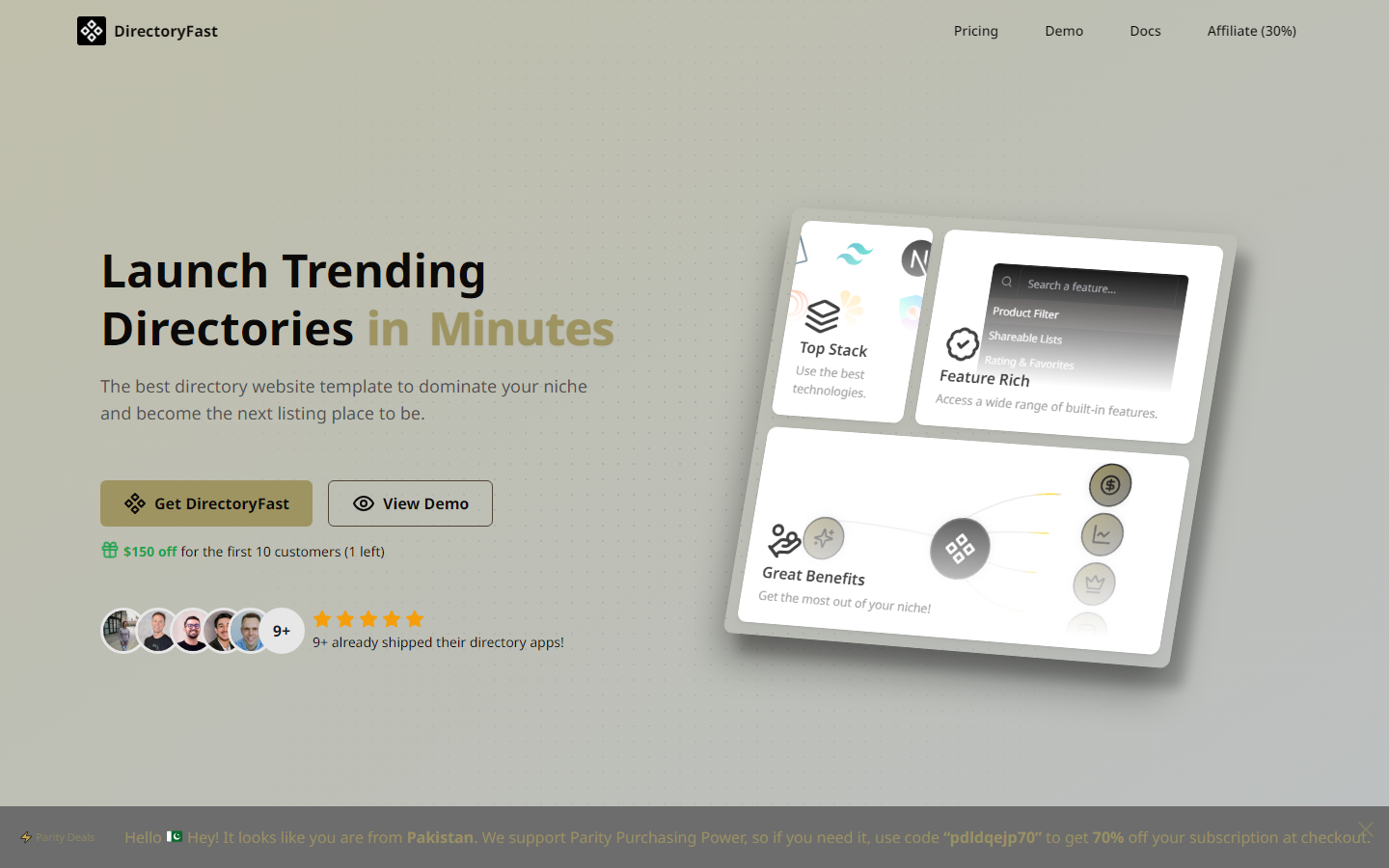
DirectoryFast
Directory sites are the whole point here, built on NextJS, TypeScript, Tailwind and Prisma with an admin panel, submissions flow, SEO and Stripe-style payments already wired. The listed feature set is one of the broadest in the catalog: auth, dashboard, database, email, payments and SEO all present. Pricing spans $147 to $847, so the entry tier undercuts the $157 median while the top tier is among the most expensive listings anywhere in the directory. Value depends entirely on your building directories repeatedly rather than one general-purpose SaaS.
AnotherWrapper
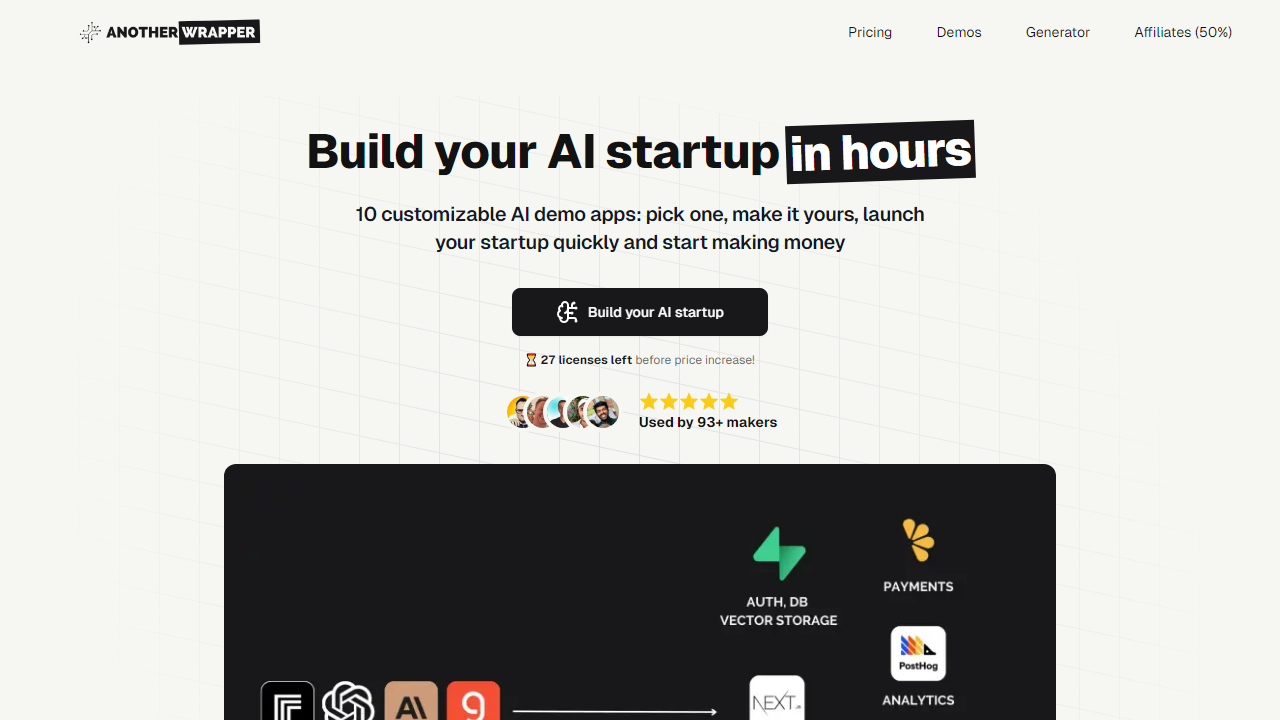
Ten prebuilt NextJS demo apps bundled into one kit, targeted at people shipping AI wrappers on Supabase with Lemon Squeezy billing. Analytics, blog, email, landing pages, payments and storage are all listed, which is unusually complete for the $127 to $157 range, sitting at or under the catalog median. AI plus NextJS plus Supabase is a well-trodden path in this catalog, so integrations are predictable. Keep in mind there is no admin panel listed, so user management and moderation tooling is something you assemble yourself.
staarter.dev
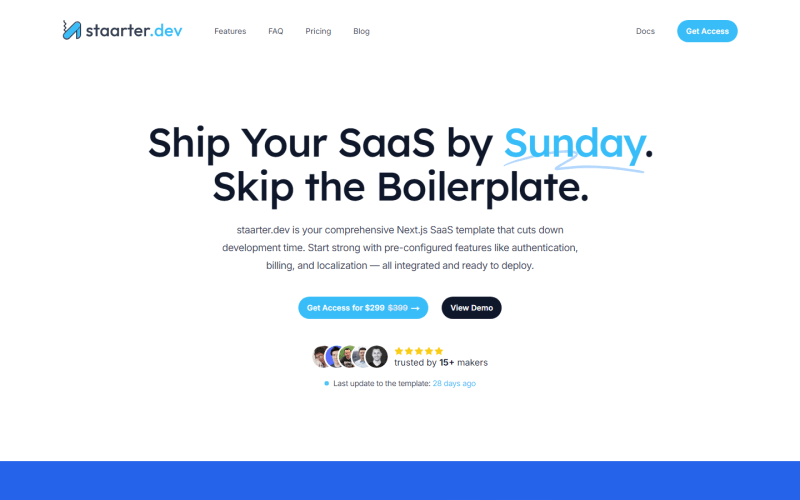
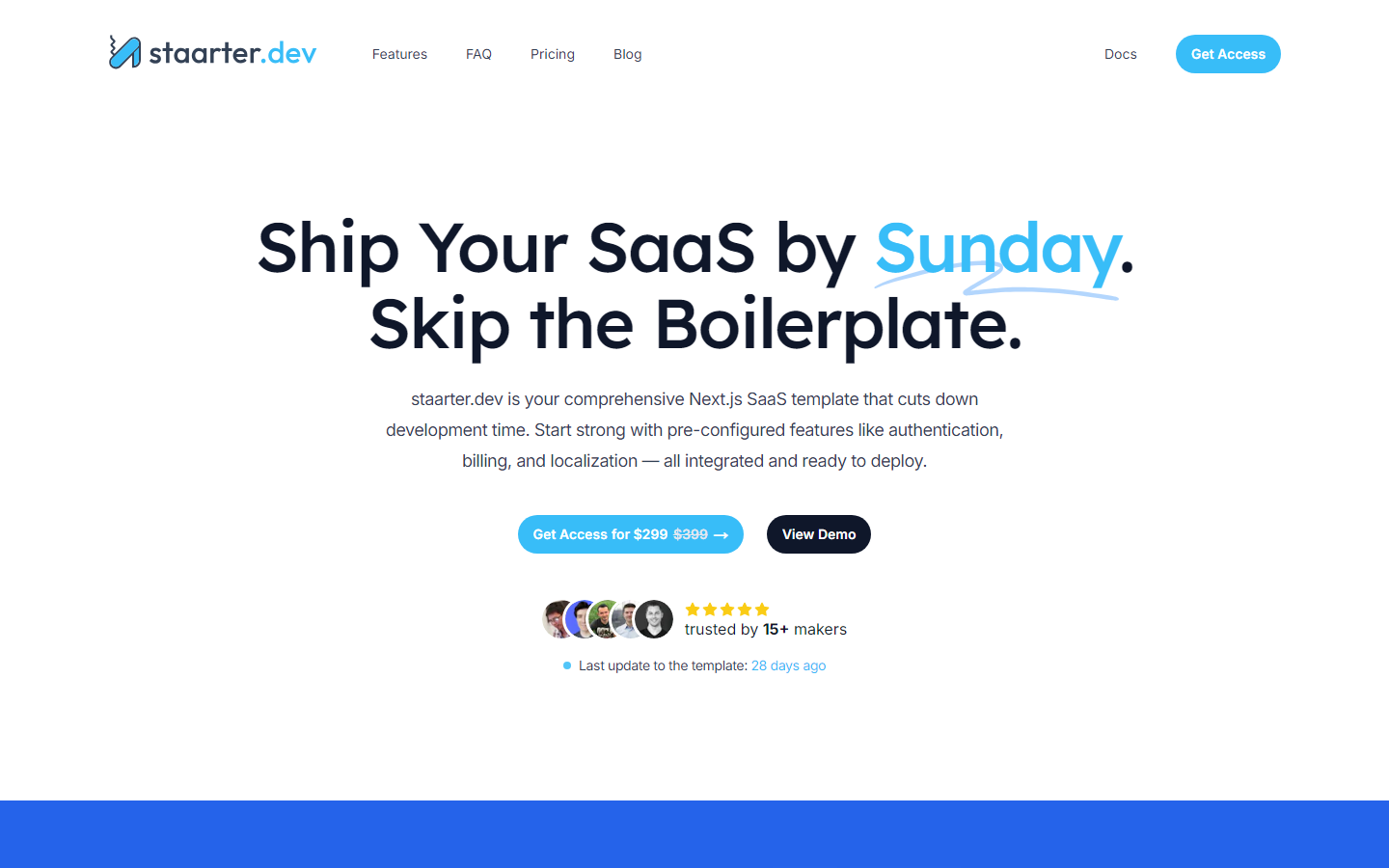
Positioned as a comprehensive NextJS and TypeScript SaaS template with three billing providers supported out of the box, Stripe, Paddle and LemonSqueezy, plus localization, blog, database, email, storage and SEO. Flat $249 pricing is roughly 60 percent above the $157 median, which you are paying for breadth rather than niche focus. Multi-provider billing genuinely matters if you sell internationally. The gap: no admin panel appears in the listed features, so internal tooling for support and account management is on you once real customers arrive.
WaitlistEasy
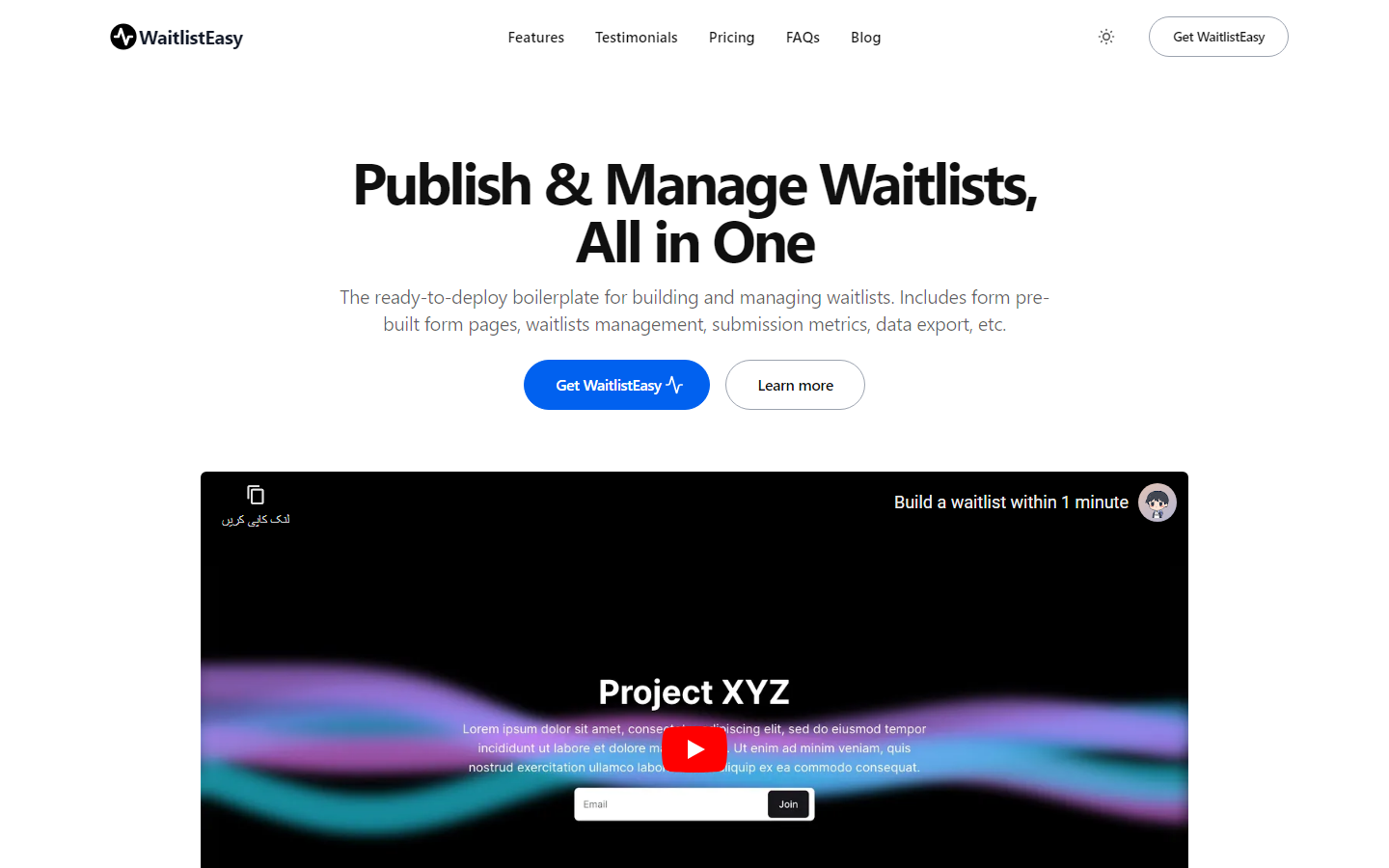
Waitlist collection is the entire product: NextJS, TypeScript, Shadcn and PostgreSQL behind a no-code setup with unlimited projects, custom domains and no vendor branding. At $30 to $60 it is one of the cheapest listings in the catalog, well under the $157 median, and the admin panel plus analytics are the real deliverables. Scope is the honest caveat. There is no auth, payments or email in the feature list, so this handles pre-launch signups only and you will still need a separate SaaS starter afterward.
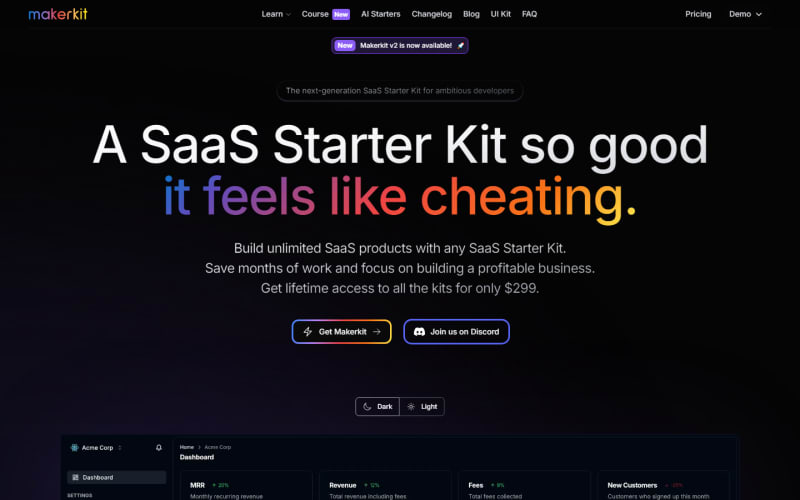
MakerKit
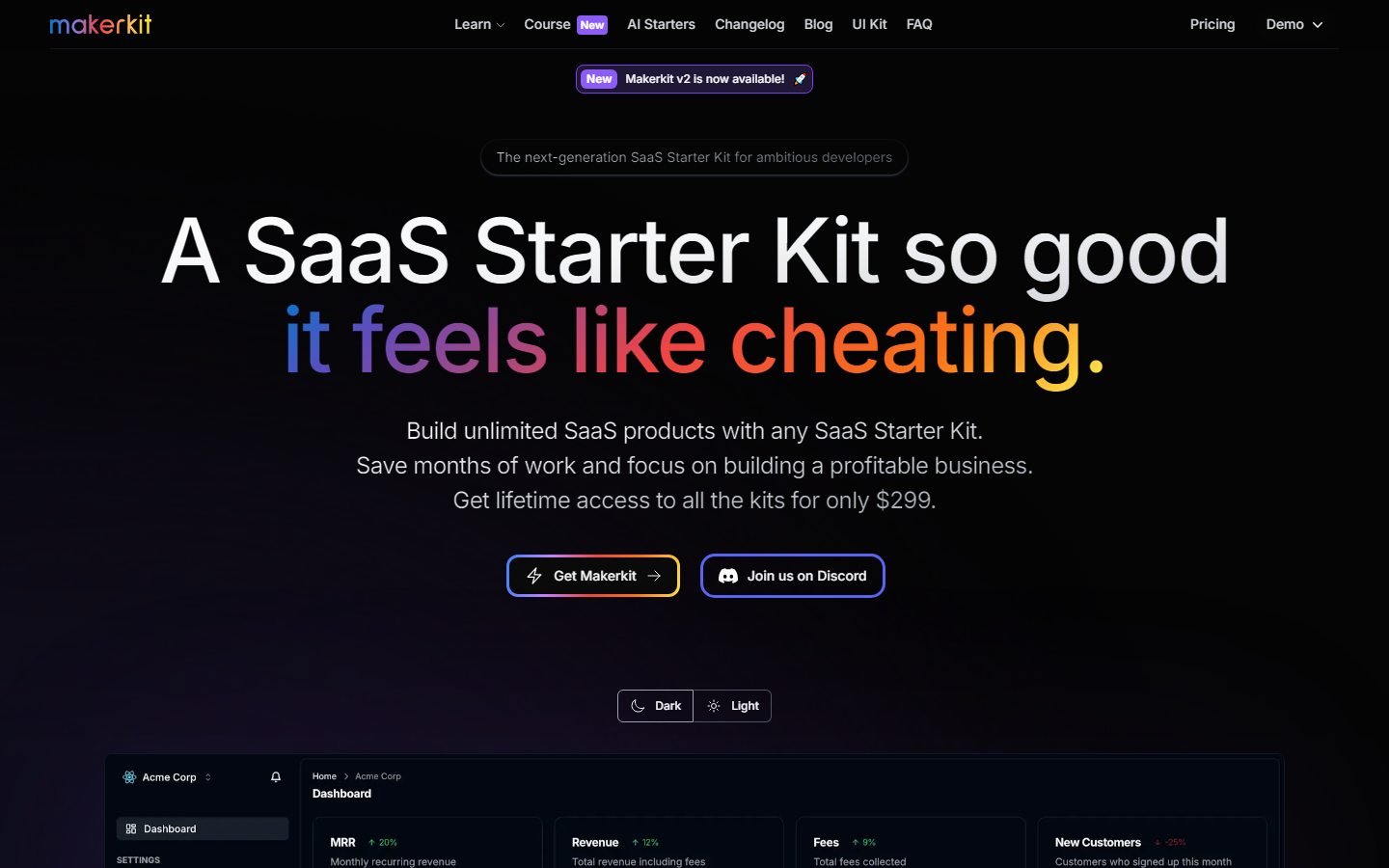
Multi-tenancy is the differentiator: a production-grade NextJS and Supabase foundation, also available for Remix, covering teams, roles, Stripe billing, admin panel, documentation and a plugin system. That B2B focus explains the $299 to $599 range, roughly two to four times the $157 median and among the pricier options here. Documentation and plugins suggest it expects long-lived projects rather than weekend launches. The tradeoff is cost and complexity: if you are shipping a single-tenant consumer tool, you pay a premium for tenancy machinery you will not use.
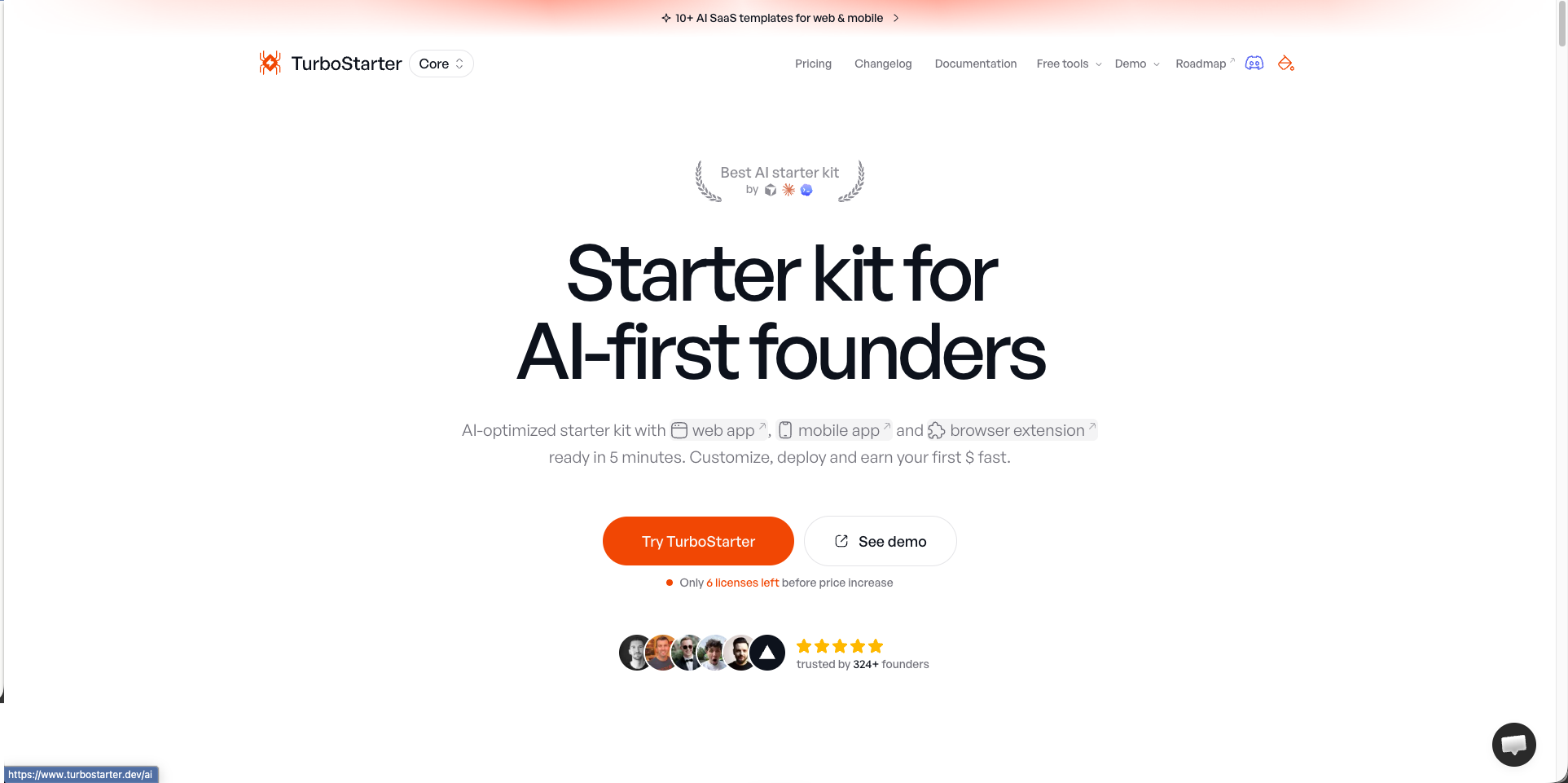
TurboStarter
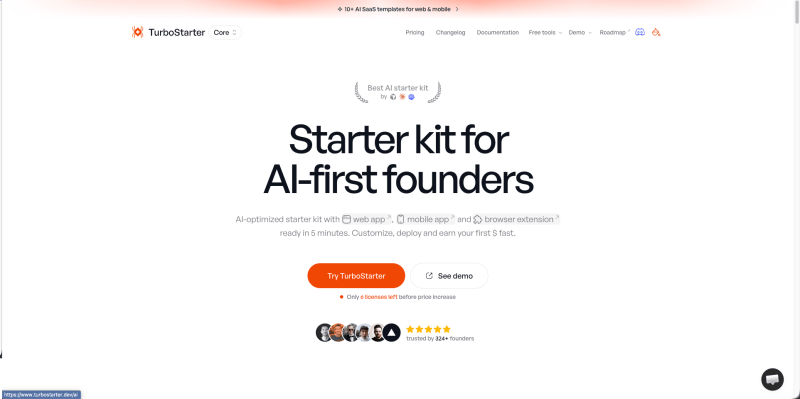
Three targets from one codebase, web on NextJS, mobile on Expo and React Native, and a browser extension via Plasmo, all on Supabase with multi-tenancy, admin panel, AI and payments. Nothing else in the catalog spans that combination. The $299 to $499 range is roughly two to three times the $157 median, and the breadth is what you are paying for. Fair warning on scope: a monorepo covering three platforms carries real setup and maintenance overhead, so it only pays off if you genuinely ship to more than one.
SaasCore
Next.js 15 SaaS boilerplate with NextAuth 5, Prisma, PostgreSQL on Neon, Stripe billing, and built-in admin, client and affiliate dashboards.

Mkdirs
Launch AI-powered directory websites in minutes
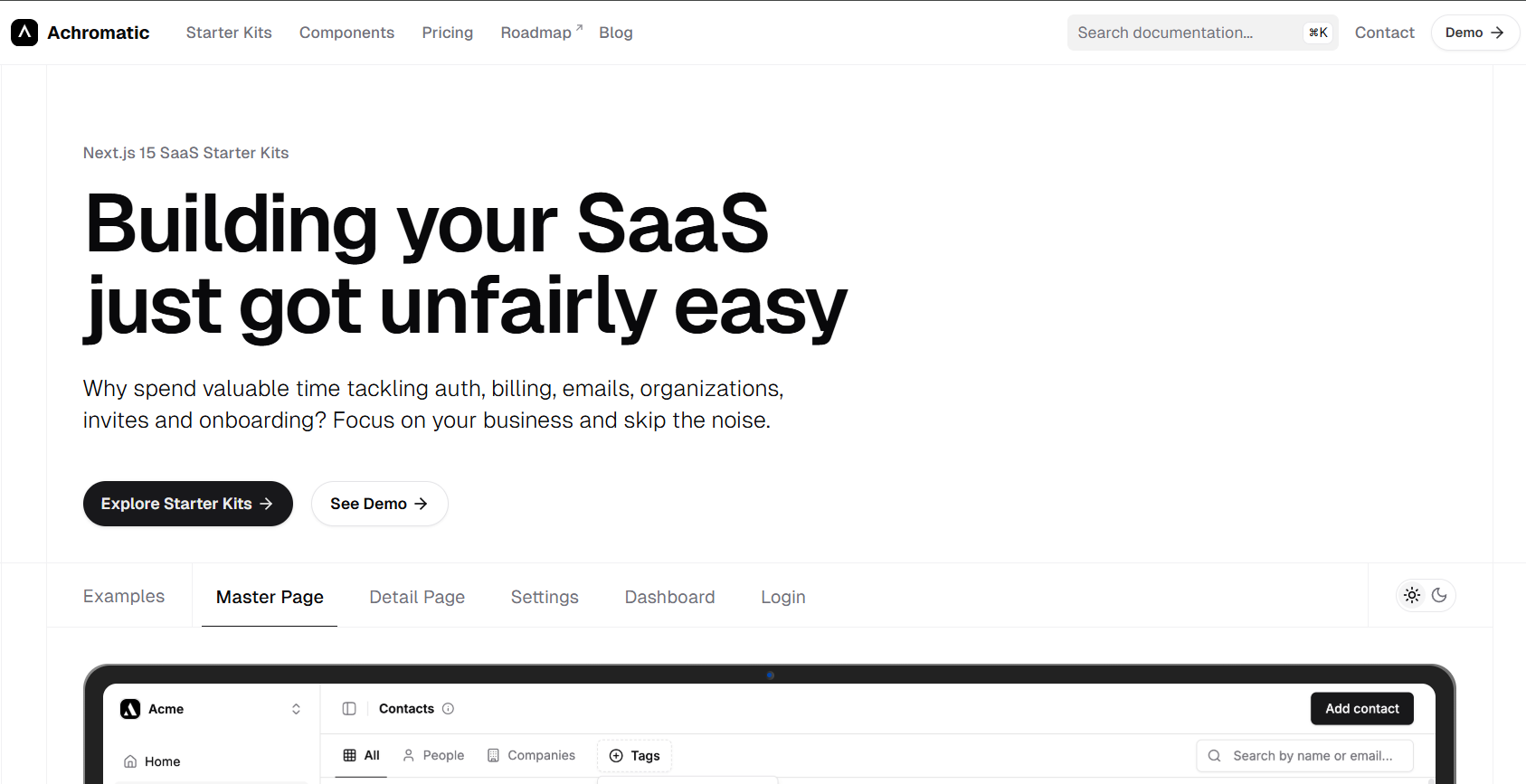
Achromatic
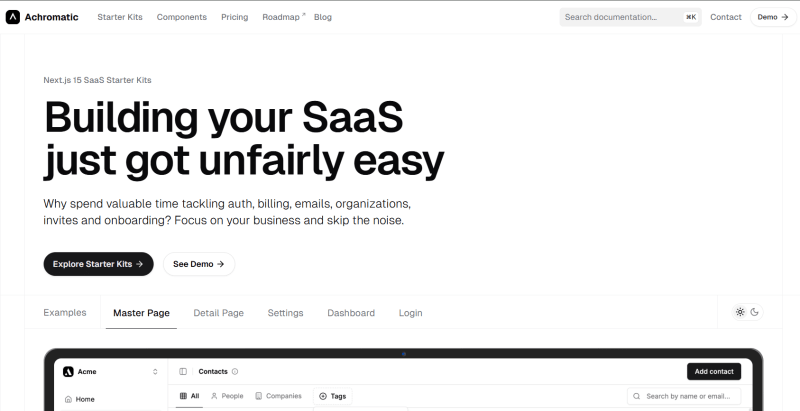
Building your SaaS just got unfairly easy. Why spend valuable time tackling auth, billing, emails, organizations, invites and onboarding? Focus on your business and skip the noise.
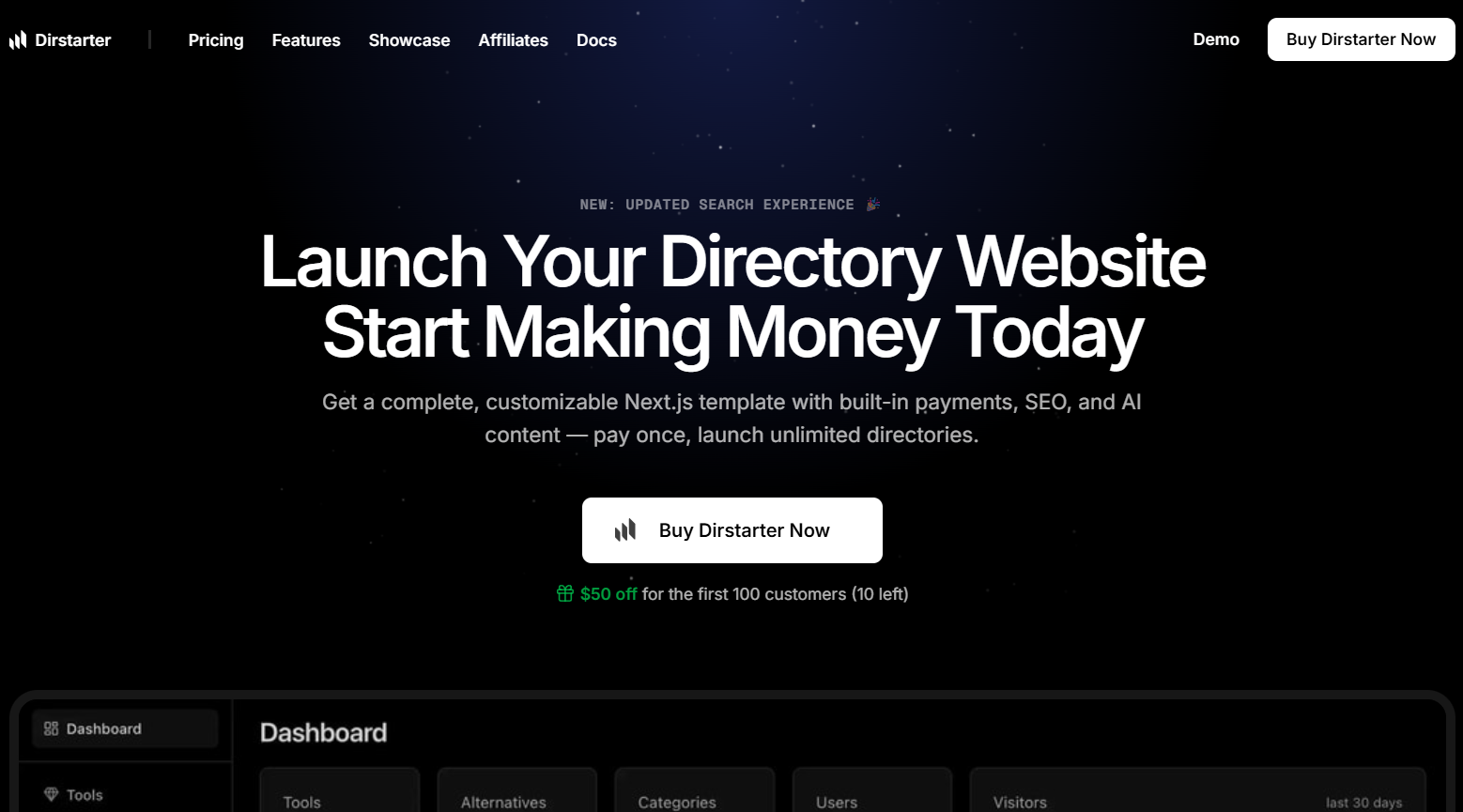
Dirstarter
Another directory-focused NextJS build, using React, TypeScript, Tailwind, Prisma and Stripe, with AI-assisted content generation, analytics and SEO included under a pay-once license covering unlimited directories. At $159 to $199 it starts right at the $157 median and stays reasonable at the top tier. The unlimited-sites term matters if you plan several niche directories rather than one. Feature-wise it is leaner than some rivals: no auth, database or email appear in the listing, so account handling and transactional mail need attention early.
Nexty.dev
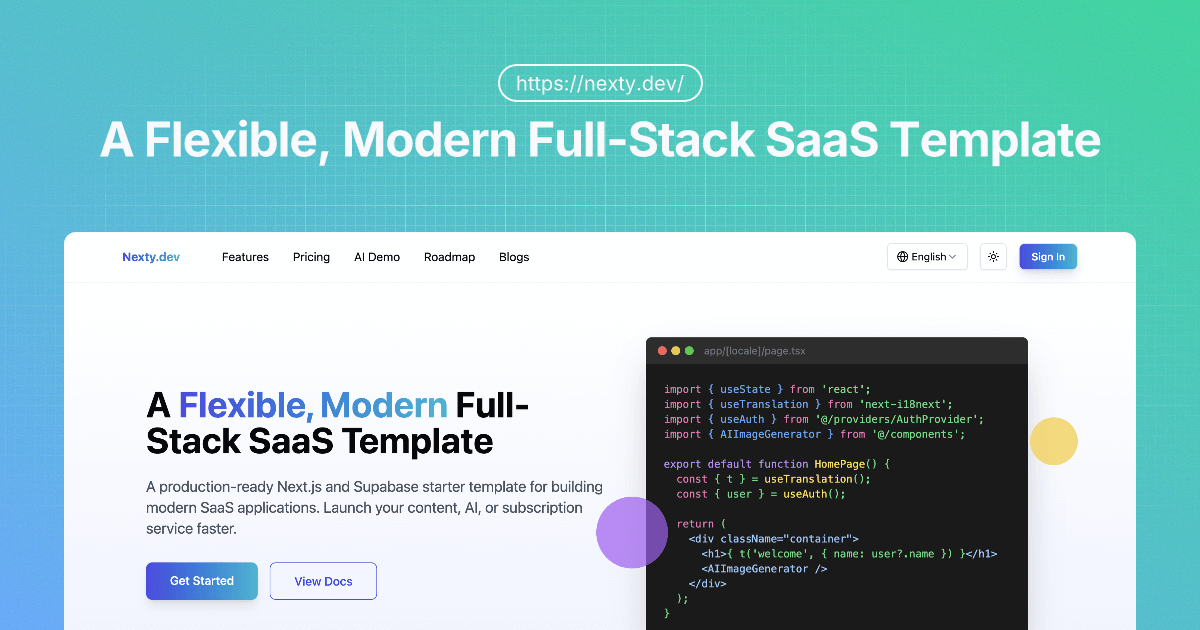
Next.js 16 SaaS boilerplate with Better Auth, Drizzle, Stripe, Creem and PayPal payments, AI SDK, CMS and i18n, deployable to Vercel or Cloudflare.
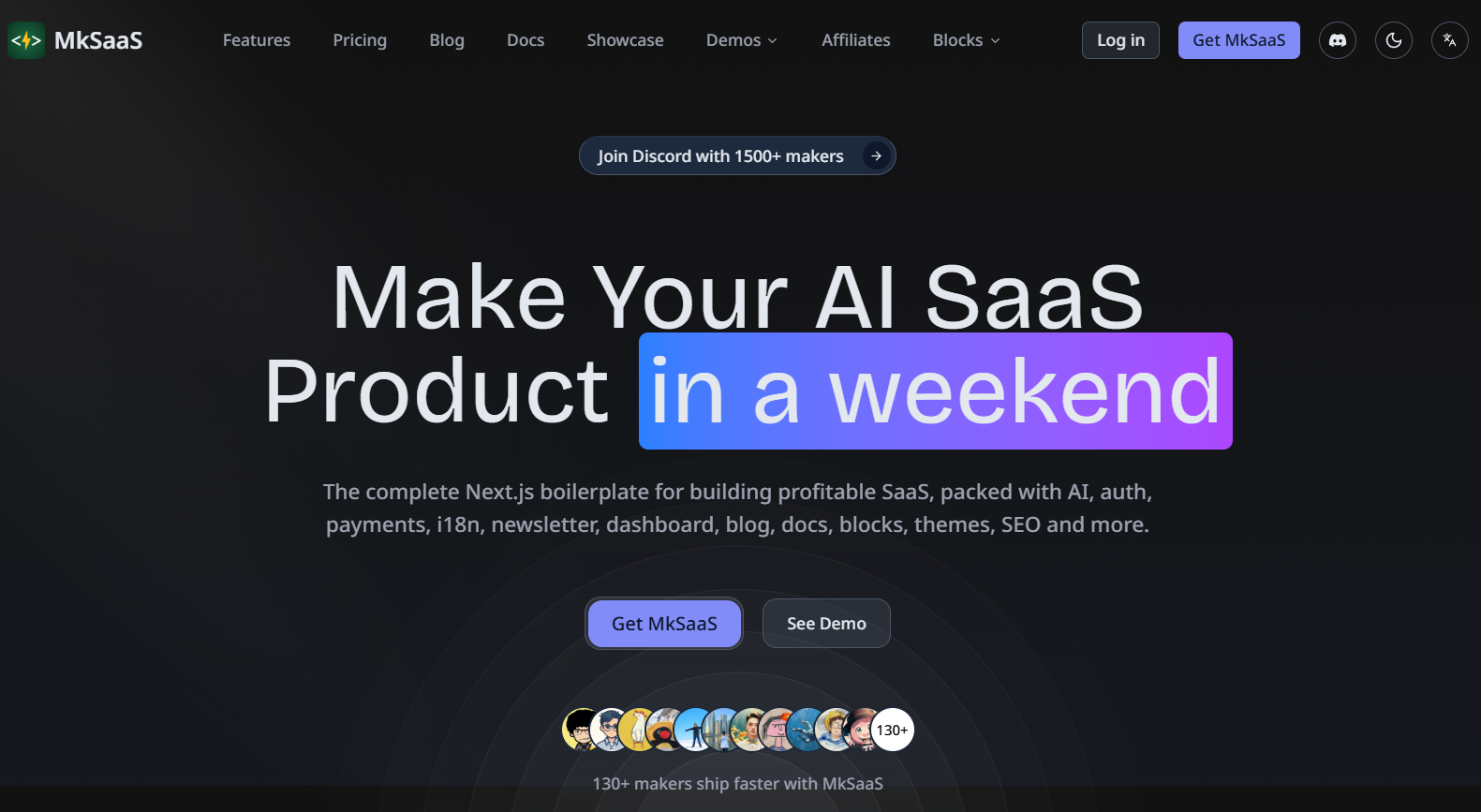
MkSaaS
The complete NextJS boilerplate for building profitable SaaS, packed with AI, auth, payments, i18n, newsletter, dashboard, blog, docs, blocks, themes, SEO and more.
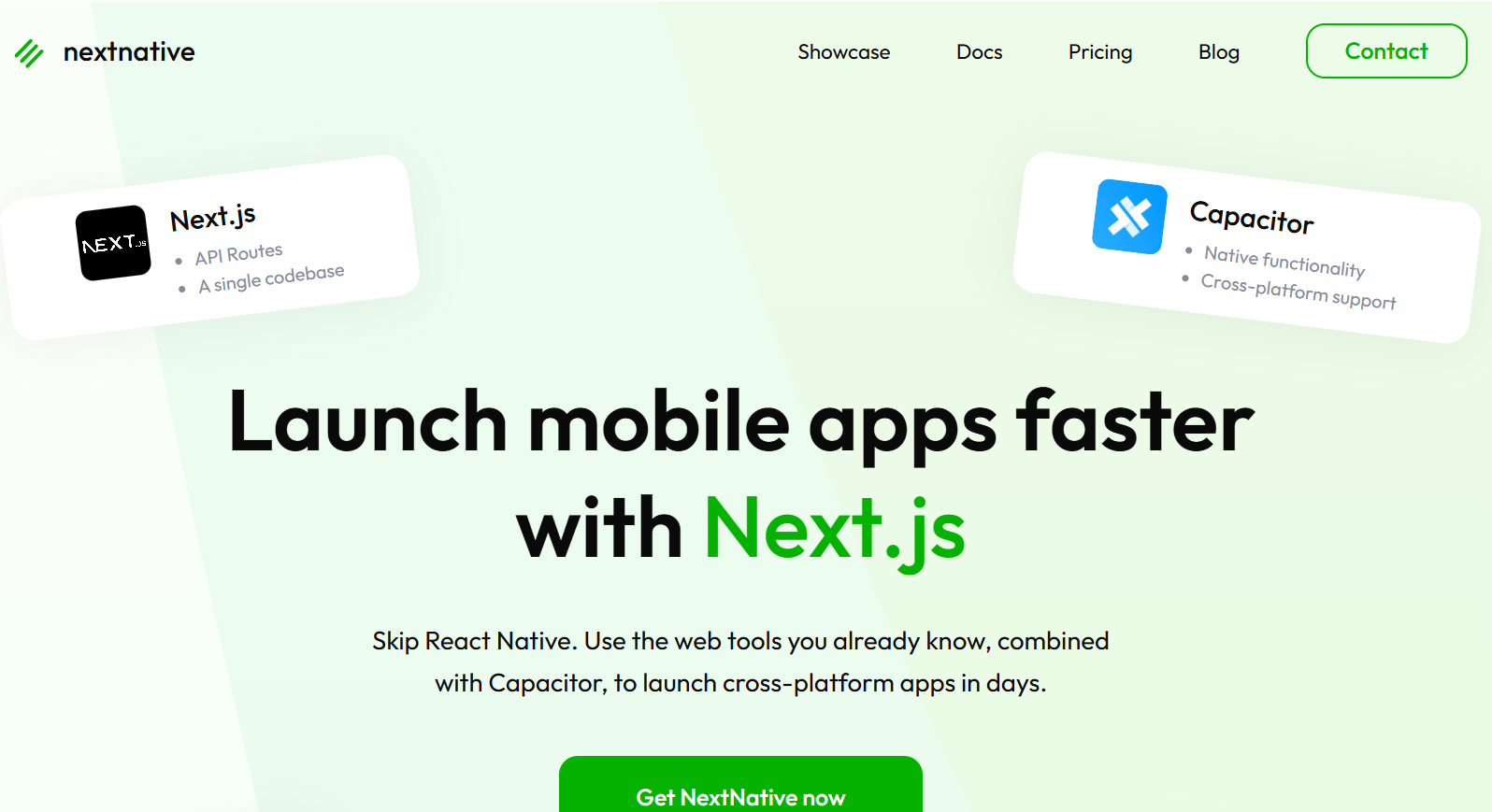
NextNative
Skip React Native. Use the web tools you already know, combined with Capacitor, to launch cross-platform apps in days.
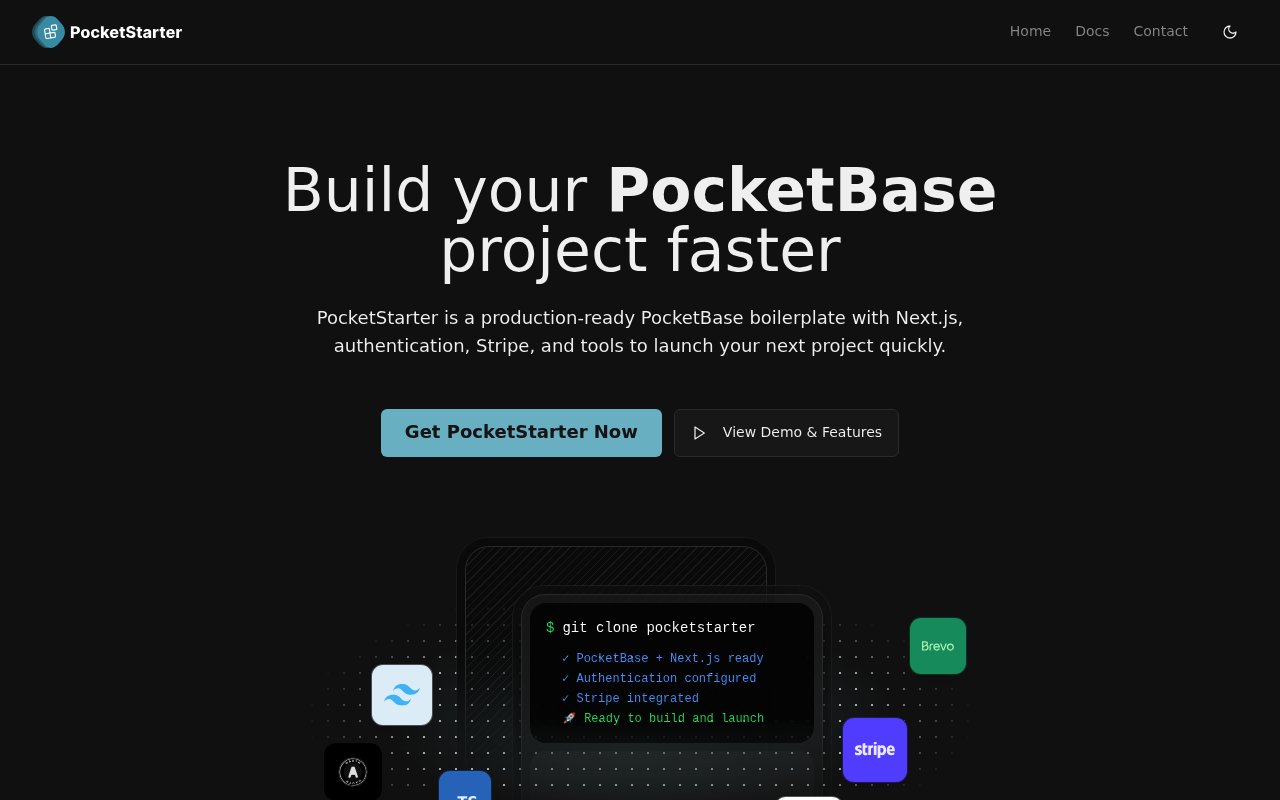
PocketStarter
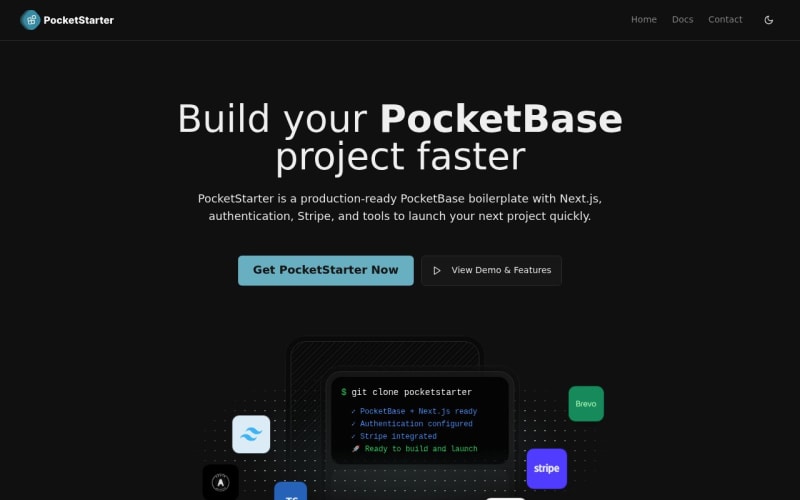
PocketStarter is a production-ready PocketBase boilerplate with Next.js, authentication, Stripe, and tools to launch your next project quickly.
Supastack
SaaS boilerplate for web, mobile and desktop using Next.js 16, Expo and Tauri in a Turborepo monorepo, with Better Auth, Drizzle, Stripe and AI.
Agentic Boilerplate
A Next.js SaaS starter that ships only the services you pick, plus the AGENTS.md, rules, skills and subagents your coding agent needs to work in it.
Building on Next.js?
Before you pick a starter, it helps to settle the layers around it and get your coding agent set up for the framework.
How to choose a NextJS boilerplate
Start with the database layer, because it is the hardest thing to swap later. Kits built on Supabase give you Postgres, auth, storage and row level security behind one SDK, which is fast to start with and ties your auth model to Supabase. Kits built on Prisma or Drizzle against your own Postgres keep the database portable at the cost of wiring auth yourself. Neither is wrong, but migrating between them after launch means rewriting every query and your entire session handling.
Check the billing implementation next, not just whether Stripe is listed. Subscriptions are easy, webhooks are not: proration, failed payments, plan changes and cancellation flows are where the weeks disappear. Look for a kit that ships webhook handlers and a customer portal, and note whether it supports Lemon Squeezy or Paddle if you want a merchant of record handling EU VAT for you.
Then match the feature set to what you are actually building. A single tenant tool needs auth, billing and email. A B2B product needs organizations, roles, invitations and an admin panel, and retrofitting multi-tenancy into a kit that lacks it is close to a rewrite. Cheaper NextJS kits tend to be single tenant, which is the honest reason the price gap exists.
Frequently Asked Questions
What is the best NextJS SaaS boilerplate?
The most popular NextJS SaaS boilerplates are ShipFast, LaunchFast, and Shipped. They differ in their ORM choice (Prisma vs Drizzle), auth provider (NextAuth vs Clerk), and whether they include a blog or multi-tenancy. Browse the full NextJS list above and use the feature filters to match your exact stack.
Do NextJS boilerplates include Stripe?
Most paid NextJS SaaS boilerplates include Stripe subscriptions and webhook handling out of the box. Some also support Lemon Squeezy or Paddle. Use the Stripe filter above to see only boilerplates with payment processing included.
Should I use the Next.js App Router or Pages Router in a SaaS boilerplate?
Modern NextJS boilerplates (2024 onwards) are built on the App Router, which supports React Server Components, streaming, and improved data fetching patterns. Unless you have a specific reason to use Pages Router, App Router is the right choice for new SaaS projects.
Are there free NextJS SaaS boilerplates?
Yes. Several open-source NextJS boilerplates are available for free on GitHub. Use the price filter above to browse free-only options. Free NextJS boilerplates may have fewer features and less support than paid alternatives, but are a solid starting point for budget-conscious founders.
What should a NextJS SaaS boilerplate include?
A production-ready NextJS SaaS boilerplate should include: authentication (NextAuth, Clerk, or Auth.js), Stripe subscription billing with webhook handling, a PostgreSQL or MySQL database with Prisma or Drizzle ORM, transactional email (Resend or Mailgun), a landing page, and a Vercel deployment setup. The best ones also include SEO configuration, an admin dashboard, and blog functionality.