
SwiftShip vs Native Express: Head-to-Head Comparison
Choosing between SwiftShip and Native Express? We've compared both boilerplates across pricing, features, tech stack, and more. SwiftShip is $50 cheaper, but pricing isn't everything. Let's dive into the details.
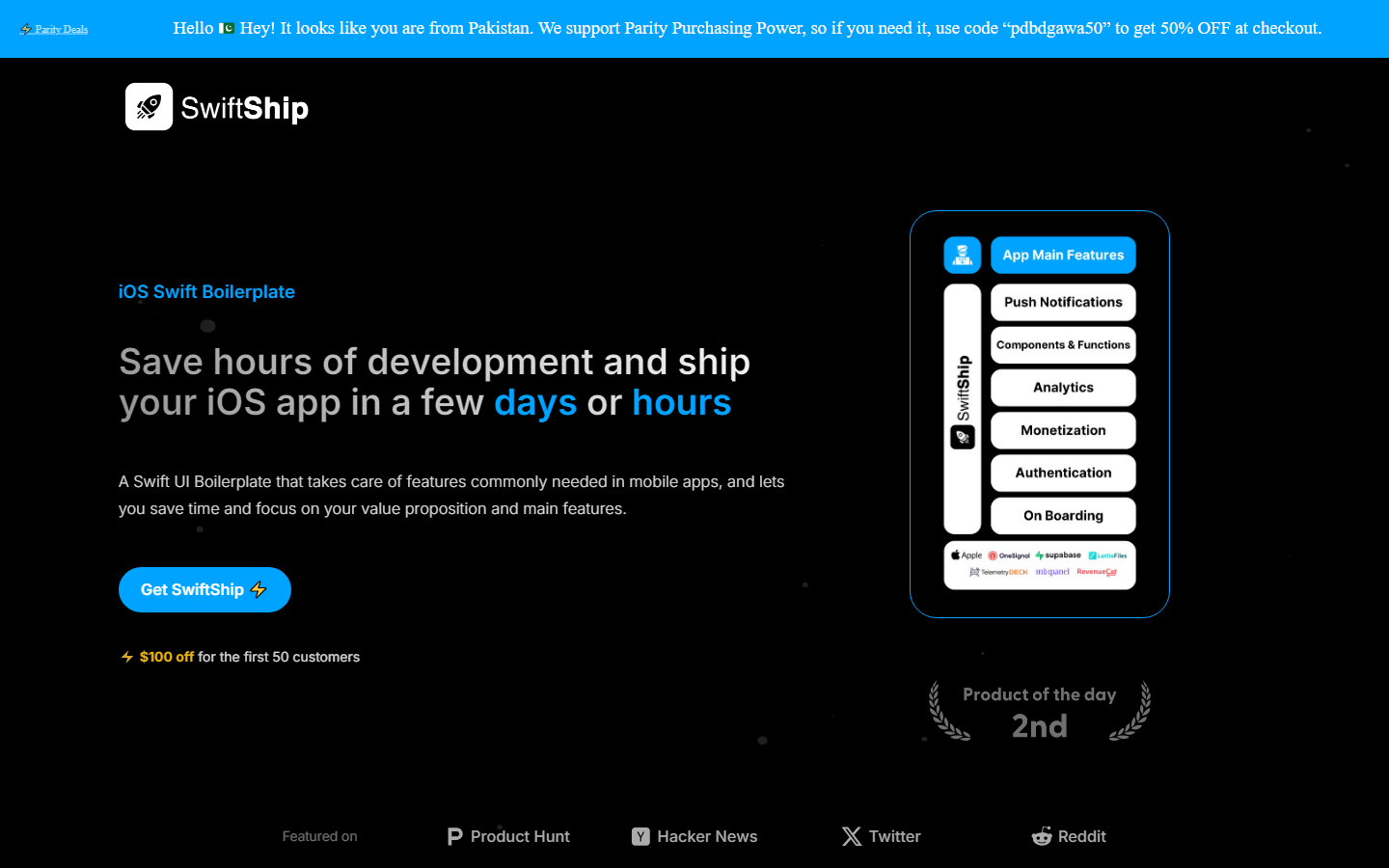
SwiftShip
Streamlined Swift boilerplate designed for rapid development and deployment of iOS applications.
SwiftShip Tech Stack
 SwiftUI
  Supabase
  RevenueCat
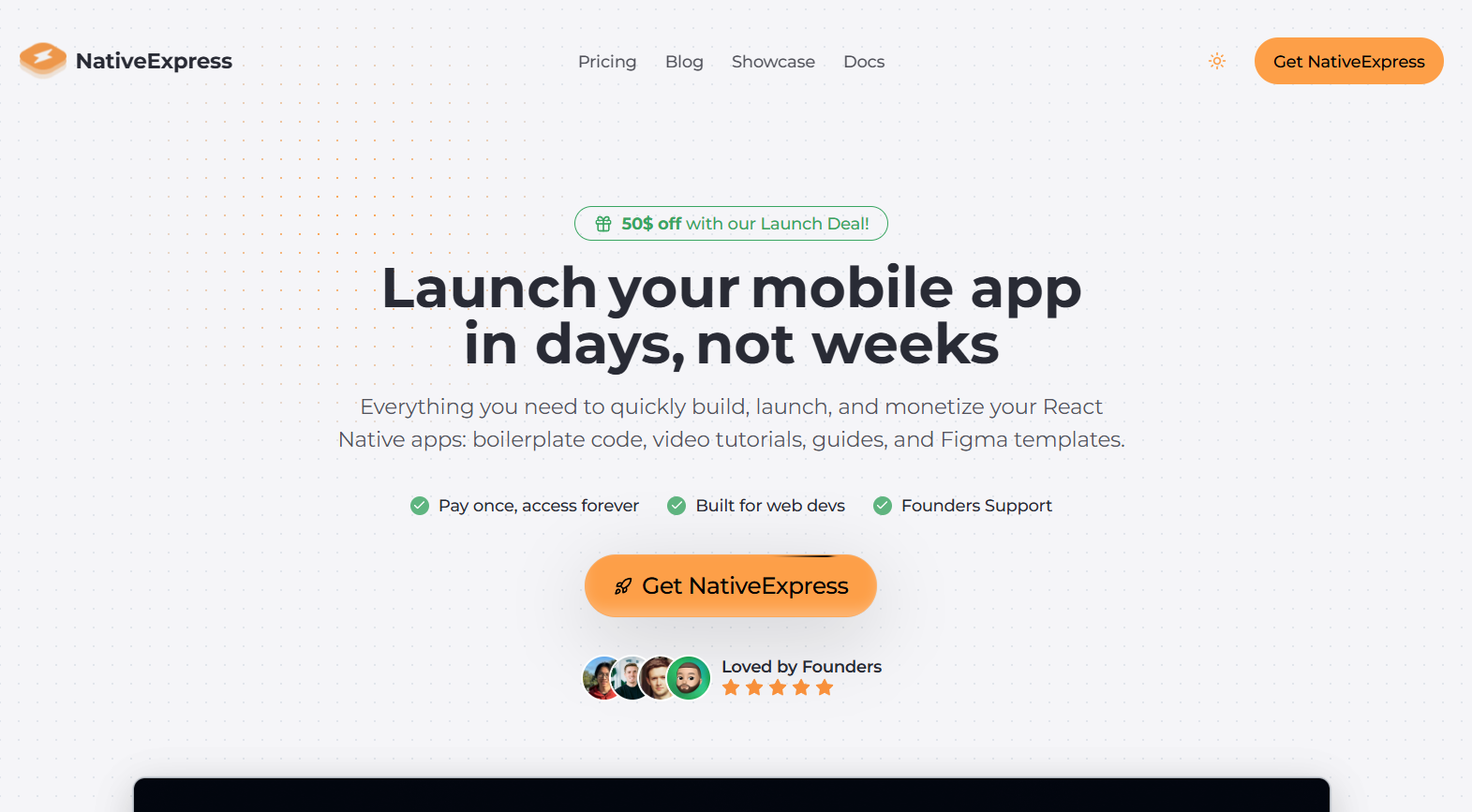
 Native Express Tech Stack
 Expo
Expo  React Native
  TypeScript Supabase RevenueCat
 | Specification | SwiftShip | Native Express |
|---|---|---|
| Starting price | $129 | $179 |
| Price range | $129 | $179 - $229 |
| Stack | Supabase Auth, SwiftUI, Supabase, RevenueCat | Supabase Auth, Expo, React Native, TypeScript, Supabase, RevenueCat |
| Integrations listed | 2 | 6 |
| Auth | — | ✓ |
| Payments | — | ✓ |
| Database | — | ✓ |
| — | — | |
| AI | — | ✓ |
| Admin Panel | — | — |
| Multi-tenancy | — | — |
| SEO | — | — |
| Blog | — | — |
| Analytics | — | ✓ |
| Agent readiness · checked 2026-08-17 | ||
| AGENTS.md included | ? | ? |
| CLAUDE.md included | ? | ? |
| Cursor rules included | ? | ✓ |
| Ships Claude skills | ? | ? |
| Ships subagents | ? | ? |
| MCP integrations | ? | ? |
| Tests an agent can run | ? | ? |
| TypeScript | ? | ✓ |
| Agent-readiness score | 0/100 | 18/100 |
| Everything else either kit lists | ||
| In-app purchases | ✓ | — |
| Notifications | — | ✓ |
| Onboarding | ✓ | — |
A question mark means the vendor's public documentation does not mention that capability. It is not a statement that the boilerplate lacks it. How we score agent readiness
Specifications last updated , from the BoilerplateHub catalog.
Which Should You Choose?
Choose SwiftShip if you prioritize In-app purchases and Onboarding. Choose Native Express if AI and Analytics are more important to your project.
Frequently Asked Questions
What is the difference between SwiftShip and Native Express?
SwiftShip costs $129 and includes 2 features. Native Express costs $179 and includes 6 features. SwiftShip uniquely offers In-app purchases, Onboarding. Native Express uniquely offers AI, Analytics, Auth.
Which is cheaper, SwiftShip or Native Express?
SwiftShip is cheaper at $129, which is $50 less than Native Express ($179).
Do SwiftShip and Native Express use the same tech stack?
Yes, both share Supabase Auth, Supabase, RevenueCat in common. SwiftShip uses SwiftUI exclusively, while Native Express uses Expo, React Native, TypeScript exclusively.
Which has more features, SwiftShip or Native Express?
Native Express has more features (6 vs 2). See the feature matrix above for the full breakdown.
Should I choose SwiftShip or Native Express?
Choose SwiftShip if you need In-app purchases and Onboarding and prefer its tech stack. Choose Native Express if AI and Analytics are higher priorities. If price is the deciding factor, SwiftShip is $$50 cheaper.