Vibe coding means building software by describing what you want to an AI in plain language and accepting the code it writes, often without reading it closely. Instead of typing the code yourself, you steer: you prompt, you run the result, you describe what is wrong, and the AI fixes it. The "vibe" is the point. You stay in the flow of what the product should do and let the machine worry about syntax.
That is the definition. The interesting parts are where the term came from, what it looks like in practice, and where it stops working. Let's go through all of it.
Where the Term Comes From
Andrej Karpathy, co-founder of OpenAI and former AI lead at Tesla, coined the term in a tweet in February 2025:
"There's a new kind of coding I call 'vibe coding', where you fully give in to the vibes, embrace exponentials, and forget that the code even exists."
He described talking to his computer, accepting all AI suggestions without reading diffs, and pasting error messages back in until things worked. He was half joking and explicitly said it was fine for "throwaway weekend projects". The internet took the name and ran with it, and within months "vibe coding" had become the default term for AI-first software building.
One year later, Karpathy himself moved on, calling vibe coding passé and sketching a more disciplined successor he calls agentic engineering. We covered that shift in detail in what agentic engineering means for solo founders. But the original term stuck, because it names something real that millions of people now do.
What Vibe Coding Looks Like in Practice
A typical vibe coding session runs in a loop:
- Describe. "Build me a dashboard that shows my Stripe revenue by week, with a dark theme."
- Run. The AI generates the code. You run it and look at the result, not the code.
- React. "The chart is squished on mobile and the totals are wrong for refunds."
- Repeat. The AI patches it. You keep going until it looks and behaves right.
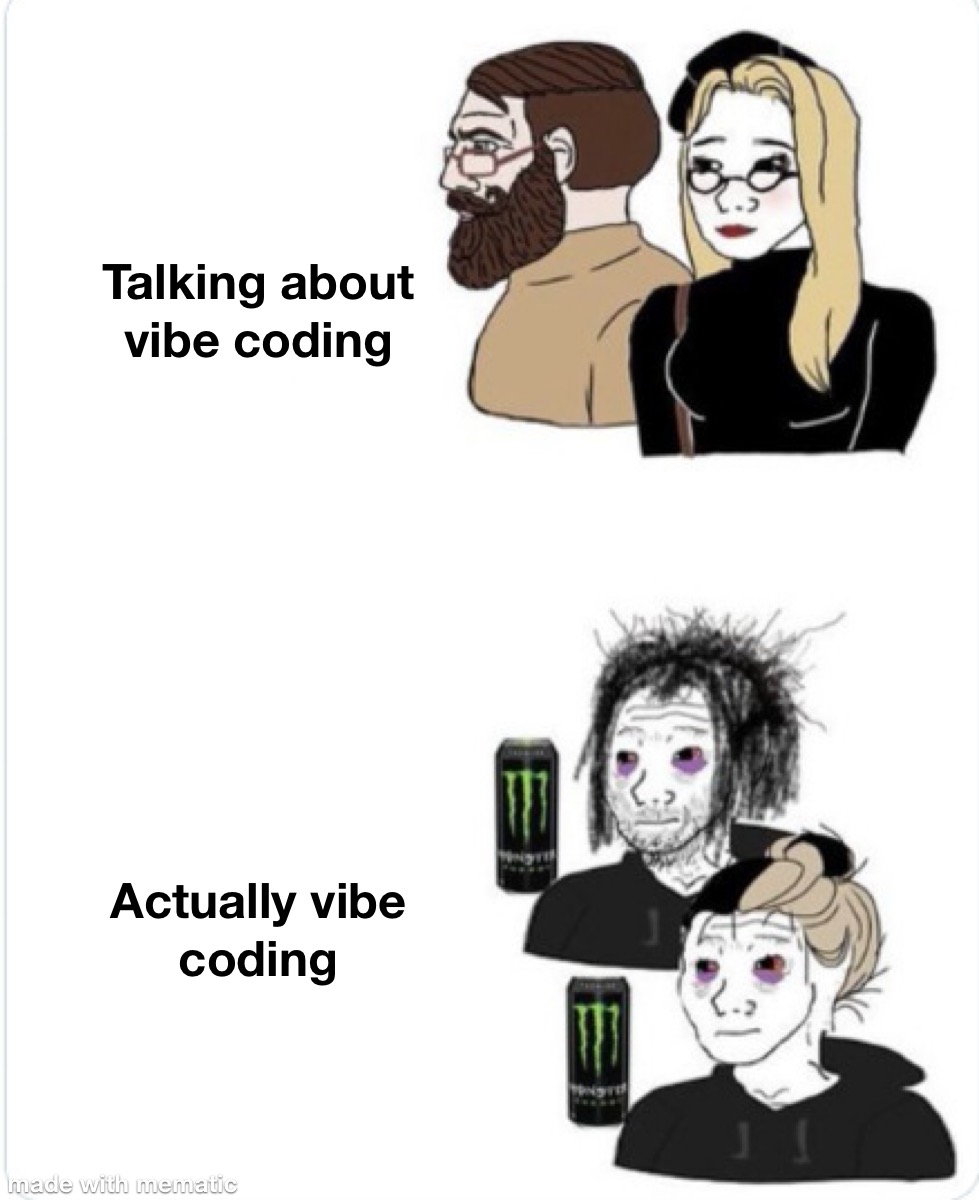
The defining trait is that the feedback loop runs through the product, not the code. A traditional developer reads the diff; a vibe coder watches the app. That trade is what makes vibe coding accessible to non-developers and extremely fast for prototypes, and it is also the source of every one of its problems.
Real Vibe Coding Examples
Concrete examples of what people actually vibe code, from our own audience of indie founders:
- Internal tools. A freelancer builds a client-reporting dashboard that pulls from three APIs. Nobody but her ever uses it. Perfect fit.
- MVPs and prototypes. A founder describes a niche booking tool to Lovable, gets a working demo in an afternoon, and uses it to validate demand before investing real money. We wrote a full breakdown of this path in can you vibe code a SaaS.
- Marketing sites and landing pages. Describe the sections, paste in your copy, ship.
- Browser extensions and small utilities. Single-purpose tools with little security surface. See can I vibe code a Chrome extension.
- Weekend games and toys. The original Karpathy use case. Zero stakes, maximum speed.
Notice what is not on this list: payment processing, authentication systems, anything storing other people's sensitive data. That is not an accident.
Vibe Coding vs Traditional Coding
The short version: traditional coding optimizes for understanding, vibe coding optimizes for speed. A traditional developer can explain every line in production. A vibe coder can ship in a day something that would have taken a month, but when it breaks at 2 a.m., nobody on the team understands the code, because nobody wrote it.
The mature answer is not picking a side. It is knowing which parts of your product deserve which approach. We compare the two approaches properly, with the data on AI code quality, in vibe coding vs traditional coding.
Where Vibe Coding Breaks Down
Every experienced vibe coder hits the same wall, usually around the point where a prototype needs to become a product. The pattern is so common it has a name in indie hacker circles: the 80% wall.
The first 80% of an app, the visible part, comes together astonishingly fast. The last 20% is auth edge cases, payment webhooks, password resets, rate limiting, GDPR, email deliverability, and database migrations. This is exactly the code you most need to be correct and exactly the code an unreviewed AI is most likely to get subtly wrong. Security researchers keep finding the same classes of vulnerabilities in vibe-coded apps: exposed API keys, missing authorization checks, injection flaws. We documented the most common ones in the hidden security risks of vibe-coded apps.
The fix most experienced builders converge on: do not vibe code the load-bearing parts at all. Start from a foundation where auth, billing, and email were written and audited by humans, and vibe code your actual product on top. That is exactly what a SaaS boilerplate is, and it is why the boilerplate-plus-AI workflow has become the default for serious solo founders. Browse kits with auth and Stripe already wired up and you skip the most dangerous 20% entirely.
There is also a third option that gets too little airtime in vibe coding circles: if the project has real budget behind it, hire experts for the production layer. A senior product studio can take a vibe-coded prototype to production while you stay on product and customers, and it can make complete sense when the app is your business rather than your weekend. We keep a vetted, budget-ranked list in how to hire a company to build a custom AI product.
The Tools People Vibe Code With
The ecosystem settled into three layers:
- AI app builders like Lovable, Bolt, and v0: describe an app in the browser, get a deployed result. Fastest start, least control.
- Agentic coding tools like Claude Code and Cursor: AI working inside a real codebase. More control, mild learning curve.
- Cloud environments like Replit: prompt-to-app with hosting included.
We ranked all of them, including the free options, in the best vibe coding tools in 2026.
Frequently Asked Questions
What does vibe coding mean?
Vibe coding means building software by describing what you want to an AI assistant in natural language and accepting the generated code largely without reviewing it. The developer judges results by running the app rather than by reading the code. The term was coined by Andrej Karpathy in February 2025.
Who invented the term vibe coding?
Andrej Karpathy, co-founder of OpenAI and former director of AI at Tesla, coined it in a February 2025 tweet describing how he built weekend projects by "fully giving in to the vibes" and accepting all AI suggestions without reading them.
Is vibe coding real programming?
It produces real, running software, so in that sense yes. What it skips is the understanding that traditional programming builds. For prototypes and personal tools that trade is excellent. For production systems handling payments or user data, the missing understanding becomes risk, which is why most serious builders combine vibe coding with human-audited foundations.
Can you build a real business with vibe coding?
Yes, founders are doing it, but the ones who succeed almost never vibe code everything. The common pattern is a production-ready boilerplate for auth, billing, and infrastructure, with AI-assisted development for the product features on top. We break down the realistic path in our guide to vibe coding a SaaS.
Is vibe coding bad?
It depends entirely on what you use it for. For learning, prototyping, and personal tools it is one of the best things to happen to programming accessibility. For unreviewed production code handling money or personal data it is genuinely dangerous. We wrote an honest assessment in our article on whether vibe coding is bad.